


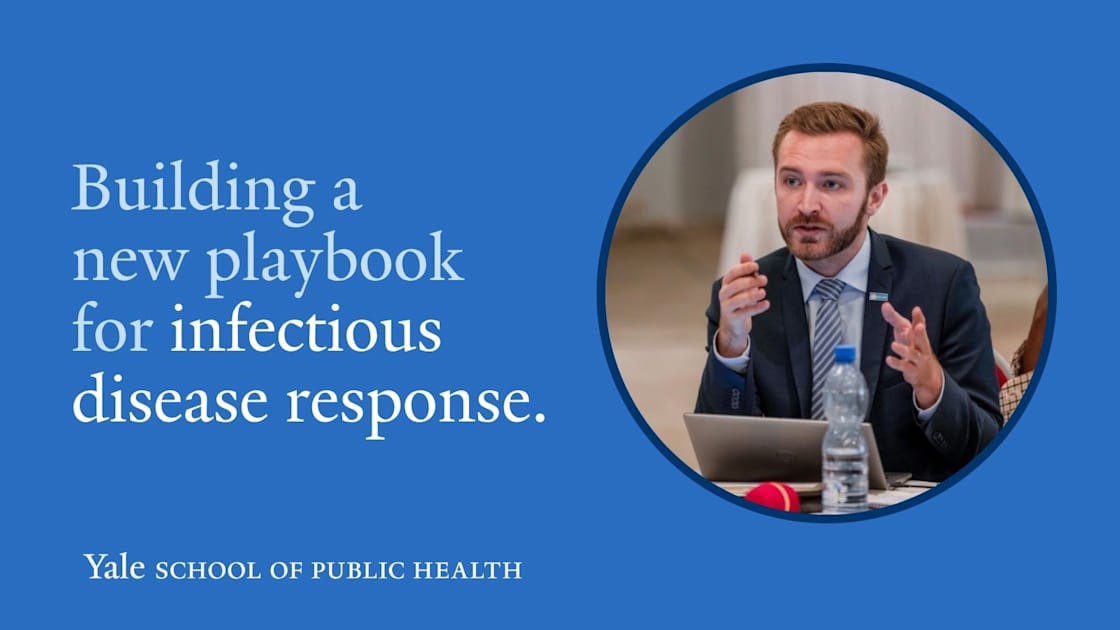
As a World Health Organization (WHO) epidemiologist, Donald Brooks was part of the emergency vaccination response to the multi-country outbreak of mpox in Central Africa in 2024. The epicenter of the outbreak was in the Democratic Republic of the Congo but it had spread to surrounding countries
Effective vaccines had been developed and used in previous outbreaks, but their supply was scarce. Because of mpox’s transmission characteristics, vaccination could be targeted in several ways, including around confirmed cases and contacts, among groups at higher risk of exposure, in geographic areas with elevated risk, or through combinations of these approaches. But the team didn’t have evidence on which would work best given the disease transmission patterns in this case and the resources available to track and confirm cases, Brooks said.
“This question comes up for many emerging or re-emerging viruses: once we have a safe and effective vaccine or other medical countermeasure, how should it actually be used?” he said
Brooks’ project as a PhD student in Yale School of Public Health’s (YSPH) Department of Epidemiology of Microbial Diseases could help provide evidence to answer that question. He is designing a research program to incorporate epidemiological data, mathematical modeling, and real-world feasibility considerations to support better decision-making in fighting epidemic-prone infectious diseases
Brooks has also continued his work at WHO and is currently a consultant epidemiologist with the organization. He’s part of a team who wrote a recently published correspondence in Nature Health on WHO’s strategic plan to manage the ongoing threat coronavirus diseases pose
Brooks led the development of the plan through his extensive background in COVID-19 with WHO: he previously coordinated the work of the organization’s global COVID-19 program and led COVID-19 vaccination data collection and monitoring. Before he joined WHO, Brooks spent five years working on public health, emergency preparedness, and outbreak response-related initiatives in West Africa
In the correspondence, Brooks and his fellow authors note that with the history of Severe Acute Respiratory Syndrome (SARS), Middle East Respiratory Syndrome (MERS), and COVID-19, coronavirus diseases have been and will remain serious threats. To manage those threats, countries need to move from “bespoke, coronavirus-specific emergency responses to the long-term management of the risks posed by this viral family,” they wrote
Doing that will mean sustaining efforts to control the harms coronavirus diseases cause, better integrating coronavirus threat management into overall disease prevention and control programs, and addressing any gaps, they wrote. Countries will also need to cooperate with each other and their global partners and produce and share research and lessons learned. Coronaviruses don’t respect borders, and gaps in preparedness anywhere could have broad consequences, they added
In writing the commentary, the authors are “trying to bring this WHO framework and way of thinking into the research community,” Brooks said. “We hope that researchers are considering from a pandemic risk perspective whether health systems are prepared and are making the investments they need to be making.”
Brooks chose YSPH for his doctoral research because of its long history of on-the-ground epidemiology, modeling expertise, and faculty experts across biostatistics, health policy and management, and epidemiology
To develop the research program, Brooks is studying chikungunya as a model of an emerging viral disease for which a vaccine has recently become available. The program will use data from the field, including information from blood tests showing whether people have antibodies to the disease. That helps determine which groups, such as people of certain ages or from urban or rural areas, have immunity and which are vulnerable, he said
Brooks will also incorporate mathematical modeling on how effective different vaccination approaches could be in meeting specific public health goals, such as containing a disease outbreak, slowing transmission, or protecting groups more likely to become very sick. And crucially, he’ll include analysis of real-world factors that would influence a decision
“I’m thinking from the perspective of a public health program manager in a given country with questions about using a specific vaccine,” he said. “What are the analyses that I would want to see to decide if and how I should use it?”
Ensuring an approach will be feasible is essential, Brooks said. Modeling might find, for example, that one vaccination strategy produces the greatest public health benefit under ideal conditions. But if that approach is too costly, too slow, or too difficult to implement, another strategy that achieves somewhat less benefit but can be delivered effectively may be the better choice, he added
“If we can ultimately act faster and use products most effectively, we can meaningfully change the course of an epidemic earlier,” he said
