


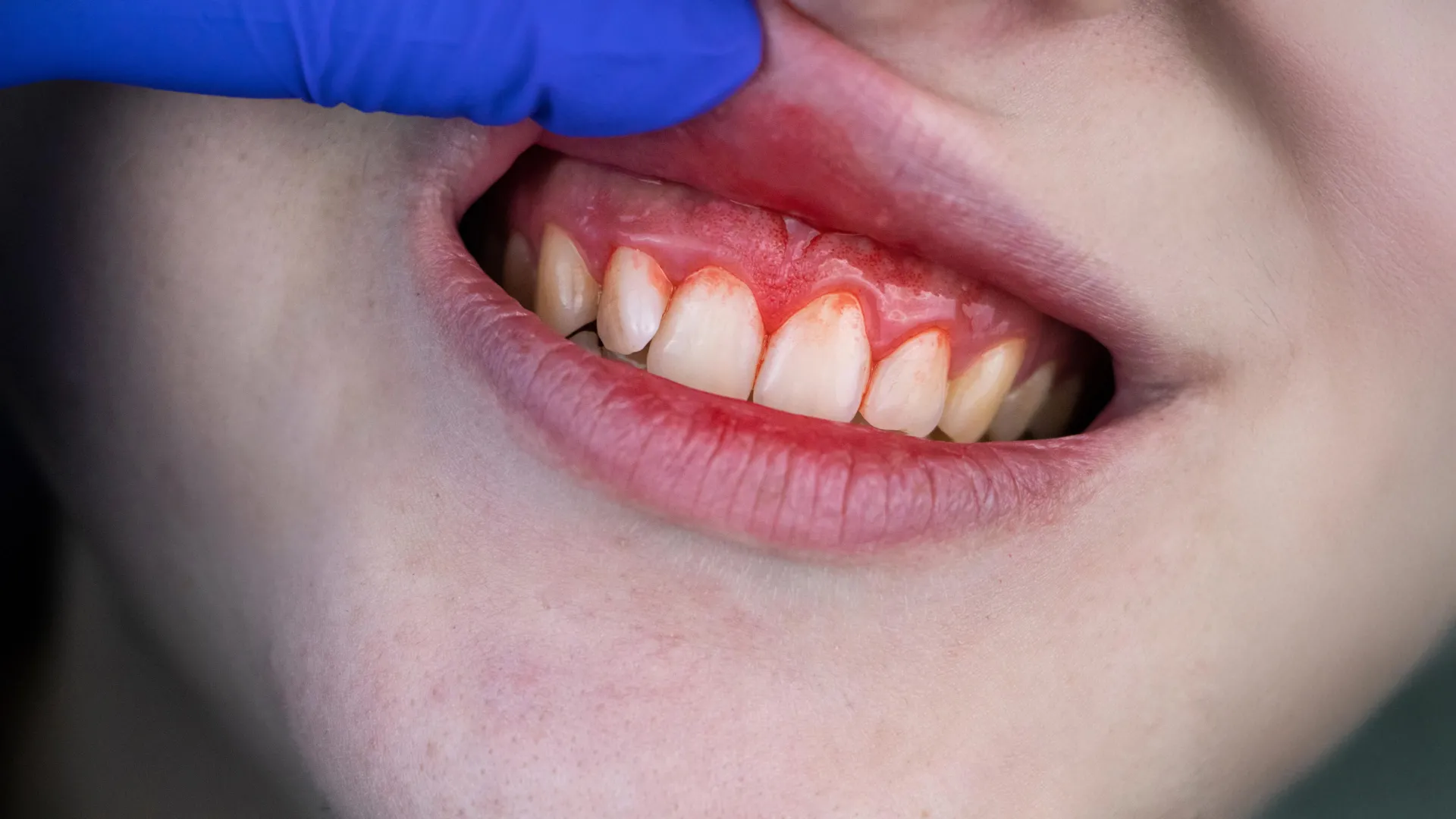
Scientists discover a hidden heart valve risk linked to gum disease
A surprising new study suggests that the bacteria behind gum disease may also contribute to dangerous heart valve damage
Date:
July 13, 2026
Source:
American Heart Association
Summary:
Researchers found that bacteria linked to gum disease may help drive the development of calcific aortic valve stenosis by triggering inflammation and calcium buildup in the heart valve. The early findings suggest that keeping gums healthy could play a role in reducing the risk of this serious heart condition.
Share:
FULL STORY
Bacteria that cause gum disease may do more than damage your teeth. New preliminary research suggests they could also contribute to the buildup of calcium in the heart’s aortic valve, potentially leading to calcific aortic valve stenosis (CAVS), a common and potentially life threatening heart valve disorder
The findings were presented at the American Heart Association’s Basic Cardiovascular Sciences Scientific Sessions 2026, held in Boston from July 13 to 16. The meeting is one of the world’s largest gatherings focused on basic and translational cardiovascular research
According to the American Heart Association, CAVS develops when the aortic valve gradually becomes thicker and more calcified, making it harder for blood to flow from the heart to the rest of the body. The condition often causes no symptoms at first. As it worsens, however, it can lead to fatigue, chest pain, shortness of breath, fainting, heart failure, and in some cases premature death. For people with severe disease, valve replacement surgery is currently the standard treatment
The new research points to a possible biological mechanism connecting chronic gum disease and infection with the development of CAVS
“There are currently no medications proven to prevent or slow the progression of CAVS. We hope our findings demonstrating the link between periodontal disease and CAVS will stimulate further research into new preventive and therapeutic approaches for this condition,” said co lead author of the study, Chenyang Li, M.D., a Ph.D. candidate in the department of cardiology at the State Key Laboratory of Cardiovascular Disease of Fuwai Hospital’s National Center for Cardiovascular Diseases, the Chinese Academy of Medical Sciences and Peking Union Medical College all in Beijing.
Researchers Focus on a Common Gum Disease Bacterium
The team concentrated on Porphyromonas gingivalis (P. gingivalis), a bacterium known to play a major role in periodontal disease by causing gum inflammation and the destruction of gum tissue. Previous research has also linked P. gingivalis to widespread inflammation throughout the body and an increased risk of cardiovascular disease, including artery plaque buildup and coronary artery disease
To investigate the connection, researchers analyzed bacterial levels in heart valve tissue collected from people undergoing valve replacement surgery. They compared calcified aortic valves from people with CAVS to valve tissue from patients with other heart valve conditions
“We were surprised by how much P. gingivalis was present in the calcified aortic valves,” Li said. “Although it was not one of the most abundant bacteria overall, it showed one of the largest differences between valves with CAVS and valves without CAVS. This unexpected finding led us to investigate its potential role in the development of CAVS.”
Mouse Study Reveals a Possible Disease Mechanism
The researchers then turned to mouse experiments to better understand how the bacterium might contribute to valve disease. Mice were exposed to either live or heat inactivated P. gingivalis to determine whether the bacteria accumulated in the aortic valve, increased calcium deposits, and produced symptoms consistent with aortic stenosis. Some animals also received preventive antibiotics, while others had the IL-1β inflammatory pathway genetically removed
Repeated exposure to live P. gingivalis caused the bacteria to accumulate in the aortic valves of mice, leading to greater valve calcification and symptoms of aortic stenosis. Preventive antibiotic treatment reduced these effects. The researchers also found that P. gingivalis activated interleukin-1 beta (IL-1b), an inflammation promoting protein produced mainly by immune cells
Additional experiments showed that genetically deleting IL-1b significantly reduced valve calcification and disease symptoms, even when P. gingivalis was present
Good Oral Health May Benefit the Heart
“The key message is simple: take good care of your oral health,” Li said. “Good oral hygiene and treatment of periodontal disease are important for overall health and may also have benefits for cardiovascular health. While it is still too early to recommend specific treatments for preventing CAVS, our findings suggest that periodontal health could be an important piece of the puzzle.”
Eduardo Sanchez, M.D., M.P.H., FAHA, chief medical officer for prevention for the American Heart Association, said the findings add to growing evidence that oral health and heart health are closely connected
“This study adds to the growing evidence that oral health and heart health are closely connected,” said Eduardo Sanchez, M.D., M.P.H., FAHA, chief medical officer for prevention for the American Heart Association. “For many people, regular visits to the dentist are their only connection to the healthcare system. That makes dental professionals important partners in spotting health conditions, including periodontal disease early — which can lead to quicker healthcare referrals and results, better health and lives saved.”
The American Heart Association’s Healthy Smiles, Healthy Hearts™ initiative supports dental professionals with educational reh. The program also includes blood pressure screening guidance for dental practices and patient education materials designed to improve both oral health and heart health
Early Findings Require Human Confirmation
The researchers emphasize that these results are preliminary and have not yet been confirmed in people. The work was presented as a scientific meeting abstract, meaning it has not yet undergone peer review or been published as a full journal paper
To further investigate the possible connection between periodontal disease and CAVS, the research team has already launched a clinical study in people
- A laboratory study using human heart valve tissue and mice found a potential connection between gum disease (periodontitis) and calcific aortic valve stenosis (CAVS).
- Researchers identified Porphyromonas gingivalis as a possible driver of inflammation and calcium buildup in the aortic valve.
- There are currently no medications that can prevent or slow the progression of CAVS, making the discovery a potential avenue for future research.
- The findings suggest that treating gum disease and reducing gum inflammation could eventually become part of strategies to help prevent the most common form of heart valve disease.
- Because the research was presented as a scientific meeting abstract, the findings are preliminary and await confirmation through peer reviewed publication and human clinical studies.
Story Source:
Materials provided by American Heart Association. Note: Content may be edited for style and length
Cite This Page:
American Heart Association. “Scientists discover a hidden heart valve risk linked to gum disease.” ScienceDaily. ScienceDaily, 13 July 2026. <www.sciencedaily.com/releases/2026/07/260713000751.htm>.
American Heart Association. (2026, July 13). Scientists discover a hidden heart valve risk linked to gum disease. ScienceDaily. Retrieved July 13, 2026 from www.sciencedaily.com/releases/2026/07/260713000751.htm
American Heart Association. “Scientists discover a hidden heart valve risk linked to gum disease.” ScienceDaily. www.sciencedaily.com/releases/2026/07/260713000751.htm (accessed July 13, 2026).
RELATED STORIES
