



Research and Innovation
Miller School Researchers Help Advance Award-Winning AI Model for Predictive Health Care
By: Chad Hanson | July 14, 2026 | 8 min. read |
A collaboration between the University of Miami Miller School of Medicine and Amalgam Rx is helping advance Chiron, an award-winning health care AI model designed to analyze a patient’s complete medical history and support earlier disease detection, personalized treatment and smarter clinical decision making
A collaboration between the University of Miami Miller School of Medicine and health technology company Amalgam Rx is helping shape the next generation of artificial intelligence for health care
The partnership recently earned national recognition when Amalgam’s health care foundation model, Chiron, was named “Overall Large Language Model of the Year” by the 2026 AI Breakthrough Awards, a global competition that drew more than 5,000 nominations from more than 20 countries. The honor places Chiron among technology innovations recognized alongside previous award winners such as NVIDIA, Qualcomm and Snowflake
While Amalgam developed the underlying AI platform, Azizi Seixas, Ph.D., professor of psychiatry and behavioral sciences, director of the Media and Innovation Lab (MIL), co-director of the Center for Translational Sleep and Circadian Sciences and interim chair of the Department of Informatics and Health Data Science at the Miller School, has played a leading role in identifying how the technology can be applied in real-world health care settings. His work has focused on translating the promise of artificial intelligence into clinically meaningful tools that can improve patient care.
“The partnership between Amalgam and The Media and Innovation Lab represents a shared vision to shape the future of medical-grade artificial intelligence and learning health systems,” said Dr. Seixas. “Together, we are working to ensure that next-generation AI moves beyond technological innovation to become safely integrated into routine clinical care, where it can improve decision-making, personalize treatment and enhance patient outcomes.”
The collaboration reflects a growing role for academic medical centers in shaping health care AI, ensuring that new technologies are not only technically sophisticated but also scientifically validated, clinically useful and responsibly deployed. At the Miller School, researchers are helping establish the framework needed to evaluate, implement and continuously improve AI-powered tools within health care systems
Understanding the Entire Patient Journey
At the center of the recognition is Chiron, a health care-specific large language model designed to analyze a patient’s complete medical history rather than isolated clinical encounters
Unlike general-purpose AI systems, Chiron is trained to interpret diagnoses, medications, laboratory results, referrals, comorbidities and other longitudinal health care data simultaneously. By analyzing how those events unfold over time, the model can identify patterns that may signal emerging health risks or opportunities for earlier intervention
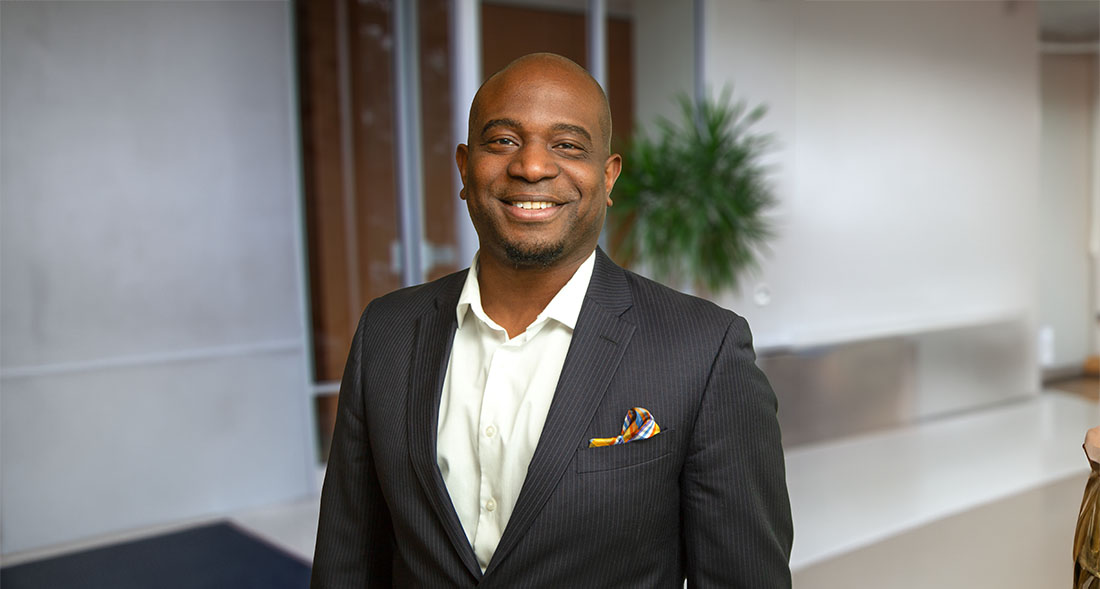
“Chiron is designed to understand the complete clinical journey of a patient rather than isolated health care encounters,” Dr. Seixas said. “What makes Chiron unique is its ability to synthesize complex health care data into meaningful clinical reasoning while operating within the realities of health care delivery.”
The model’s design reflects a fundamental reality of medicine. Health care decisions are rarely based on a single encounter
“Health care is inherently longitudinal,” Dr. Seixas said. “Every diagnosis, medication change, referral, hospitalization and clinical encounter represents part of a patient’s health story rather than an isolated event.”
Bridging Innovation and Implementation
A key aspect of Dr. Seixas’ involvement has been ensuring that the technology can be integrated into health care environments in ways that support clinicians and patients
“My role has centered on identifying clinically meaningful applications for this technology and developing strategies to integrate it into health care delivery,” he said. “As an implementation scientist, informatician and digital health researcher, my focus is understanding how AI can be translated from promising technology into sustainable clinical practice.”
The partnership’s initial use case focused on sleep apnea
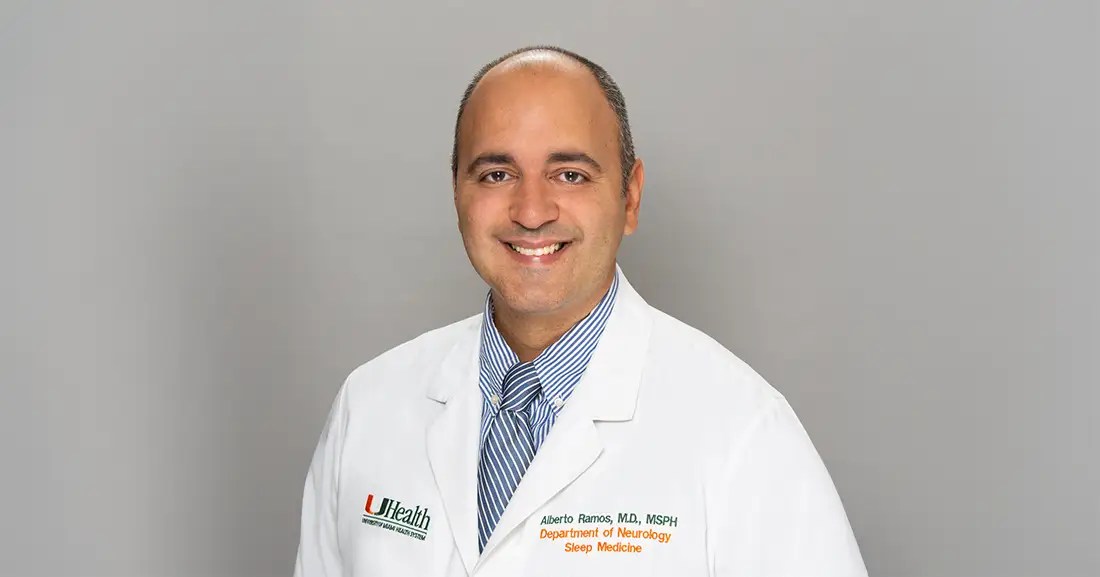
“This approach can help examine a very common but often overlooked disorder that affects brain, cardiovascular and metabolic health over time,” said Alberto Ramos, M.D., a professor of neurology and research director of the sleep program at the Miller School, who contributed to the project. “AI that can recognize these longitudinal patterns has the potential to help clinicians identify high-risk patients earlier and deliver more personalized care.”
Researchers are now exploring additional applications and future research initiatives involving the health care-focused large language model
At the University of Miami, investigators are studying how technologies such as Chiron could support disease detection, clinical decision making and personalized care within academic health care environments that continuously generate and apply knowledge from patient care. Any future implementation would undergo rigorous scientific evaluation and institutional oversight
“Our goal is to establish evidence-based models for responsibly integrating AI into health care systems that can ultimately be scaled nationally and internationally,” Dr. Seixas said
A Vision for the Future of Medicine
For Dr. Seixas, the award highlights the importance of collaboration between academia and industry
Academic medical centers contribute scientific rigor, clinical expertise and implementation science. Technology companies bring engineering expertise and scalable product development. Together, those complementary strengths can accelerate the balanced adoption of new technologies
“At the University of Miami Miller School of Medicine, we believe the future of health care will be defined by learning health systems powered by medical-grade AI,” Dr. Seixas said. “Partnerships like this are essential because they allow us to responsibly develop, validate and implement these technologies while educating the next generation of clinician-innovators, scientists and engineers who will lead the future of medicine.”
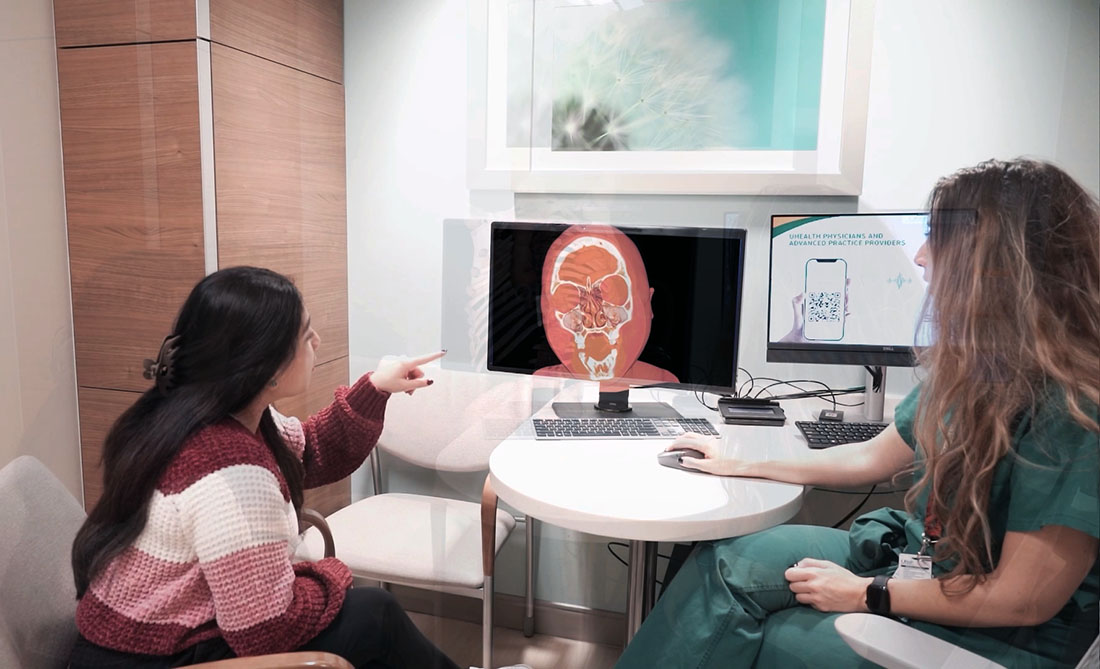
UHealth Neurosurgeons First to Use Glass-Free 3D Imaging for Patient Care
UHealth neurosurgeons are first to use glasses-free 3D imaging, turning scans into interactive models to improve patient care planning
Read more
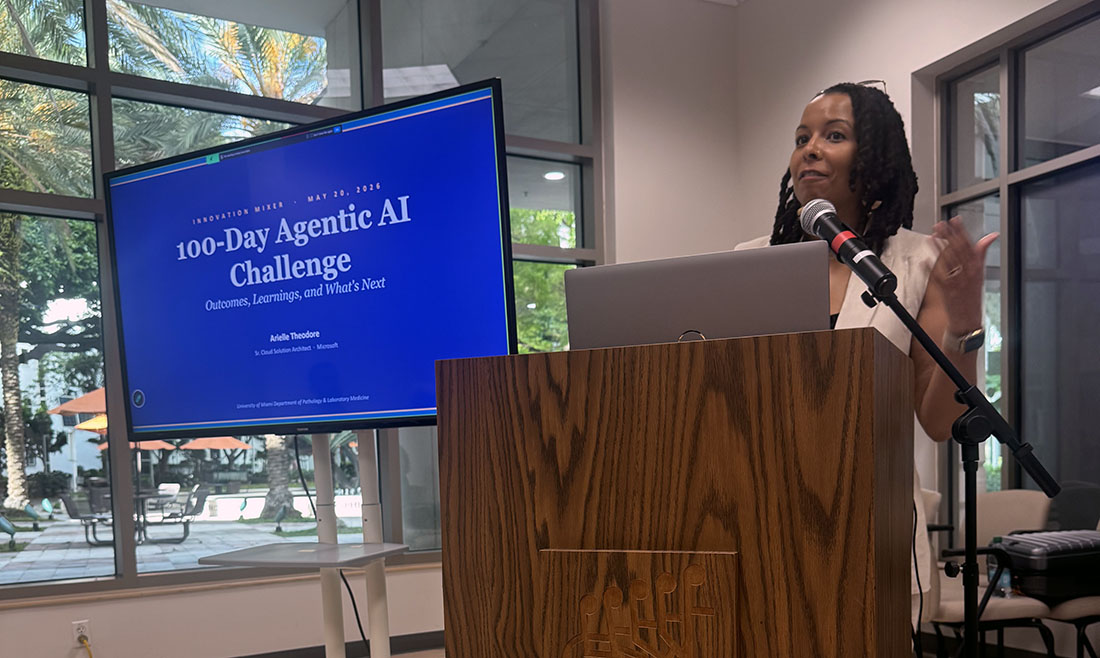
Inside the 100-Day Agentic AI Challenge Transforming Pathology at the Miller School
Miller School researchers deploy agentic AI tools to automate pathology workflows and improve clinical efficiency
Read more
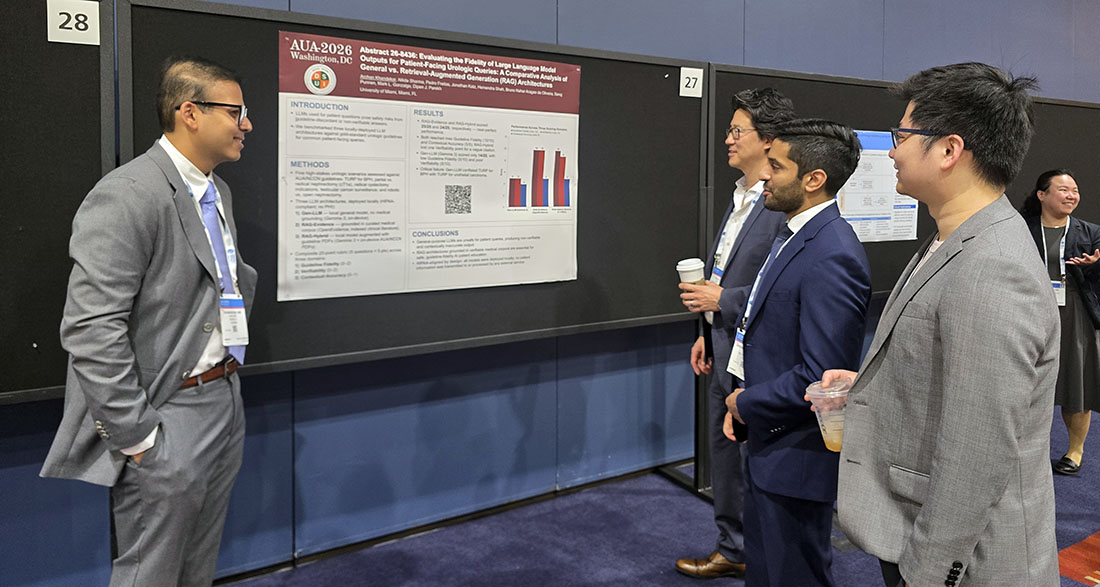
Desai Sethi Urology Institute Debuts AI-Driven Augmented Reality Prostate Biopsy at AUA 2026
University of Miami Miller School urologists presented AI-powered AR guidance for MRI fusion prostate biopsy at AUA 2026
Read more
Redefining Cancer Survivorship Care: How AI Technology and Big Data are Contributing to Proactive Care Delivery
AI-driven models using patient-reported outcomes and clinical data help predict risk in cancer survivors, enabling more personalized care
Read more
Tags:AI, artificial intelligence, Department of Psychiatry and Behavioral Sciences, digital health, Media and Innovation Lab, obstructive sleep apnea, sleep, sleep apnea, technology, Translational Sleep and Circadian Sciences
