


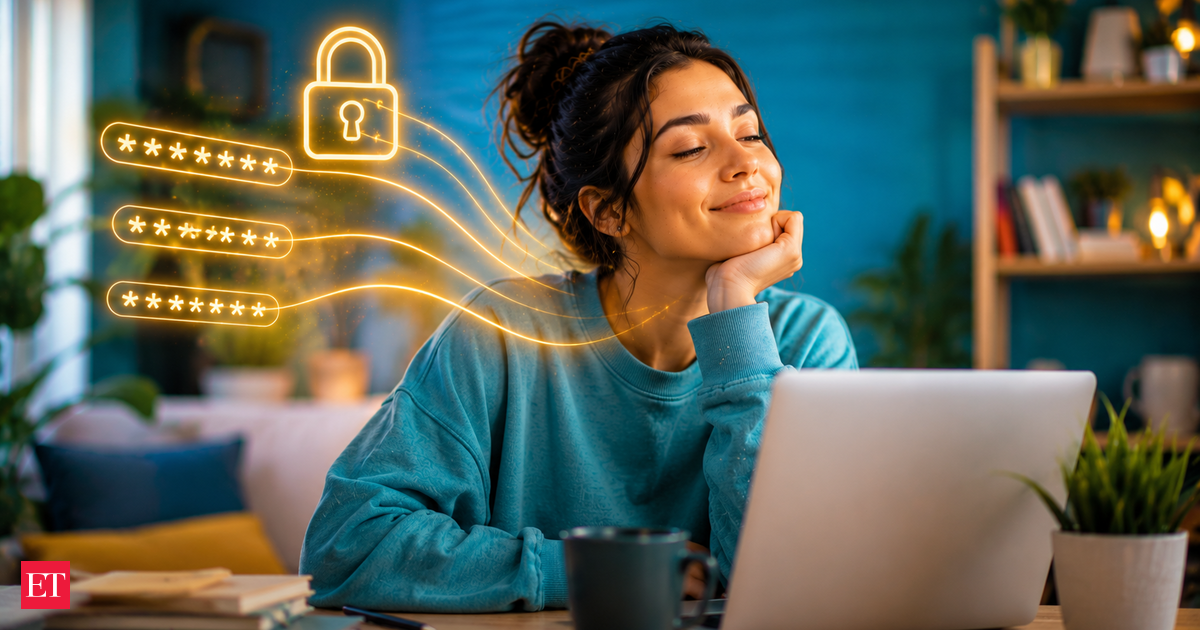
Most cybersecurity experts recommend using unique passwords for every account. Yet millions of people continue using the same password, or slight variations of it, across multiple websites, apps, and services. From email accounts and streaming platforms to shopping sites and social media, password reuse remains surprisingly common despite years of security warnings.Psychology suggests that this behavior isn’t necessarily a sign of irresponsibility. Instead, it often reflects how the human brain manages memory, effort, risk, and daily decision-making. Researchers studying human behavior and cybersecurity have found that people frequently prioritize convenience and mental efficiency over long-term security.
The brain naturally tries to reduce cognitive load
One of the strongest explanations comes from Cognitive Load Theory, developed by educational psychologist John Sweller. Human working memory has limited capacity. Modern life already requires people to remember work tasks, appointments, phone numbers, financial information, and countless digital accounts.Creating and remembering dozens of unique passwords increases mental effort. For example, someone with accounts on banking apps, streaming services, work platforms, online stores, and social media may choose one familiar password simply because it feels easier to manage.From the brain’s perspective, simplifying information often feels efficient, even when it creates security risks.You Might Also Like:

Psychology says people who freeze on stage aren’t shy, their brain may be activating body’s stress response
Habit formation can make password reuse automatic
Psychologist Wendy Wood, known for her research on habits, has shown that repeated behaviors often become automatic over time. When someone creates their first few online accounts using a particular password, the behavior may gradually become a routine.Years later, they may continue using similar passwords without consciously evaluating the risks. This is similar to always taking the same route to work or sitting in the same chair at a meeting. The behavior becomes familiar and automatic.
Decision fatigue encourages simpler choices
People make thousands of decisions every day. Research on Decision Fatigue suggests that mental energy decreases as people continue making choices throughout the day. When creating a new account, many users don’t want to spend additional effort inventing and remembering another password.As a result, they often choose the easiest option available: reusing an existing password. For example, after a long workday, someone signing up for a new service may prioritize speed and convenience over security considerations.You Might Also Like:

Psychology says people who love being in front of the camera aren’t narcissists, they may be driven by confidence and self-expression
People often underestimate risk
The Health Belief Model, frequently used in behavioral science, suggests people are more likely to take protective action when they believe they face a meaningful threat.Many individuals assume cyberattacks happen to other people.They may think:
- “Nobody would target my account.”
- “I don’t have anything valuable.”
- “It probably won’t happen to me.”
Psychologists call this tendency optimism bias, the belief that negative events are less likely to happen to oneself than to others. As a result, the perceived inconvenience of creating unique passwords can feel more immediate than the possibility of a future security breach.
The brain prefers immediate rewards
Behavioral economists describe Present Bias as our tendency to prioritize immediate benefits over future consequences. Creating a strong, unique password requires effort now. The reward, better security, may not become visible for months or years.Meanwhile, reusing an old password provides an immediate benefit: convenience. This helps explain why people often choose short-term ease even when they understand the long-term risks.
Self-efficacy affects cybersecurity behavior
Psychologist Albert Bandura’s Self-Efficacy Theory suggests people are more likely to engage in behaviors when they believe they can perform them successfully.Some individuals feel overwhelmed by cybersecurity recommendations. Managing password managers, two-factor authentication, and dozens of unique credentials may seem complicated.If people doubt their ability to handle these systems effectively, they may return to simpler strategies, including password reuse. Research shows that increasing digital confidence often improves security behaviors.
Familiarity creates a false sense of safety
Psychologists have long studied the Mere Exposure Effect, first identified by Robert Zajonc. The effect suggests people tend to prefer things they encounter repeatedly.A familiar password feels comfortable because it has been used successfully many times before. The absence of past problems can create a misleading sense of security.For example, someone who has reused the same password for ten years without experiencing a breach may feel justified continuing the behavior, even though the underlying risk remains.Psychology says people who keep the same password everywhere are often responding to normal human tendencies such as reducing cognitive load, relying on habits, avoiding decision fatigue, underestimating risks, and prioritizing immediate convenience. These behaviors do not necessarily reflect laziness or carelessness. Instead, they illustrate how the brain frequently balances effort and efficiency.However, cybersecurity experts consistently recommend using unique passwords, enabling two-factor authentication, and considering password managers. Understanding the psychology behind password reuse helps explain why the behavior is common—but it doesn’t eliminate the security risks associated with it.
Is reusing passwords common?
Yes. Multiple cybersecurity studies have found that password reuse remains widespread despite repeated security warnings.
Does password reuse mean someone is careless?
Not necessarily. Psychology suggests memory limitations, habits, convenience, and risk perception often contribute to password reuse.Add 
as a Reliable and Trusted News Source

Add Now!
(You can now subscribe to our Economic Times WhatsApp channel)
Read More News on
Psychology of using same passwordPsychology of reusing passwordPsychology of comfortPsychology of conveniencePsychology of unique passwords
(Catch all the US News, UK News, Canada News, International Breaking News Events, and Latest News Updates on The Economic Times.)
Download The Economic Times News App to get Daily International News Updates
…moreless
(You can now subscribe to our Economic Times WhatsApp channel)
Read More News on
Psychology of using same passwordPsychology of reusing passwordPsychology of comfortPsychology of conveniencePsychology of unique passwords
(Catch all the US News, UK News, Canada News, International Breaking News Events, and Latest News Updates on The Economic Times.)
Download The Economic Times News App to get Daily International News Updates
…moreless
