


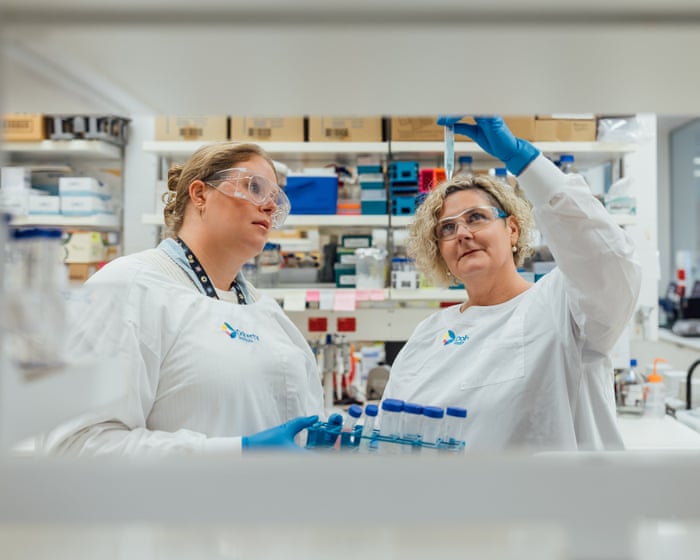
Infectious disease research demands more than technical knowledge. At the University of Melbourne, students are learning how safety, regulation and critical thinking can help to turn laboratory insights into better care
At the centre of that system is the Doherty Institute, a joint venture between the University of Melbourne and the Royal Melbourne Hospital. Purpose-built to bring together experts in public health, infectious diseases and immunology, the institute is widely recognised as a world leader in epidemiology. In 2020 the institute conducted world-first mapping of the immune response to Covid-19 – a critical step towards the development of vaccines
“Each outbreak brings an awareness that viruses are unpredictable and always changing,” says Assoc Prof Sarah Londrigan, an academic in the University of Melbourne’s department of microbiology and immunology. “For many viruses, we still lack effective options to treat infection once it’s begun.”
Londrigan and her team study how the immune system responds as viruses replicate, with a particular focus on respiratory viruses such as influenza. Her research also helps build a bridge between discoveries made in the lab and potential new therapies to prevent or treat severe respiratory disease
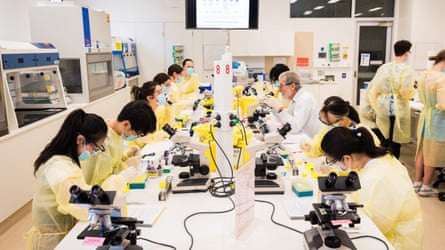
That research-informed lens is central to the university’s master of biomedical science, in which students learn from academics, such as Londrigan, who are not only teaching the science but working on complex public health challenges. The course takes a work-integrated learning approach, giving students first-hand industry experience to prepare them for future employment as they complete a required biomedical research project
As part of the Melbourne Biomedical Precinct – a world-renowned biomedical research hub – the university has partnerships with more than 40 hospitals, research institutes and biotech organisations
Where lab work opens doors
Alixandra Colafella, a PhD student at the university, completed a master of biomedical science before moving into doctoral research on antibiotic-resistant bacteria. Her work investigates how bacteria acquire and transport micronutrients such as zinc, with the long-term goal of understanding whether those pathways could be disrupted to help make bacteria respond to antibiotics again
For Colafella, the master’s degree offered a chance to undertake substantial research at the Doherty Institute, while also learning the broader systems that shape biomedical work
“One of the great things about the master’s program is that it allowed me to grasp other career options, beyond research scientist,” she says. “It’s an amazing opportunity to be able to do coursework and learn about different fields, while also being able to pursue your own research.”
Learning from research in action
To equip students for their work with industry, Londrigan has drawn directly on her research practice to help develop two coursework subjects. She says this kind of research-informed teaching is critical because complex infectious disease problems are rarely solved by one discipline or one technique alone
The coursework teaches students to sharpen their critical thinking, empowering them to incorporate different techniques to approach infection or immunity research from multiple angles
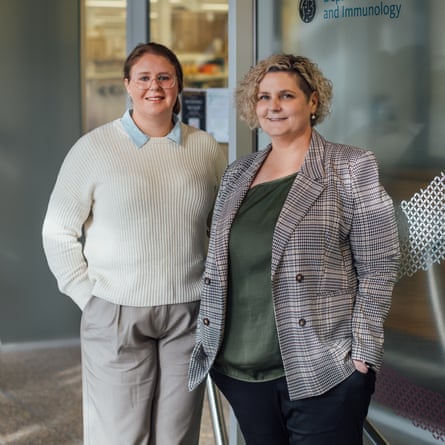
“There is no single magic bullet,” she says. “You can have a new and amazing technology but the key to answering and validating your research question is to use multi-pronged approaches.”
For example, Londrigan says, the data-driven science of the omics revolution, the large-scale analysis of biological molecules such as genes, proteins and metabolites, is incredibly powerful. “But scientists still need to go back to ‘old school’ wet lab experimental techniques to validate their answers.”
Colafella says that kind of flexible thinking has shaped the way she approaches her PhD research. “Being able to draw on different perspectives and techniques to comprehensively address whatever problem you are facing, both in a research capacity and also professionally, is critical,” she says. “Honestly, I feel that’s what makes a good scientist.”
Managing risk and responsibility
Londrigan says one of the most sought-after skills among prospective employers is the ability to handle pathogenic organisms safely and responsibly. The subject ‘containment or chaos’ was introduced two years ago to meet this need
“Employers are seeking graduates who are familiar with and who understand the principles, regulations and laws that allow us to handle pathogenic organisms safely in diverse laboratory settings,” she says
Students are exposed to a variety of lab settings and career pathways. “They’re educated not only by us academics at the university, but by industry specialists, professionals who manage regulatory activities, and public health scientists who are getting specimens from hospital patients and trying to diagnose the pathogens
“Students even have the opportunity to go into one of the highest containment laboratories in the world, at CSIRO Geelong.”
Colafella has already had the opportunity to apply her studies in the lab, drawing on them to contribute to a new standard operating procedure
As future pandemics and infectious diseases are inevitable in an increasingly connected world, Londrigan says graduates must be able to ask sharper questions, work safely and learn from researchers at the cutting edge
“Lab work is two steps forward, many steps back,” she says. “Discovery is just the beginning … For every individual success in the clinic or in the form of a treatment, we need thousands of different discoveries. Having students that are trained in communicating, asking questions and critical thinking is key to this discovery.”
Explore how postgraduate study at the University of Melbourne can advance your health career
Explore more on these topics
- University of Melbourne: Advancing healthcare
- advertisement features
Share
Reuse this content
