


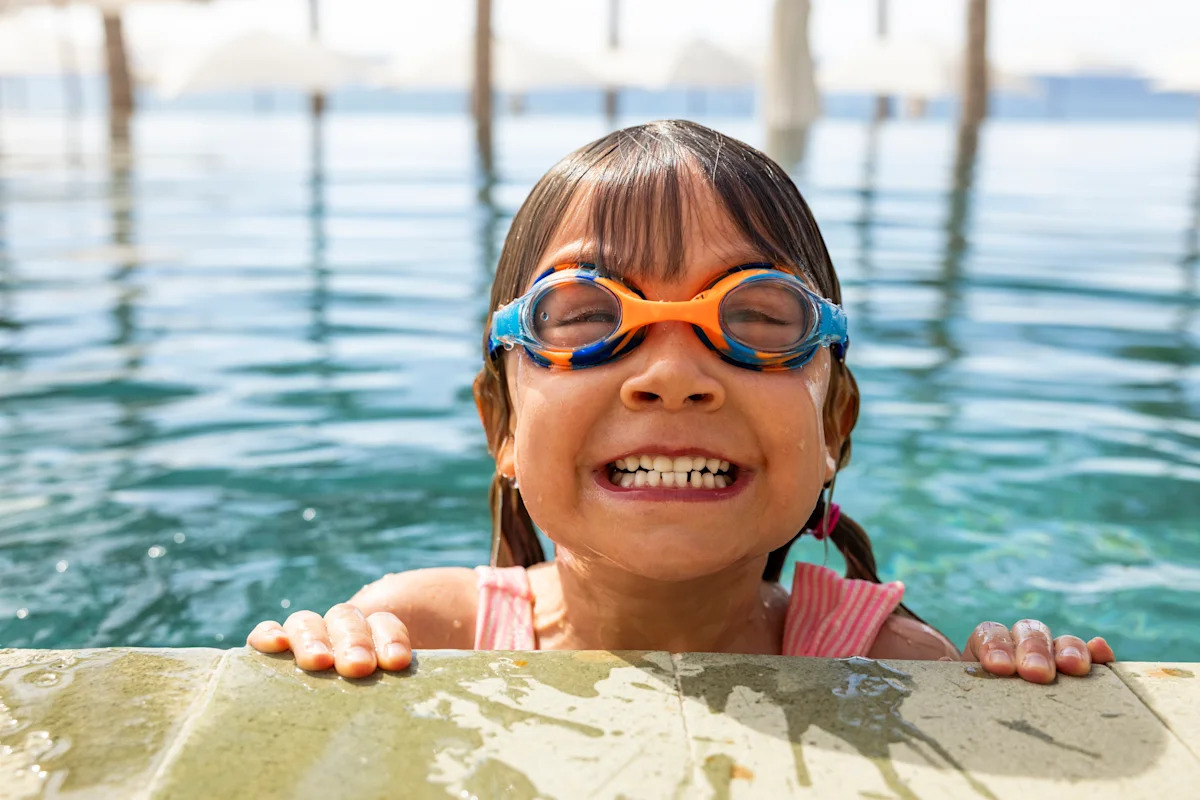
Every summer, the same parenting debate bubbles back to the surface: If your kid spends hours splashing in a pool, sprinkler or splash pad, do they really need a bath that night?
For one mom, the answer sparked a social media firestorm. Earlier this month, creator KatieMarieBakeryQueen posted that her follower count had plummeted after she quipped that the neighborhood splash pad had become her children’s bath for the summer. (Yahoo could not reach her for comment.)
The internet weighed in. Many applauded the chill approach to parenting during the dog days of summer (let us live!). Others, to quote one commenter, bemoaned the bath swap as “a public health hazard and honestly revolting.”
To bathe or not to bathe?
I turned to parents for an informal poll: In the summer, is getting wet just as good as getting clean? “If it gets the dirt/paint/chalk/food off them, it’s absolutely a bath!” Lisa, who has a preschooler, says. Adds Ashley, a mom with a toddler: “We literally did this on Sunday — public splash pad and no bath. He had a BLAST.”
Advertisement
“What are baths?? It’s summer!” Sarah, a mom of two, told me. Susannah, who has a teenager, suspects her own “scrubby and dirty-footed” childhood is why she rarely gets sick. “People are so hygiene-obsessed,” she says.
And for good reason, say parents who wouldn’t dream of letting their kids take a dip without soaping up afterward. Public water spaces, including splash pads, can contain chlorine, sunscreen residue, sweat, dirt, grass, body oils, germs — and yes, sometimes urine or fecal matter. Think about it: If many kids aren’t bathing after their swims, they probably aren’t bathing before, either. (According to a 2019 online surveyconducted on behalf of the Water Quality and Health Council, more than half of swimmers don’t.)
“Not acceptable in my opinion!” Sophia, a mom of three, tells me. “It doesn’t take that much time and energy to put your kids in the bath. Put your phone down for 10 minutes and get off of Instagram and use that time to bathe [your] kids!”
Ann’s preschooler has eczema. “Pool and hose water is one of the triggers,” she says. “We definitely don’t let the chlorine, dirt, etc. stay on her overnight, or it would be a thousand times worse.” Ann’s stance isn’t specific to her daughter’s skin condition, though. “Even if she didn’t [have eczema], I would need to wash her,” she admits. “My parents believed that even if it was a splash pad or whatever, there’s still dirt, so you need soap involved to get in bed clean. So that is passed on to me!”
So … what do doctors say?
Does swimming actually get kids clean? Experts say it depends on what you mean by “clean.”
Advertisement
“Although chlorine may kill many common germs in the pool, it does not remove dirt, sweat, sunscreen or bacteria from the skin,” mom and dermatologist Dr. Kate Viola says. “And pools can also leave behind chlorine and other chemical residues.”
The missing ingredient is, of course, soap; it uses surfactants to physically lift oil, sunscreen, sweat and dead skin off the body. While swimming can certainly wash off some visible grime, “chlorine’s job is to disinfect the water, not to clean you,” Viola explains. “It also does not discriminate between harmful microbes and the skin’s protective flora.”
Pharmacist and skin care formulator Janis Kosma-Covey agrees. “Properly maintained pools are disinfected to reduce bacteria and other harmful microorganisms, so the concern isn’t that the water itself is necessarily ‘dirty’ or that it will automatically lead to infections,” she says. “The bigger issue is that chlorine is designed to disinfect, and in the process, it strips away the skin’s natural oils that help maintain a healthy skin barrier.”
Public pools can also expose kids’ skin to entirely new substances, including chlorine byproducts that dry out skin and hair, as well as contaminants other swimmers bring into the water. Every doctor I spoke with recommended a quick shower after swimming — not because pool water is inherently gross or dangerous, but because rinsing helps remove lingering irritants. “This is especially important for children with eczema, sensitive skin or naturally dry skin, because their skin barrier is already more vulnerable,” says Kosma-Covey.
A middle ground?
As with so many Parenting Things, the best answer is bound to be found somewhere in the middle. The California mom behind @CoffeeAndCarSeatCo seems to have nailed the balance: squirting soap along her kiddo’s backyard pool slide for a sudsy soak
“This hack is honestly genius,” pediatrician Dr. Sonal Patel says. “This at-home version is great because you’re in total control. You know the water quality and control the soap. As a mom of four boys, summer is all about the outdoors, and multitasking is key.”
Advertisement
Rachel has her own workaround for her elementary school-aged kid. “We have a hot tub, and it’s almost a tub, really,” she says. “I bring shampoo out and make my son hang his head over so I can rinse it out.”
But even the middle ground will have its detractors. Dr. Marisa Ponzo is a dermatologist and parent who does not mince words on the topic: “Pool time is not bath time,” she says. “The same goes for backyard pools. While they may have fewer people using them, inflatable pools, plastic surfaces and pool toys can still collect dirt and bacteria if they aren’t cleaned regularly. Many are stored in the garage or shed during the winter months and are not kept as clean as a bathtub would be.”
She adds, “Skipping a bath once in a while isn’t likely to harm an otherwise healthy child. But I wouldn’t rely on swimming as a replacement for regular bathing. A one-minute rinse after swimming goes a long way … to ensure the skin barrier is as healthy as possible.”
The bottom line
Like any online parenting argument, this whole conversation isn’t reallyjust about hygiene. It’s also about projecting what kind of parent you want to be. One side sees practical, low-pressure parenting: Kids had fun, they’re tired, they’re cleanish, everyone’s happy. The other side sees an unacceptable decline in cleanliness standards.
But if there’s one thing parents can probably agree on, it’s that by mid-July, we’re all just trying to survive. Let’s give each other some grace, OK?
If you buy something through a link in this article, we may earn commission
