


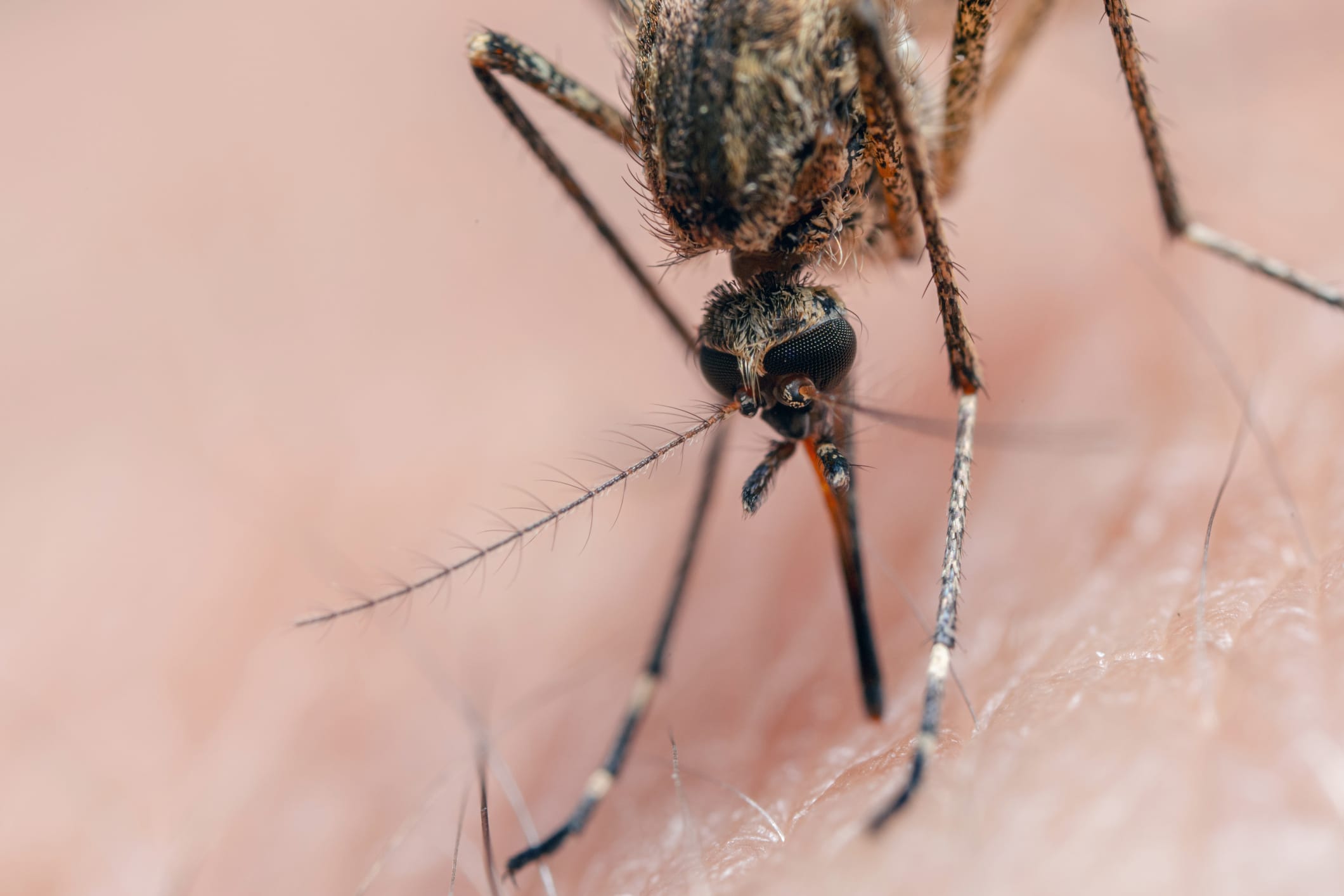
In Queens, New York in August 1999, a patient presented with high fevers that rapidly progressed to confusion and paralysis. Over the following weeks, patients continued to present with similar symptoms that did not respond to antimicrobial therapy. With growing concern for an outbreak, infectious disease specialists alerted the New York Health Department and sent serum and cerebrospinal fluid samples for evaluation. At the same time, local veterinarians and the New York State Department of Environmental Conservation began noting large die-offs of crows across New York City and submitted animal tissue for testing. Analysis of both animal and human samples ultimately led to the identification of West Nile virus (WNV) in the United States for the first time.1 In the years following its emergence in North America, ophthalmologists were among the first to describe a distinct pattern of multifocal chorioretinitis associated with infection, which ultimately lead to improved clinical recognition and diagnostic confirmation and established the eye as a key sentinel organ for WNV infection.2
Infectious outbreaks such as the emergence of WNV in the United States highlight the interconnectedness of humans, animals, and our shared environment and underscore the need for multidisciplinary care to address infectious diseases
The One Health approach — a collaborative effort to optimize health outcomes across humans, animals, and ecosystems — provides a framework for addressing these complex relationships through collaboration across disciplines. While the idea of One Health has been recognized for decades, there is increasing emphasis on operationalizing it in practice, which can be described through 4 key pillars: communication, coordination, collaboration, and capacity building.3 As ophthalmologists, we have a role to play in each of the 4 pillars. The emergence of WNV in North America, with its well-described ocular manifestations, offers a useful example of how ophthalmic observations can contribute to disease recognition, surveillance, and broader public health response.
The 4 Pillars of The One Health Approach
Communication. The pillar of communication focuses on the recognition and dissemination of clinically meaningful information, particularly signals that may not yet be fully understood within the broader medical community. For example, in the years following 1999, WNV emergence, ophthalmologists played a critical role in uncovering a distinct pattern of ocular manifestations ranging from multifocal chorioretinitis, which can be seen in up to 80% of patients with neuroinvasive disease, to less common manifestations such as retinal vasculitis or optic neuropathy.4
Through case reports, case series, and interdisciplinary communication with infectious disease and public health colleagues, ophthalmologists helped define the ocular phenotype of West Nile virus infection. Recognition of pathognomonic findings such as target-like lesions in a radial distribution on fluorescein angiography has prompted targeted diagnostic testing and confirmation of WNV infection in patients with nonspecific systemic presentations.5
Additionally, real-time sharing of unusual or emerging ocular findings through institutional channels, multidisciplinary case discussions, or public health reporting systems contribute to earlier recognition of infectious disease patterns at both the patient and population levels
As ophthalmologists, we have the unique ability not only to serve as diagnosticians, but to discover novel manifestations of known diseases by recognizing ocular patterns in our patients, and ultimately, inform broader clinical understanding, surveillance efforts, and public health response
Coordination.In the context of the “one-health” approach, “coordination” refers to how clinical observations are translated into activation of healthcare and public health processes and systems
During the WNV outbreak in New York, rapid activation of coordinated surveillance efforts was critical in the identification of disease and mitigation of the number of cases. When the initial 2 cases of patients with encephalitis were noted in Queens, notices to hospitals and surrounding counties led to identification of additional cases that resembled the disease pattern. These efforts, combined with veterinary findings of bird die-offs and lab testing, ultimately led to better understanding and ability to track the outbreak in real-time.
Ophthalmologists play a critical role in this process by contributing clinically meaningful data to these systems. Recognition of characteristic findings such as multifocal chorioretinitis can prompt targeted workups that lead to case identification. In this way, when ophthalmic observations are integrated into coordinated systems connecting clinical care with diagnostics and public health action, they become part of the broader surveillance infrastructure that informs outbreak detection and response.
Collaboration. Collaboration emphasizes integration of expertise across disciplines to better understand and respond to infectious diseases. The identification of and response to WNV in the United States relied on close collaborations among veterinarians, physicians, scientists, public health officials, and epidemiologists. For example, a common factor of a love for gardening led to surveillance of homes and areas that the patients frequented, resulting in the identification of mosquitoes as a source of infection.1 This key finding helped to link the potential vector with the large number of local bird deaths and ultimately elucidated the source and transmission dynamics of the outbreak.
Ophthalmologists contribute to this collaborative framework by providing specialized knowledge of ocular manifestations that may refine diagnosis and expand understanding of disease severity. In the North American WNV emergence, recognition of characteristic retinal findings helped distinguish it from other causes of infectious uveitis and supported the identification of neuroinvasive disease
These contributions are especially impactful when integrated with findings from other disciplines, such as vector surveillance data or neurologic assessments, to build a more complete picture of the disease process. Collaboration also occurs at the level of individual patient care, where ophthalmologists work alongside infectious disease specialists and other clinicians to guide diagnosis and management. Within the One Health framework, this interdisciplinary approach ensures that no single perspective operates in isolation and that ophthalmic findings contribute meaningfully to both clinical decision-making and broader public health understanding.
Capacity Building. The pillar of capacity building focuses on the systems, training, and infrastructure to ensure clinicians are prepared to recognize and respond to emerging infectious diseases. As West Nile virus spread after its initial introduction to the United States in 1999, the Centers for Disease Control and Prevention (CDC) Epidemiology and Laboratory Capacity cooperative agreements supported capacity building to create national arboviral surveillance infrastructure to prevent further outbreaks.6 Early in the outbreak, recognition of WNV-associated chorioretinitis was limited, and the diagnostic value of these findings was not yet widely appreciated.
As ophthalmologists characterized the ocular manifestations of WNV and disseminated these findings through the literature and clinical networks over time, awareness increased. This led to improved recognition of characteristic patterns, more timely diagnostic testing, and more consistent incorporation of ophthalmic evaluation into the care of patients with suspected or confirmed infection
One Health: An Opportunity for Continued Medical Education
Ophthalmologists can both benefit from and build on capacity in the field. Training programs and continuing medical education can emphasize recognition of infectious uveitis patterns associated with emerging pathogens, and clinical protocols can incorporate ophthalmic evaluation as part of broader infectious disease workups
Access to diagnostic tools — such as fluorescein angiography — can support more accurate identification and documentation of disease patterns. Just as importantly, establishing clear pathways for communication with infectious disease specialists and public health authorities ensures that ophthalmic findings contribute meaningfully to larger surveillance and response efforts. Ultimately, ensuring that the specialty is fully integrated into the systems that detect, understand, and respond to emerging infectious threats positions ophthalmologists as essential contributors to a more resilient and responsive public health infrastructure.
The Root of Infectious Ocular Diseases
The principles of One Health approaches are highly relevant to ophthalmologists, given that many infectious uveitis and retinitis syndromes originate from pathogens in animal reservoirs or are influenced by environmental or vector-related factors. These connections are increasingly important since climate change, urbanization and ecological disruption are continuing to alter disease patterns, and ophthalmologists will increasingly encounter infectious conditions outside of their traditional geographic ranges.
Ophthalmologists may be the first to identify an atypical uveitis or other ocular finding that does not fit a conventional disease pattern. Early pattern recognition can play an important role in identifying and more broadly understanding infectious etiologies. Through communication of findings, participation in coordinated surveillance efforts, collaboration with multidisciplinary teams, and engagement of capacity-building initiatives, ophthalmologists contribute meaningfully across all four pillars of the One Health framework. As emerging infectious diseases continue to evolve, ophthalmologists’ roles will extend beyond diagnosis and management of ocular complications.
Ophthalmologists may be on the forefront of identifying and responding to the next outbreak and embracing this role will be essential to protecting both vision and public health
This article originally appeared on Ophthalmology Advisor
- Nash D, Mostashari F, Fine A, et al.The outbreak of West Nile virus infection in the New York City area in 1999. N Engl J Med. Jun 14 2001;344(24):1807-14. doi:10.1056/nejm200106143442401
- Chan CK, Limstrom SA, Tarasewicz DG, Lin SG. Ocular features of west nile virus infection in North America: a study of 14 eyes. Ophthalmol. 2006;113(9):1539-46. doi:10.1016/j.ophtha.2006.04.021
- Adisasmito WB, Almuhairi S, Behravesh CB, et al. One Health: a new definition for a sustainable and healthy future. PLoS Pathog. 2022;18(6):e1010537. doi:10.1371/journal.ppat.1010537
- Rousseau A, Haigh O, Ksiaa I, Khairallah M, Labetoulle M. Ocular manifestations of West Nile Virus. Vaccines (Basel). 2020;8(4)doi:10.3390/vaccines8040641
- Winward BK, Gottlieb JL, Chang JS, et al. Ocular findings aid in diagnosis of West Nile Virus. Wmj. 2023;122(3):208-212.
- Hadler JL, Patel D, Bradley K, et al. National capacity for surveillance, prevention, and control of West Nile virus and other arbovirus infections–United States, 2004 and 2012. MMWR Morb Mortal Wkly Rep. Apr 4 2014;63(13):281-4.
