


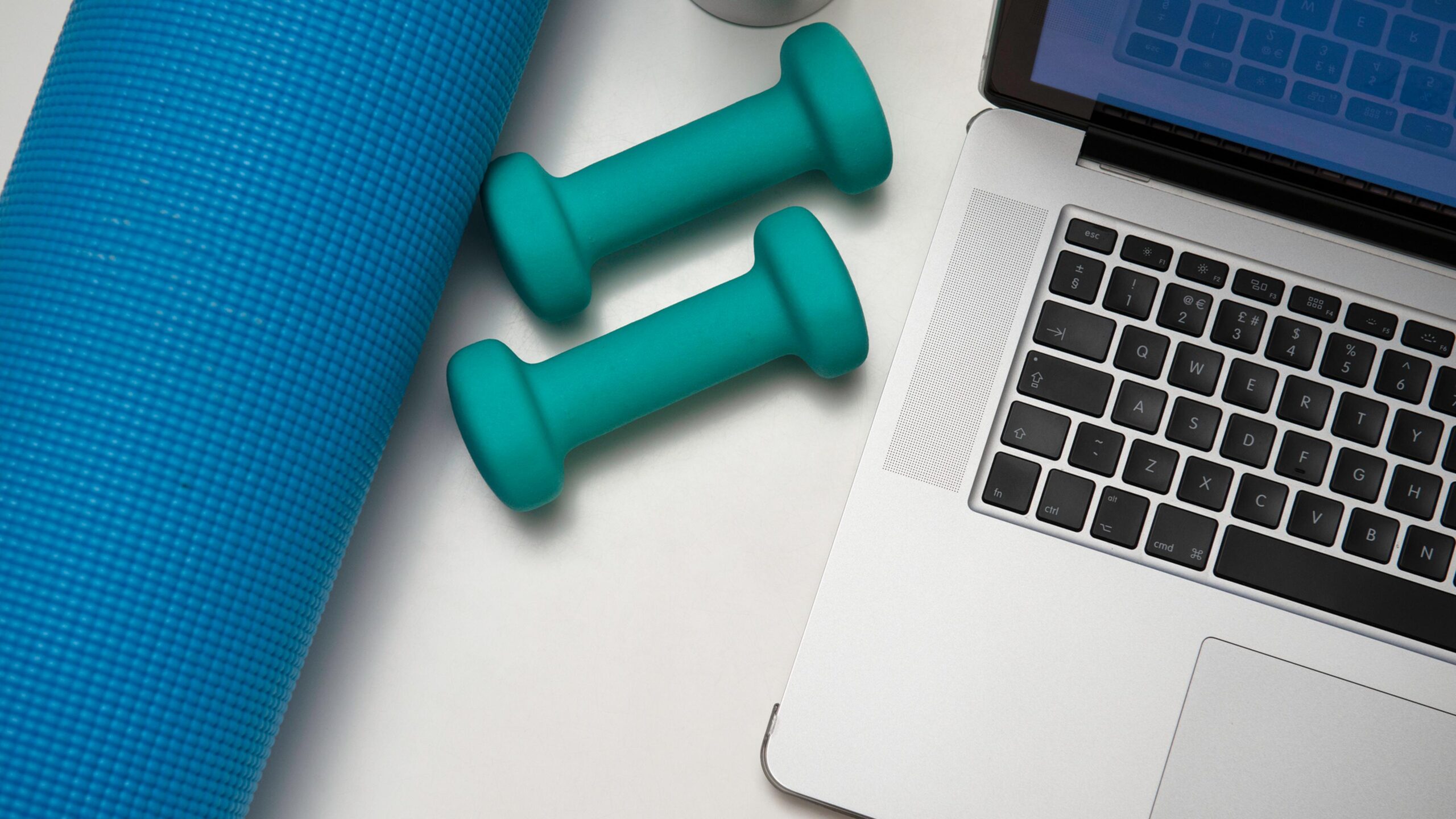
At most desk jobs, you’ll be sitting down for the majority of the day. But remote work creates a particularly sedentary environment. There’s no need to walk from your front door to the car or train station. There are no aisles of cubicles to maneuver on your bathroom break or colleagues to stand around with at the water cooler. “We’re just sitting there in front of the screen by ourselves,” says Mary Jayne Rogers, an exercise physiologist based in Albuquerque, who’s on the certification advisory board of the American Council on Exercise.
This immobility has real downsides. “Prolonged sitting can increase the risk of heart disease and high blood pressure, even if you’re otherwise active,” says Amy Bantham, past president of the Physical Activity Alliance. It also makes our fascia—the connective tissue that supports every structure, from our muscles and bones to our nerves and organs—stiffen up, causing ripple effects throughout the body that can impact our heart, lungs, gut, and even our brain, she says.
While giving yourself some adult recess during the work day might seem indulgent, it can actually make you more productive. Even a little activity can help you focus, improve your mood and energy levels, and relieve stress. “You will feel better almost immediately,” Bantham says.
Fortunately, remote work means there’s no one around to give you side-eye for doing jumping jacks between emails. Here are a few simple ways to move more when you’re working from home.
Create your own commute
During the time you’d otherwise spend commuting, Bantham suggests taking a walk. She runs her own consulting business from home and likes to go for a stroll and call a friend before work. Similarly, Lindsey Bomgren, a personal trainer based in Minneapolis, gets in her steps each morning while using her phone’s talk-to-text app to draft emails and write herself notes. “I can start my day out walking, wrapping my head around my to-do list,” she says.
Then, at the end of the day, Bomgren makes a point to do active errands around the house before her kids get home. “I’ll run up and down the stairs three times just to get laundry in, clean up, set out stuff for dinner,” she says. This gets her moving and helps her transition from work mode to mom mode
Find ways to move while you work
Over the past few years, walking pads have become a popular way to boost your step count while at a computer. Some people, like Divya Balakrishnan, a yoga instructor in New York City, find the slow, rhythmic movement helps them stay focused and less stressed. “When something comes up, I’m a little bit more stable and able to handle it,” she says. Under-desk bikes and mini steppers are other options
Another strategy is to use phone calls to go for a walk outside, pace the room, or simply stand up. “Even just standing extends your hip flexors, engages your glutes, engages your core,” Bomgren says.
If nothing else, Rogers suggests changing your posture throughout the day by shifting forward then back in your chair, or moving how you place your legs underneath you. Even bouncing your feet can increase circulation and move the joints a little. “The more you can keep things flowing, the more energy you’re going to have at the end of the day,” she says
Have an exercise snack
Taking a five-minute walk every hour has been shown to help offset the harms of sitting. Bantham says any quick movement break is worthwhile. “If you have two minutes between meetings, use those two minutes because it all counts,” she says.
That could look like a quick set of jump squats or crunches. It could mean running up and down the stairs as fast as you can. Or, for something even simpler, Rogers recommends standing up and sitting down 10 times.
Advertisement
Even gentle movement can help balance out hours of sitting, but if you’re using these “exercise snacks” in place of traditional workouts, Bomgren recommends making them hard enough to fatigue your muscles or become breathless. “You have to create enough external stress that it actually challenges you,” she says. She suggests aiming for about an eight or nine out of 10 difficulty level. If you push hard enough, research shows that short bursts of high-intensity movement can improve your cardiometabolic health and reduce your risk of several chronic diseases.
Schedule a lunchtime workout
One benefit of working from home is having a shower and a change of clothes handy. If you have the flexibility to do an online workout video or go for a run during your lunch hour, your afternoon might benefit. “It’s like starting all over for the second half of the day so you’ve got less of that 4 p.m. lag where you feel like, ‘I need some coffee,’” Rogers says. Getting active shortly after lunch can also help regulate your blood sugar.
Advertisement
Stack habits
It’s easy to get caught up in emails and video meetings before realizing you haven’t budged in hours. To avoid this, Bomgren recommends pairing movement with things you do regularly during the work day. Maybe that’s getting in 10 push-ups anytime you fetch a cup of coffee, or stretching whenever you switch tasks.
Bantham says some of her clients intentionally schedule meetings to end five minutes before the top of the hour. That’s a natural chance to get up for a bathroom break and do some arm circles or calf raises—whatever your body is craving—before settling back down for the next call
Don’t feel like you need to sweat
Rogers emphasizes that moving your body during the work day doesn’t need to be “exercise.” Even simple movements can encourage healthy blood flow and keep fascia from stiffening up. For instance, Balakrishnan suggests counteracting our hunched-over-the-keyboard posture with stretches that expand the chest (by reaching your arms overhead and back so your shoulders roll open), twist the spine (by grabbing one knee with the opposite hand), and open the hips (by laying one ankle across the opposite knee and reaching the chest forward). “You can do all of these from your chair, which makes it very hard to find an excuse to not do it,” she says. Although this won’t replace a workout, it can help break up sedentary hours.
Advertisement
The key is to find movements you enjoy enough to do consistently. “If you absolutely hate squats, don’t choose squats to be the thing that you do between meetings,” Bantham says. Instead, maybe try a mini dance party to your favorite song, or release tension with a few deep breaths and neck rolls. It all helps. “Any activity is better than no activity,” Bantham says.
