


The National Tribune
The National Tribune
The National Tribune
- Health
- 29 Jul 2026 1:48 am AESTDate Time
As we mark International Self-Care Day on 24 July, it is a timely moment to highlight how WHO is championing self-care approaches for HIV and other diseases. This topic will be in the spotlight at the upcoming 26th International AIDS Conference (AIDS 2026) in Rio de Janeiro from 26–31 July. Self-care is the ability of individuals, families and communities to promote health, prevent disease, maintain health and to cope with illness with or without the support of a health or care worker. To support countries in their efforts to deliver safe and accessible people-centred services that are needed to reach communities most at risk of HIV and other diseases.
“Self-care options are a major step forward in making healthcare more accessible, personal and integrated into people’s daily lives,” said Dr Tereza Kasaeva, Director of WHO’s Department for HIV, TB, Hepatitis & STIs. “WHO urges countries and partners to expand access to these evidence-based self-care tools. Giving people agency over their health is one of our most effective strategies to close testing gaps, stop transmission and ensure everyone can achieve a better quality of life.”
WHO supports self-care for HIV, TB, viral hepatitis, STIs, SRHR and more
WHO guides the global research agenda, develops policy, norms and standards, and supports countries in their efforts to implement evidence-based self-care interventions and access channels across diseases, such as:
- Condom use: Using a male or female condom correctly and consistently is among the most effective ways to prevent STIs – including HIV – as well as unintended pregnancy.
- Self-sampling: WHO recommends or supports self-sampling to screen for chlamydia, gonorrhoea and human papillomavirus, and to diagnose TB among people who cannot produce sputum. Self-sampling helps to reduce barriers to care by enabling more private or comfortable collection of samples needed to detect infection or disease.
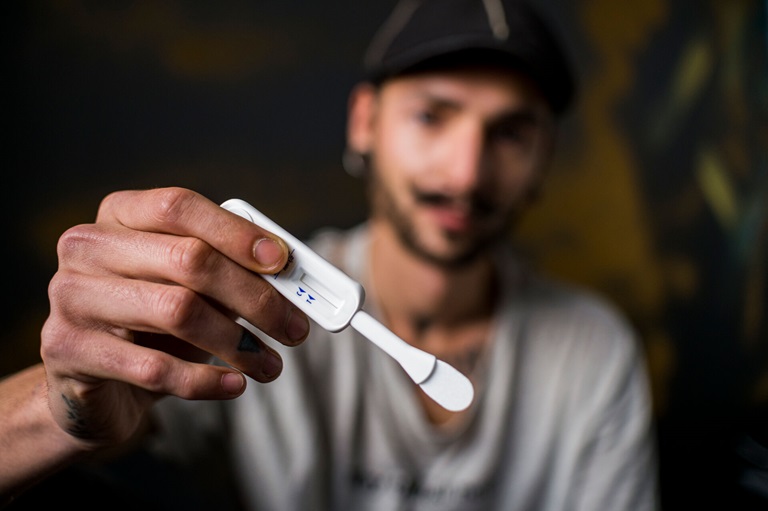
- Self-testing: WHO recommends self-testing for HIV, hepatitis C and syphilis. Rapid, affordable self-tests make it easier for people to test when and where they want, and learning one’s status is critical to accessing prevention and care.
- Locally accessible prevention and treatment: A crucial component of effective self-care is ensuring tools are physically and safely accessible where people live and shop. Convenient, rapid and affordable self-care makes it easier for people living with HIV, or with HIV risk, to engage in services. Through differentiated service models for HIV prevention and treatment, such as multi-month dispensing, as well as pharmacy- and community-level services, needed therapies can be more readily accessed.
- Integrated service delivery: By providing self-tests and delivering prevention, treatment and care for one or more diseases close to where people live, individuals are able to access lower-barrier health services for HIV, syphilis, hepatitis and TB in one place. This is especially important for vulnerable populations, key populations and their partners, and women and their children who can be at greater risk for HIV, hepatitis, other STIs or TB.
- AI and digital health solutions: Digital platforms, AI-driven health assistants and mobile apps empower people to manage their health from home any time, offering anonymous access to evidence-based information, medication and appointment reminders, and supportive messaging across HIV, TB, STIs and viral hepatitis.
“Evidence‑based self‑care options provide a powerful path toward integrated, people‑centred health care,” said Pascale Allotey, Director, WHO Department of Sexual, Reproductive, Maternal, Child, Adolescent Health and Ageing and HRP, the UN’s Special Programme in Human Reproduction. “By enabling individuals to manage elements of their SRHR, HIV, tuberculosis, hepatitis, STIs, and mental well‑being, self‑care supports truly holistic services. Equipping people with accessible tools for diagnostics, prevention, and mental health strengthens countries’ ability to reach those most at risk and uphold their health needs and rights.”
In addition to self-care interventions for communicable diseases, complementary self-care practices help people stay healthy, maintain a better quality of life and live longer. While these practices do not remove the financial, social or personal challenges people face, they do offer tools to support well-being alongside them. Complementary practices include:
- Nourishing body and mind: Good nutrition supports daily function and helps prevent TB and other opportunistic infections among people living with HIV or diabetes, whose immune systems may be compromised.
- Proactive mental health and stress management: Many people living with or at risk of HIV, viral hepatitis, TB and STIs experience anxiety and depression. Connecting with loved ones, joining local or online peer support groups, prioritizing sleep and making time for enjoyable activities all support emotional balance.
- Staying physically active: Any daily movement counts – from the gym, yoga or swimming to walking to the bus or doing housework – strengthening bones and muscles, supporting the immune system and boosting mental health.
- Maintaining community and clinical connections: Alongside medication routines, keeping up regular touchpoints – in person, through communities and health facilities, or via telemedicine – is crucial.
- Reducing unhealthy habits: Cutting down on tobacco and alcohol reduces long-term liver and cardiovascular risks, which are critical to the prevention and management of HIV, TB, viral hepatitis and STIs.
“Self-care is not an optional add-on to health systems; it is a core strategy for equity. Every tool that brings health care closer to people strengthens the ability to expand access to sexual and reproductive health services and to end HIV, TB, viral hepatitis and STIs,” said Dr Yogan Pillay, Director of TB and HIV Delivery Programmes, Gates Foundation
Overview of WHO self-care sessions at AIDS 2026
As part of its commitment to advancing self-care, WHO will convene three dedicated sessions during the 26th International AIDS Conference (AIDS 2026) in Rio de Janeiro (26–31 July):
- Satellite session: Shared pipeline, shared goal: Innovations in long-acting antiretrovirals for PrEP, PEP and treatment on 27 July from 11:30–12:30 (Rm 103)
- Satellite session: The future of HIV service delivery is…simplification, self-care, integration, and AI in practice on 29 July from 12:00–13:00 (Rm 201)
- Workshop: Advancing HIV Self-Care: Evidence, Gaps, and Future Role in Service Delivery (WHO, Children’s Investment Fund Foundation, Gates Foundation; invitation only).
Through these sessions, WHO and partners will showcase the latest evidence, innovations and country experiences demonstrating how self-care can accelerate progress towards universal health coverage and strengthen integrated responses to HIV, TB, viral hepatitis, STIs and mental health
/Public Release. View in full here.
