


For millions of women living with chronic pelvic pain (CPP), finding answers can take far too long
Studies have shown the condition affects nearly one in four women worldwide and is linked to dozens of potential disorders involving multiple organ systems. Yet many healthcare providers receive only limited training in diagnosing the repeated testing and ineffective treatments before receiving the right diagnosis
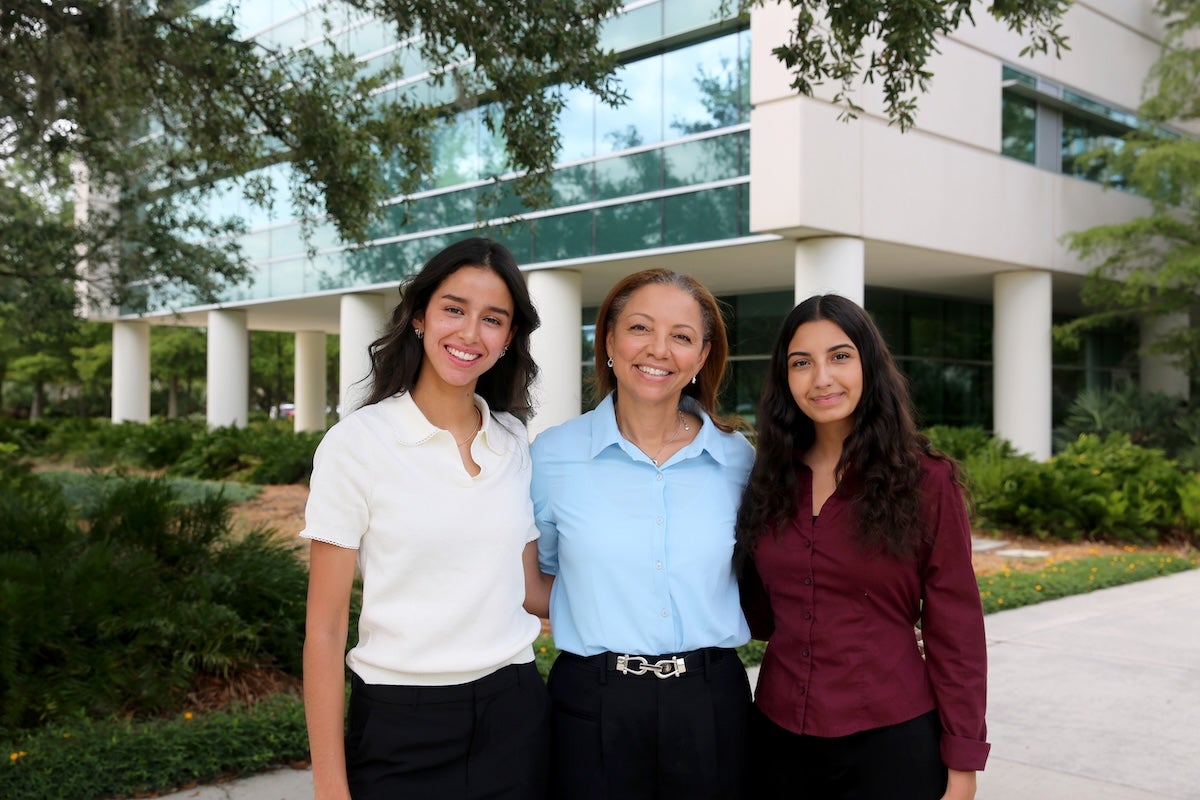
A yearlong collaboration between a UCF physician-scientist and two biomedical sciences undergraduate students aims to create a better environment for doctors and patients to reach an understanding together. Biomedical sciences students Sarah Gabriela Nieto Chavarro and second-year Juliana Dimetry interned with Georgine Lamvu, a UCF College of Medicine volunteer professor of obstetrics and gynecology, to transform years of international research into a practical tool to help clinicians evaluate patients more quickly and confidently.
The team is developing an AI-assisted clinical questionnaire application that guides physicians through a patient’s symptoms and identifies which organ systems and conditions should be examined. Rather than replacing a physician’s judgment, the application compiles patient histories quickly to help guide physicians toward making a clearer diagnosis
From International Research to a Practical Tool
Despite the prevalence of CPP, many healthcare providers lack specialized training in diagnosing the underlying condition because symptoms often overlap with gastrointestinal, urinary, musculoskeletal and reproductive disorders
“We’re hoping that this can become easy to use and can take a detailed medical history that could take an hour to get through down to just 5 to 10 minutes.” — Georgine Lamvu, volunteer professor and Orlando VA practitioner
“We’re hoping that this can become easy to use and can take a detailed medical history that could take an hour to get through down to just 5 to 10 minutes,” says Lamvu, who practices at the U.S. Department of Veterans Affairs Medical Center in Orlando and directs its gynecological surgery fellowship program and center. “That allows physicians to have a more efficient evaluation and spend more time with the patient.”
The center is a pioneering program designed to address the growing demand for specialized gynecologic care among women veterans. As the number of women veterans using VA healthcare services is expected to increase significantly, this fellowship and center aims to train highly skilled gynecologists to meet their healthcare needs within the VA system and beyond
As part of that initiative, this project builds upon nearly five years of work led by Lamvu alongside an international coalition of physicians, researchers and patient advocacy groups
Their research culminated in an international consensus called R U MOVING SOMe, an acronym that categorizes the broad range of symptoms associated with chronic pelvic pain and is the basis of the AI-tool Lamvu and her team developed
Finding a Definitive Diagnosis
Lamvu says the team translated the clinical research into the logic behind a chatbot-style application that asks fewer than 20 targeted questions. Physicians enter a patient’s symptoms and history into the program, which then suggests the organ systems and conditions most likely responsible for the pain, helping clinicians focus their evaluation
The team plans to expand the application beyond patient questionnaires by incorporating physical examination findings into the same scoring system. Ultimately, the researchers say they hope it can be used in any practice that serves women, but it may be years away from being realized
“Physicians just need a way of processing all the information that comes from the patient to narrow it down to a differential diagnosis,” Lamvu says. “Right now, it’s all too common to see healthcare workers panic a little when they hear a patient has chronic pelvic pain because it’s considered a complex condition.”
An Inspiring Internship
The students sifted through years of research and developed the logic for the AI in less than a year. Given the complexity of CPP and the vast amount of data, Lamvu says she is impressed by Dimetry and Nieto Chavarro
“They learned valuable lessons, like if you see a problem that seems unsolvable to everyone else and that directly and negatively impacts patients, you have the power to do something about it,” she says. “These are experiences not every student gets to have, especially this early on in their life.”
Dimetry says she challenge intrigued her, and that she was drawn to the project for the opportunity to be at the forefront of medicine and emerging technology
“I think that adapting the field of medicine to AI in ways such as this project is necessary to keep medicine growing and advancing,” she says. “I also saw how impactful this project could be if done successfully, and I wanted to be a part of that and make a difference,”
For Nieto Chavarro, who graduates Summer 2026, the experience showed her how to use technology to help deliver compassionate patient care
“On a personal level, this experience has taught me to keep going and to never give up,” Nieto Chavarro says. “All of this has ultimately reinforced how essential it is to genuinely listen to patients so they feel safe and understood”
Pegasus Magazine

Pegasus Magazine Featured Story
Robots in the Real WorldFrom smart-assistant robots that can feed people cereal to Mars-ready rovers built by UCF’s robotics club, the university is developing the minds and machines that will shape our future.

Pegasus Magazine Featured Story
Community CareUCF-HCA Florida Healthcare residency programs are playing a
crucial role in bringing more in-demand physicians to the state.

Pegasus Magazine Featured Story
Stellar HealthUCF researchers are exploring how space travel impacts the human body.

Pegasus Magazine Featured Story
The Rise of SpaceUFounded to help fuel talent for the nearby space industry, UCF continues to build its reputation as SpaceU. Here’s a look at the early days of UCF’s space ties and journey to new frontiers.
