


Aug 02, 2026 — by
Cara Chapman (Champlain Valley Reporter)
& New York Focus
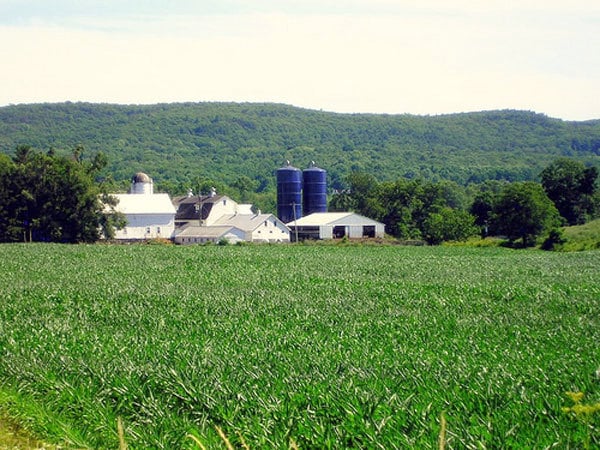
Photo: Henry M. Diaz, Creative Commons, some rights reserved
Research has linked a popular herbicide used on farms throughout the North Country and New York state to a degenerative brain disease
Paraquat is used to kill broadleaf weeds and grasses. It’s most commonly sprayed on corn, soybeans, cotton, and grapes.
It’s very difficult to link a specific person’s illness to a specific environmental cause. But New York Focus climate reporter Amudalat Ajasa said studies dating back to the late 1990s link paraquat exposure to Parkinson’s disease
“One study that we pointed to found that mice injected with paraquat lost dopamine neurons, which is kind of a hallmark of Parkinson’s disease,” she said
An expert Ajasa interviewed for a recent story told her she believes the research connecting the two is “one of the strongest databases out there linking a chemical to its impact on human health.”
More than 70 countries have outlawed the use of paraquat, with some bans dating back to the 1980s. Meanwhile, in the U.S., federal data show that its use across the country doubled to at least 11 million pounds per year between 2014 and 2018
Fourteen states, including New York, have introduced bills to restrict or ban the herbicide. Ajasa told Champlain Valley reporter Cara Chapman that her reporting on the issue brought her to the Washington County town of Hebron, outside of Glens Falls. Their conversation has been lightly edited for clarity
Cara ChapmanResidents of a North Country farm town want herbicide linked to brain disease banned
AMUDALAT AJASA: I decided to go to Hebron because there’s a resident named Sarah Teale who spoke out as an advocate for a New York bill that looked to potentially ban the use of paraquat in the state. As she spoke, she talked about her community, which kind of became, in some ways, a hotspot for Parkinson’s disease. Studies dating back to the late 1990s had linked paraquat to Parkinson’s disease. Teale’s husband (Gordon Chaplin) was actually diagnosed with Parkinson’s disease after dealing with symptoms that they couldn’t explain for a decade. Teale knocked on doors in their community and found that there were other residents near her home that had Parkinson’s disease. She also spoke to a tenant farmer who had used their land and found that this person had used paraquat there for years. It started to make her wonder whether or not she was seeing the real-life ramifications of paraquat use.
CARA CHAPMAN: Something that really struck me about your story was what these Hebron residents have lost due to Parkinson’s disease. Can you talk a bit about what they told you?
AJASA:I spoke with several residents who were diagnosed with Parkinson’s disease in the community and they spoke about how the diagnosis really changed their lives. One of my characters, Sally, talked about how she was diagnosed literally the day that she got engaged. She thought she was starting this new life and later that evening she found out that she had Parkinson’s disease. She had to subsequently retire
These people say Parkinson’s has shaped and impacted every facet of their lives. Sally talked about how she used to be a singer and how she’s basically not really able to sing anymore. When you hear her speak, her voice is really just above a whisper. And Gordon talked about how he used to run up to the top of this really gorgeous farm and how that’s not something he can physically do anymore. There’s kind of this sense, for them, of feeling like maybe their condition could be attributed to something outside of their control.
CHAPMAN: Right—the paraquat exposure, potentially. One of the world’s largest producers of paraquat is Syngenta, this Swiss agricultural technology company. What have they said publicly about the research linking paraquat and Parkinson’s disease and how has that stacked up with what they’ve said privately?
AJASA: Syngenta is the largest manufacturer and producer of paraquat, although they have decided to stop selling paraquat in the United States. And basically, they have kind of stood by the product’s safety. They have pointed to research of their own that suggests that paraquat does not cause the same neuron damage associated with Parkinson’s disease that other studies have found. They’ve also been very outspoken and adamant that, when used the way that the EPA (Environmental Protection Agency) has outlined, paraquat is safe for use.
But it’s been reported by the Guardian and the New Lede that, privately, the company was aware of the growing narrative that Parkinson’s could be linked to paraquat exposure and really actively worked to cut through that noise through a number of strategic measures to push their own narrative that there wasn’t a causal relationship between paraquat use and Parkinson’s disease
CHAPMAN: Paraquat has been banned in dozens of countries. In the U.S., some states introduced bills to ban it this year, but only Vermont passed theirs. What happened to the bill that you mentioned earlier in New York that aimed to ban paraquat use?
AJASA: A number of bills this year did not get to see the light of day due to the delayed stayed budget negotiations and the delayed release of the budget. The paraquat bill was one of them. Despite making it to the floor in its first year, it did not have enough time to be voted on. The assemblymember who brought that bill to the floor this year has said she’s committed to making sure that it gets to the floor again and voted on next year. The fact that it got to the floor this year in its first year being introduced seems to mean that there’s some support behind it.
CHAPMAN: And is there any opposition to the bill?
AJASA: The bill has faced a lot of opposition from agricultural groups who say that, when used the way that the EPA has restricted its use, that it’s safe for farmers. They don’t want to not be able to use this crop protection tool
NCPR provides this essential service
You provide your essential support
You put the “public” in this public service. Donations from you and your neighbors are a big part of what makes our quality journalism possible. Please make a donation now to support NCPR’s continuing efforts to be everything you count on us to be.Donate Now
CHAPMAN: Why was it important for you to do this story?
AJASA: I think it was important to do this story because, while not everybody lives in rural or farming towns where herbicides or pesticides are used, it doesn’t mean that those voices aren’t important and that doesn’t mean that those stories of impact shouldn’t be told. Paraquat is something that I had reported on in the past and when I saw that New York was introducing a bill to potentially ban its use, I wanted to know more about those who were impacted here in the state. It turns out that there are a number of people who believe they’re impacted by paraquat use. It was important to show what that could continue to mean for, not only them, but future generations of people who could continuously be exposed to the herbicide.
Click here to read Amudalat Ajasa’s full story on the New York Focus website
