


Canadian forces return to Esquimalt after ‘world’s largest maritime exercise’
Published 12:00 pm Sunday, August 2, 2026
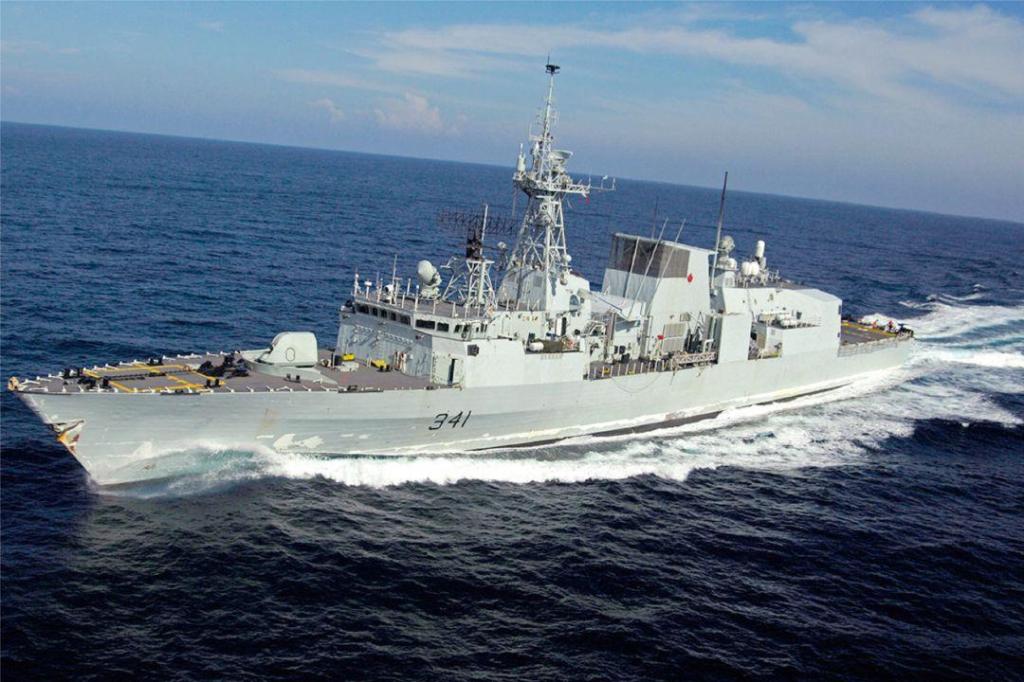
The Halifax Class frigate HMCS Ottawa was part of this year’s RIMPAC training exercise.
(Photo via canada.ca)
More than 800 members of the Canadian Armed Forces have wrapped up their participation in the Rim of the Pacific (RIMPAC) 2026 exercise, the world’s largest multinational maritime training exercise
The exercise ran from June 24 to July 31 in and around the Hawaiian Islands, bringing together 30 nations, 30 surface ships, five submarines, 15 national land forces, more than 190 aircraft and 30,000 personnel
Canada deployed HMCS Regina, HMCS Ottawa, HMCS Corner Brook and MV Asterix, along with Royal Canadian Air Force aircraft and helicopter detachments. The Canadian Armed Forces said the exercise strengthened interoperability with allies and partners across the Indo-Pacific
During the exercise, HMCS Ottawa fired two Mark 46 torpedoes to evaluate upgraded anti-submarine warfare capabilities. A Royal Canadian Navy-led team aboard the ship also commanded a multinational task group responsible for protecting the U.S. aircraft carrier USS Theodore Roosevelt from surface and underwater threats
Canadian clearance divers, port inspection divers and a Fleet Cyber Protection Team also participated, with the military conducting its second stand-alone defensive cyber operation as part of RIMPAC
The Royal Canadian Air Force contributed a CP-140 Aurora long-range patrol aircraft and two CH-148 Cyclone helicopter detachments, supporting maritime surveillance, anti-submarine warfare and multinational operations
Canadian Forces Health Services personnel led RIMPAC’s first multinational maritime tactical combat casualty care course for non-medical participants. Canadian medical teams also carried out real-world casualty evacuations and surgical procedures aboard USS Essex, marking another first for the exercise
HMCS Corner Brook took part in a live-fire sinking exercise involving the decommissioned USS Mobile Bay. The submarine fired an MK 48 heavyweight torpedo during the multinational operation, which included forces from Australia, Japan, Spain and the United States
Additional Canadian personnel, including chaplains, logisticians and public affairs officers, supported the exercise from shore-based positions. Canada also held several leadership roles within the multinational command structure
RIMPAC, first held in 1971, is in its 30th iteration. Canada is one of the exercise’s three founding nations and has participated in every edition since its inception
