


Craig Chandler | University Communication and Marketing
Craig Chandler | University Communication and Marketing
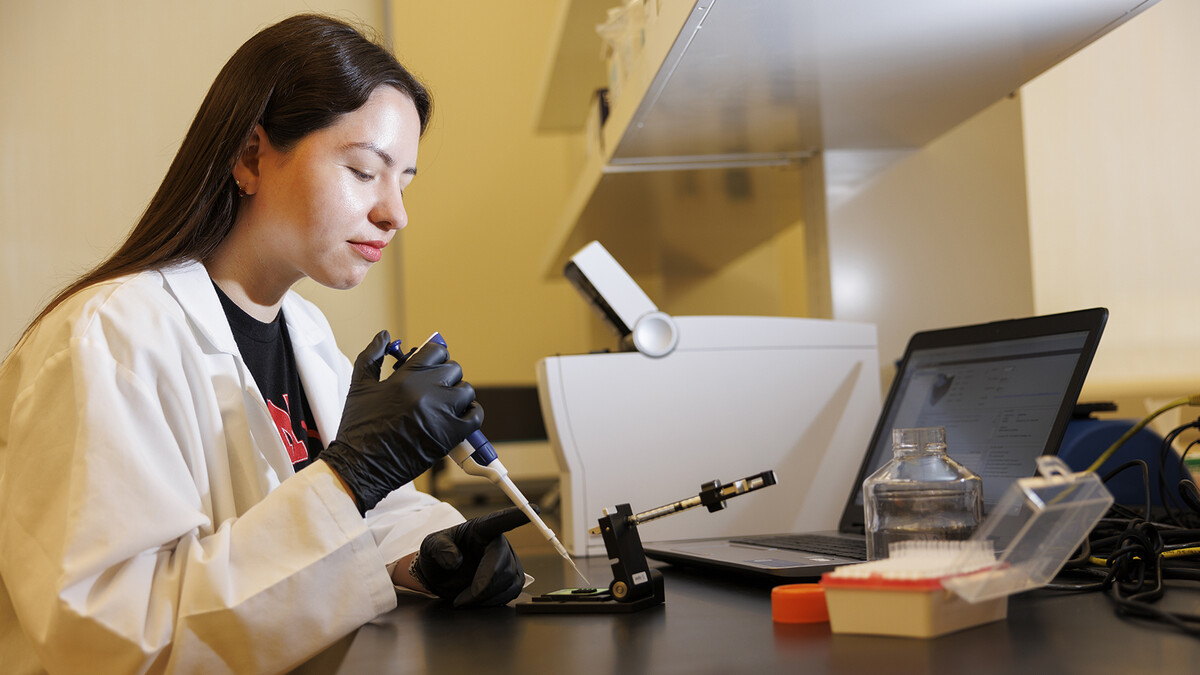
A graduate student works in the Flow Cytometry Lab at the Morrison Center’s Nebraska Center for Bio<a href="https://healthylife7.com/apply-now-12-million-for-digital-technology-research-in-africa/” title=”Apply Now: $12 Million for Digital Technology Research in Africa”>technology. Researchers use advanced tools to study biological systems and address challenges in human and animal health.
Gladys Henry Dick did not begin her career studying scarlet fever from a distance
She lived it
In 1911, while working as a physician at Children’s Memorial Hospital in Chicago, Dick contracted the disease that would become the focus of her scientific career

Kristen Labadie | University Communication and Marketing
At the time, scarlet fever was among the most feared illnesses affecting children in America. Before antibiotics, outbreaks swept through schools and communities, and physicians had few tools to predict which patients would become seriously ill or how the disease could be prevented
Dick, a 1900 graduate of the University of Nebraska, turned that experience into research
Working with her husband, George Dick, she helped advance understanding of scarlet fever and developed methods that allowed physicians to identify people susceptible to the disease. Their work contributed to progress in prevention and immunization efforts, earning the couple recognition as pioneers in infectious disease research and a Nobel Prize nomination
A Nebraska-trained researcher had helped address a challenge facing families across America
More than a century later, University of Nebraska researchers continue that tradition
The path from Dick’s laboratory to today’s efforts to prepare for future pandemics spans generations of scientific discovery. Along the way, Nebraska researchers helped establish the university as a center for virology excellence. Myron Brakke developed techniques that transformed how scientists purified viruses, providing tools used by researchers around the world. James Van Etten expanded understanding of giant viruses, reshaping ideas about viral diversity. Charles Wood helped establish the Nebraska Center for Virology, creating the collaborative foundation that supports infectious disease research today.
As America marks 250 years of innovation and discovery, Nebraska’s research story reflects a broader Cornhusker tradition: solving problems that affect communities far beyond where the work begins
Today, Nebraska researchers are studying viruses, developing vaccines and building knowledge that can help the world prepare for future health threats.
Jordan Opp | University Communication and Marketing
Getting ahead of the next pandemic
For Eric Weaver, preparing for the next pandemic begins long before the next threat appears
“We need to do really comprehensive research now, so that in a future pandemic, we have a head start,” Weaver said
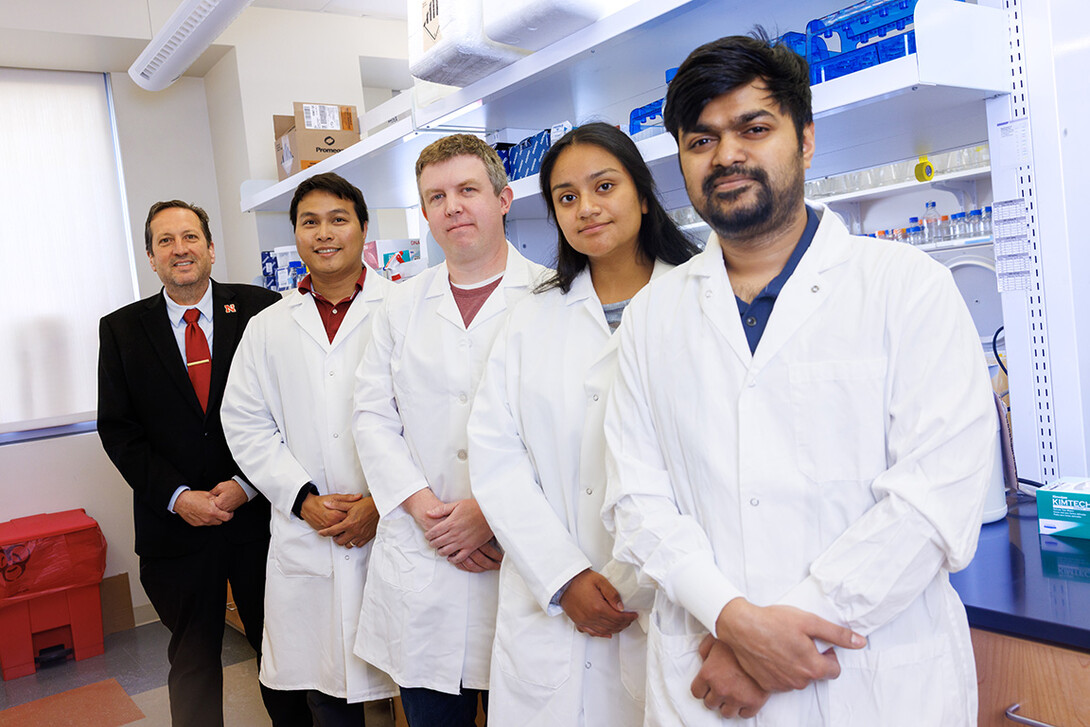
A University of Nebraska–Lincoln virologist and director of the Nebraska Center for Virology, Weaver studies influenza and vaccine strategies designed to provide broader protection against the virus
Influenza remains one of the world’s most persistent infectious disease challenges because the virus is constantly changing. Each year, scientists predict which strains are most likely to circulate and develop vaccines based on those forecasts
Weaver’s research is designed to move beyond that annual cycle
Rather than focusing only on the strains circulating today, his team examines influenza’s genetic history to identify parts of the virus that remain relatively stable across multiple strains. Those findings have led to a vaccine strategy designed to provide broader protection against influenza viruses affecting humans, birds and swine
A vaccine that protects against many influenza strains could strengthen preparedness for future outbreaks and reduce reliance on annual reformulation. While researchers continue to evaluate those approaches, the goal reflects a broader shift in infectious disease science: preparing for tomorrow’s threats instead of reacting only after they emerge
The work illustrates how infectious disease research has evolved since Dick’s era. Scientists can now analyze viral genomes, track how pathogens evolve and use that information to design new approaches to prevention. While the technology has changed dramatically, the mission remains remarkably similar: understanding disease well enough to prevent it before it spreads
For Weaver, that means preparing before the need becomes urgent
“The main message that I want people to take away is: Let’s not forget,” Weaver said. “Let’s not brush this aside once we get through it.”
Russell Shaffer | IANR Communications
A Nebraska approach to global health
Weaver’s work is part of a broader effort at Nebraska to understand viruses across humans, animals and the environment
Researchers at the Nebraska Center for Virology study viruses affecting people, livestock and plants, recognizing that disease does not exist in isolation. Viruses that emerge in animals can affect human health, while diseases affecting crops can influence food systems and economies. Discoveries made in Nebraska often contribute to research and public health efforts far beyond the state
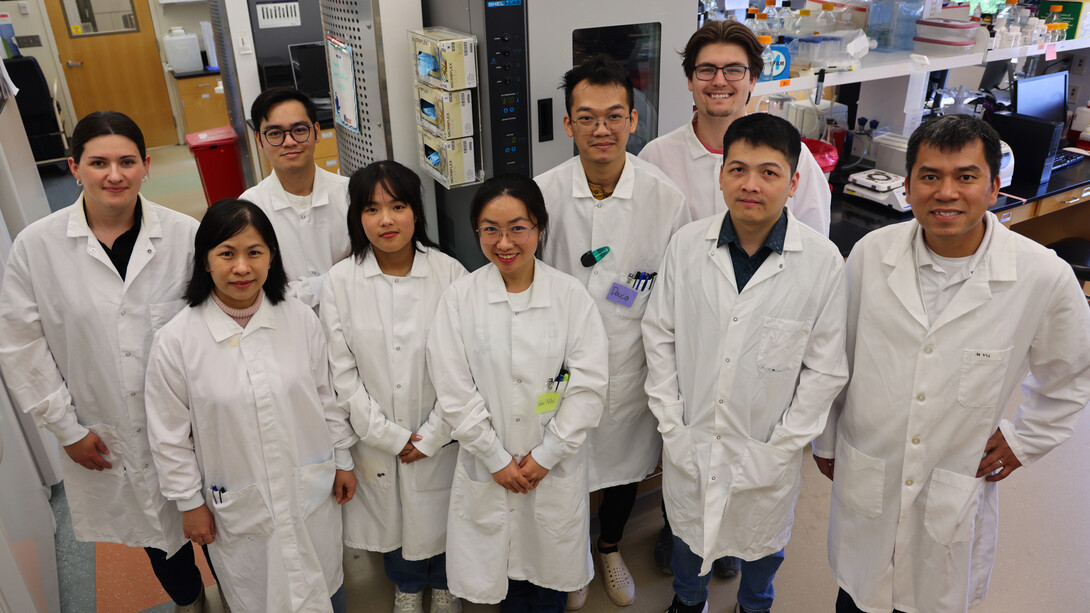
That interconnected approach is reflected in the work of Hiep Vu
Growing up on a swine farm in Vietnam, Vu saw how vaccines protected animals and the people whose livelihoods depended on them
“It amazed me at that time how vaccines work,” Vu said
Today, Vu studies swine influenza, a field with particular importance in Nebraska, where livestock production plays a significant role in the state’s economy
His research extends beyond animal agriculture
Influenza viruses can move among birds, pigs and humans, creating opportunities for viruses to evolve. Understanding those changes in animals helps researchers identify potential risks before they become broader public health concerns
Nebraska’s agricultural strengths make that work especially relevant. Research that helps protect livestock can also improve scientists’ understanding of viruses capable of crossing between animals and people, demonstrating how advances in animal health can strengthen public health as well
Craig Chandler | University Communication and Marketing
Research with reach beyond Nebraska
The distance between Gladys Dick’s laboratory and today’s research facilities spans more than a century of scientific progress
Dick worked before scientists could sequence genomes, analyze viral evolution in real time or design vaccines using advanced molecular technologies
What has remained consistent is the role of research in addressing problems that extend beyond a laboratory, institution or state
As the United States marks its 250th anniversary, Nebraska’s history of infectious disease research reflects a broader Cornhusker tradition of scientific discovery serving the public good. Research that begins with a question in a campus laboratory in Lincoln can eventually influence physicians, farmers, communities and public health efforts far beyond where the work began
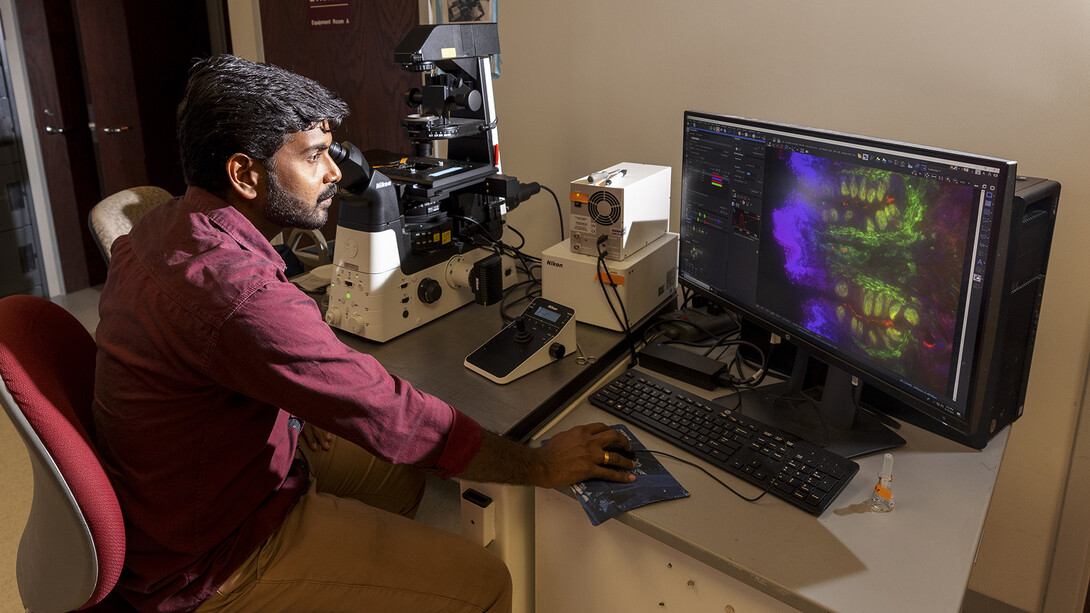
Today, Nebraska researchers continue studying viruses, developing vaccine strategies and building knowledge that can help communities prepare for future disease threats. Their work carries forward a tradition of discovery built over generations — one that began with scientists like Gladys Dick and continues to reach communities around the world
Share
Tags
- American 250
- research
