



1 Drugs May Have a Hidden Effect on Your Eyes, Study Finds
Health05 August 2026ByPeter Dockrill
Add ScienceAlert on Google
(Maria Korneeva/Moment/Getty Images)
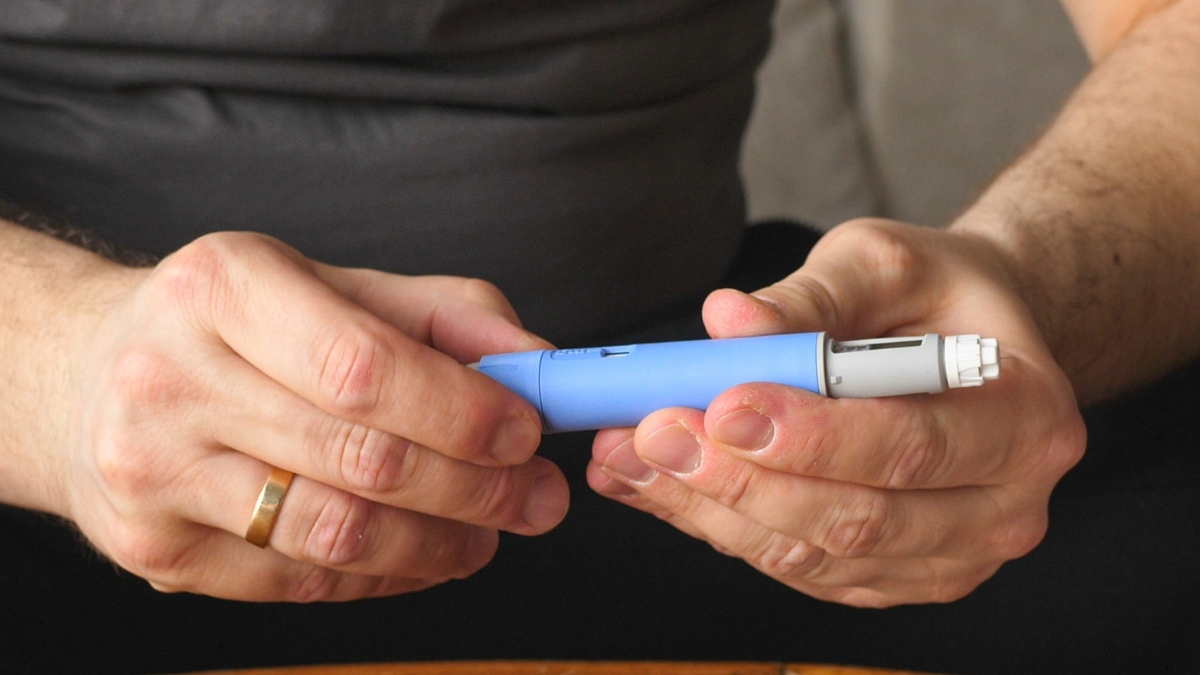
GLP-1 drugs such as Ozempic have transformed healthcare in recent years, dramatically altering how we treat conditions like type 2 diabetes and obesity
But while the medications are primarily used to help lower blood sugar and reduce appetite, scientists keep finding GLP-1 effects appear to extend much further, affecting our health in ways we never expected
Now, a new study has uncovered another unintended effect, and it shows we’re still only scratching the surface of fully understanding how GLP-1 receptor agonists impact the body
In a paper published in Diabetes, Obesity and Metabolism, researchers found that GLP-1 drugs are linked with a lower risk of age‐related macular degeneration (AMD), a common eye disease that is the leading cause of irreversible vision loss in older adults
In the study, a team led by clinical pharmacology researcher Cheng-Hsien Hung from Chung Shan Medical University in Taiwan analyzed patient data from more than 157,000 matched patients
All the patients were aged 60 or above, and all had obesity, but none had diabetes. The cohort was split into two groups, each numbering nearly 79,000 individuals
One group consisted of people who had started using GLP-1 drugs to manage their weight (either liraglutide, semaglutide, or tirzepatide), while individuals who used other kinds of non-GLP-1 medicines for weight-loss treatment made up the second group
Over a few years of follow-up, the patients who used GLP-1 drugs showed a significantly lower incidence of AMD when compared to the group who used other kinds of weight-loss medicines
Overall, GLP-1 use was associated with an estimated 18 percent lower risk of developing AMD in the follow-up window, which increased to a 30 percent lower risk in cases where the kind of AMD was unspecified in the data
No association was evident for the ‘wet’ form (exudative) AMD. There was a trend toward reduced risk of ‘dry’ AMD (aka nonexudative AMD, the most common form of the disease) from GLP-1use, but this wasn’t statistically significant
Previous research had uncovered evidence of a similar protective effect from GLP-1 drugs against AMD, with many studies involving people with type 2 diabetes – the disease GLP-1 drugs were first used to treat
The researchers behind this study wanted to focus specifically on patients without type 2 diabetes to eliminate glycemic and diabetic factors that might alter the results
As for why exactly GLP-1 drugs might protect older adults from vision loss, we can’t yet be sure
The researchers say GLP-1s could offer a neuroprotective effect by reducing inflammation in the retina, suppressing an inflammasome called NLRP3

But there’s also the possibility that people with obesity who take GLP-1 drugs achieve greater weight loss than those who use other kinds of weight-loss drugs, and that in itself could potentially contribute to the risk reductions demonstrated here
“Weight loss per se reduces systemic inflammation and oxidative stress, which may independently reduce AMD risk,” the researchers explain in their study
“If the effect is primarily weight‐loss mediated, the therapeutic implication shifts from ‘GLP‐1RAs are retinally neuroprotective’ to ‘greater weight loss by any means may protect against AMD’, an important distinction requiring prospective mechanistic studies.”
If that’s true, it echoes a study from 10 years ago – before semaglutide was introduced to the market – which found AMD risk increased by 2 percent for each 1 kg/m2 increase in body mass index (BMI) in overweight and obese people
Either way, as the team explains, we’ll need more research to identify what’s really going on here
The median follow-up period for the study was only 1 year among GLP-1 users and 2.5 years in the comparison group
In other words, these were new users who were tracked for a fairly short time, meaning the observed effects may not persist
“Whether the observed benefit reflects direct GLP‐1RA retinal neuroprotection, greater weight‐loss magnitude or both cannot be determined from the current observational data,” the study authors conclude
“Further mechanistic research, prospective studies with longitudinal weight and ophthalmologic outcome data, individual‐level analyses accounting for unmeasured confounding and investigation of younger cohorts (e.g., ≥ 50 years) are needed to validate and characterize the clinical implications of these findings.”
The findings are reported in Diabetes, Obesity and Metabolism
This article was fact-checked by Clare Watson and edited by Clare Watson. While we pride ourselves on our process, we are only human. If you spot a mistake, please let us know
