


How many times do you ask yourself, What should I eat? I ask this question whenever I walk into a supermarket, which typically has about 40,000 food products. But consider this: We never evolved to answer that. Our ancestors had to know how to gather, hunt, fish, grow, and process their food, but they never evolved to choose their food. Now, for the first time in millions of years, billions choose what to eat amid abundant food options, many of them processed to appeal to our cravings, but also unhealthy.
We often choose poorly. How can we do better?
I teach and study human evolutionary biology, but, like many, I’ve been confused by the diversity of information and advice, often contradictory, about diet and health. Because nothing in biology makes sense except through the lens of evolution, I decided to explore the long history of how humans have answered the key question of what to eat by integrating evolutionary biology with nutrition, physiology, and medical science
I started with what our ape ancestors ate and worked my way through the farming and industrial eras, then ended with today’s most popular dietary approaches. Although my focus is the science underlying these diets, for this project, my wife and I also tried many of them — from Paleo to Atkins — for two weeks to experience what they’re like
Here are some of the main takeaways for healthy eating
1) Be skeptical of magic-bullet diets
Many popular diets are based on a single, simple idea, which usually is eliminating entire food categories: nothing cooked, no legumes, no grains, no meat, no plants, no fat, no carbs. That’s sad. These prohibitions often have a grain of truth, but high-quality science shows that things are more complicated
All foods have costs and benefits, people vary, food is more than fuel, and associations between diet and health are complex. We all have aversions, allergies, and dietary lines we won’t cross, but good food brings joy. There is wisdom in moderation — I limit how much red meat and dessert I eat — but sometimes enjoy boeuf bourguignon, and I never pass on birthday cake
2) No diet is optimal
The basic equation of life is: Food in = babies out. So unless you’re trying to have as many children as possible, be wary of diets claiming to be “optimal” because it’s the “natural” diet our ancestors evolved to eat. While researching different diets, I lost count of how many were touted as “optimal.” I read that the raw food diet is optimal. Also the Paleo Diet. And the Blue Zones Diet, the carnivore diet, and, of course, various low-calorie, low-fat, low-carb, keto, and plant-based diets. Some of these diets allege to have “unlocked the secrets to optimal health,” or to have been “scientifically proven to be optimal.”
These unfounded claims should give you pause
One reason is varying goals. Are you aiming to lose weight, live longer, lower your blood pressure, improve your cholesterol levels, or protect yourself from cancer, gout, dementia, or irritable bowel syndrome? What about optimizing taste? Cost? Convenience?
And how do we account for the diverse effects of diets depending on people’s age, sex, genetics, fitness, weight, previous medical history, and environment? Some can eat dairy and meat without raising levels of plaque-forming cholesterol; others not so. Are the best foods for an 80-year-old also best for a 10-year-old? Ditto for people who struggle to climb a flight of stairs versus marathoners. What if you live in Boston or Beijing? Because of variation, it’s hubris to think the best diet for me is best for you.
Also, all foods have costs and benefits. Meat is highly nutritious but increases the risk of cancer. Saturated fat tastes good but increases some people’s risk of heart disease. Tuna is rich in omega-3 fatty acids but may contain mercury
Finally, no one eats only to optimize their health. Billions of people still struggle to eat whatever they can to survive. Billions of others have the good fortune to choose what they eat based on cravings, culture, values, advertisements, and more. In pursuit of an optimal diet, will you forgo the cookies your grandmother made? Deny your children candy on Halloween?
3) We never evolved to lose weight
Humans are adapted to store more fat than most mammals to afford our big, energetically costly brains. Since our ancestors often struggled to acquire enough energy and had to survive occasional lean times, we never evolved to voluntarily lose fat — that is, to diet
Dieters must overcome deep, potent adaptations for storing and safeguarding body fat, the most powerful being appetite. Weight loss lowers levels of the hormone leptin and stimulates other signals that make us ravenous, driving us to eat until we return to our previous weight
Hunger from dieting also causes stress, elevating levels of the hormone cortisol, which activates food cravings and promotes the storage of harmful belly fat. To make matters worse, after one eats, insulin causes fat cells to take up and lock in fat, so as fat cells swell when we gain weight, the body falsely thinks it’s energy-deprived after a meal, stimulating yet more hunger
Because hunger is a dieter’s biggest foe, GLP-1 drugs that blunt hunger can be game changers. So far with these drugs, an average dieter can expect to lose up to 20 percent of body weight, possibly more. But as soon as one stops taking the drug, appetite comes roaring back
Be compassionate and nonjudgmental toward yourself or anyone trying to lose weight because none of us evolved to diet, especially to defy the hunger it triggers. If you use a GLP-1, consider also doing some strength training to avoid muscle loss
4) Combine the best elements of multiple diets
Most diets fall into one of three categories: low-calorie, low-fat, and low-carb. Since all have strengths and weaknesses, why not combine their best elements and avoid their drawbacks?
Low-calorie diets can work because ultimately one must cut calories, but they become increasingly hard to follow (especially crash diets) as the body responds to perceived starvation with intense hunger and a slower metabolism
Low-fat diets have long been popular and can be effective because fat is twice as calorie-dense as carbs and protein, and saturated fat is associated with cardiovascular disease. But low-fat foods are prone to being overconsumed and can be highly fattening when they include lots of refined carbs and sugar. Because fat makes food delicious, low-fat diets tend to be less satisfying, hence difficult to sustain
Low-carb diets make physiological sense by suppressing levels of insulin. High-glycemic foods spike insulin levels, causing fat cells to store fat as well as stimulate hunger, causing overeating. But low-carb diets also have drawbacks. Apart from much of the initial weight loss being mostly water instead of fat, some low-carb diets emphasize saturated fats, which are a potential concern. Many low-carb diets are also low in fiber, whose health benefits are manifold
Instead of picking one of these diets, why not combine each one’s strengths while avoiding their drawbacks? That’s exactly what mosttraditional, nonindustrial, minimally refined, minimally processed, mostly plant-based diets do! All over the world, people learned how to supply their basic nutritional and energy needs by combining unrefined cereals such as wheat, rice, and corn in their whole grain form with legumes plus other vegetables, fruits and nuts, along with modest amounts of animal foods from dairy, meat, or seafood. All these diets ferment some foods, and none adds much sugar, not to mention trans fats and questionable chemical additives.
The best-studied such diet is the Mediterranean diet, but this category also includes many traditional diets from Africa, Asia, and the Americas
A Stanford University study randomized over 600 people who are overweight or obese to eat however much they wanted of minimally processed, home-cooked foods low either in fat or carbs. After a year, the low-fat and low-carb dieters both lost 12 to 13 pounds on average
In another study, scientists randomized over 300 people with obesity to either low-fat, low-carb, or Mediterranean diets. After two years, the low-fat dieters shed on average 6.3 pounds and the Mediterranean and low-carb dieters dropped about 10 pounds. But after six years only the Mediterranean dieters had kept off most of their lost weight
5) Emphasize preventing weight gain
Weight isn’t the same thing as health, but obesity can affect health and we never evolved to lose weight. So, the best long-term diets prevent excess weight gain and regain — something that commonly happens when motivation dwindles, the environment nudges you back to your previous lifestyle, and hormones try to lure back lost weight by making you hungry
Some factors consistently help people successfully lose weight and then keep it off. The National Weight Control Registry followed over 10,000 Americans who shed at least 30 pounds without gaining it back. Although not a controlled study, the results are illuminating. Almost everyone who kept weight off reported that they eat mostly fiber-rich plant foods and limit portion sizes, added fat, sugar, and highly processed junk foods such as soda and doughnuts. Also they consistently enjoy breakfast, cook most of their food at home, weigh themselves, and exercise. Oh, and only 16 percent follow a special diet!
6) Dieting without exercising is like brushing your teeth without flossing
People sometimes ask which is more important: diet or exercise? It’s a terrible question. Far from being a trade-off, diet and physical activity are complementary. Sure, exercise is not as effective as dieting for shedding lots of weight fast. But dozens of high-quality prospective studies (ones that follow participants over time) find that at least 300 minutes a week of moderate physical activity such as brisk walking can help prevent weight gain or regain and can bring many other health benefits.
7) Be pragmatic about fat
Dietary fat has been unfairly blamed for the obesity epidemic. But what about debates over saturated fat contributing to cardiovascular disease, the number one cause of death worldwide? That’s still unresolved. The physiology underlying arterial plaque formation is complex, varies from person to person, and is influenced by numerous environmental factors, including the trillions of microbes in your gut. It’s also challenging to study this problem, as researchers must integrate large-scale epidemiological studies, which cannot test for causation, with smaller-scale, short-term clinical trials, which can never control for all possible or relevant factors.
Even so, abundant high-quality evidence shows that saturated fat may not always be a foe but it’s never a friend, and that polyunsaturated and monounsaturated fats have many health benefits as long as they’re not dangerous trans fats. Buttering your bread might not kill you, but consider dipping it in olive oil. Also, claims that seed oils cause inflammation, hence disease, are based mostly on conjecture
Given the benefits of unsaturated fats and the lack of scientific consensus on saturated fat, isn’t it sensible to hedge your bets and favor vegetable oils (except coconut and palm) instead of animal fats?
8) Eat to die healthy
We are inundated by cheap, convenient, highly processed foods formulated to be alluring and addictive. But many of these foods cause evolutionary mismatches — illnesses that are more common or severe because we’re poorly adapted to them in large quantities. These foods cause damage so slowly and imperceptibly we rarely discover their harmful effects until middle age. The liver, muscles, and other organs slowly fill up with fat and start to malfunction. Inflammation impairs cells and tissues throughout the body. Arteries harden and clog, blood pressure rises. Too often the accumulated damage leads to chronic diseases that used to be extremely rare even among the elderly.
We all have to die, but wouldn’t it be better to increase the odds of avoiding these diseases as we age, and thus die healthy? Our evolutionary history as the planet’s ultimate omnivores combined with human ingenuity enabled cultures all over the world to develop many delicious diets that are also nutritious and don’t hasten chronic diseases. Regardless of whether they are from Asia, Africa, Europe, or the Americas, these nonindustrial diets all share a few basic characteristics that medical science has shown to help us stay healthy as we age:
- Little added sugar
- Lots of unprocessed and minimally processed fruits and vegetables that still include their fiber
- Unrefined grains (e.g., brown, not white, flour and rice)
- Some legumes (cooked or fermented)
- Some nuts and seeds
- Mostly unsaturated instead of saturated fat and no trans fats
- Some seafood (if possible)
- Not too much red meat, especially processed meats such as bacon and salami
- Not too much salt
- No weird chemical additives
Apart from also not drinking too much alcohol (as well as not smoking and getting enough sleep), that’s about it. Happy eating!
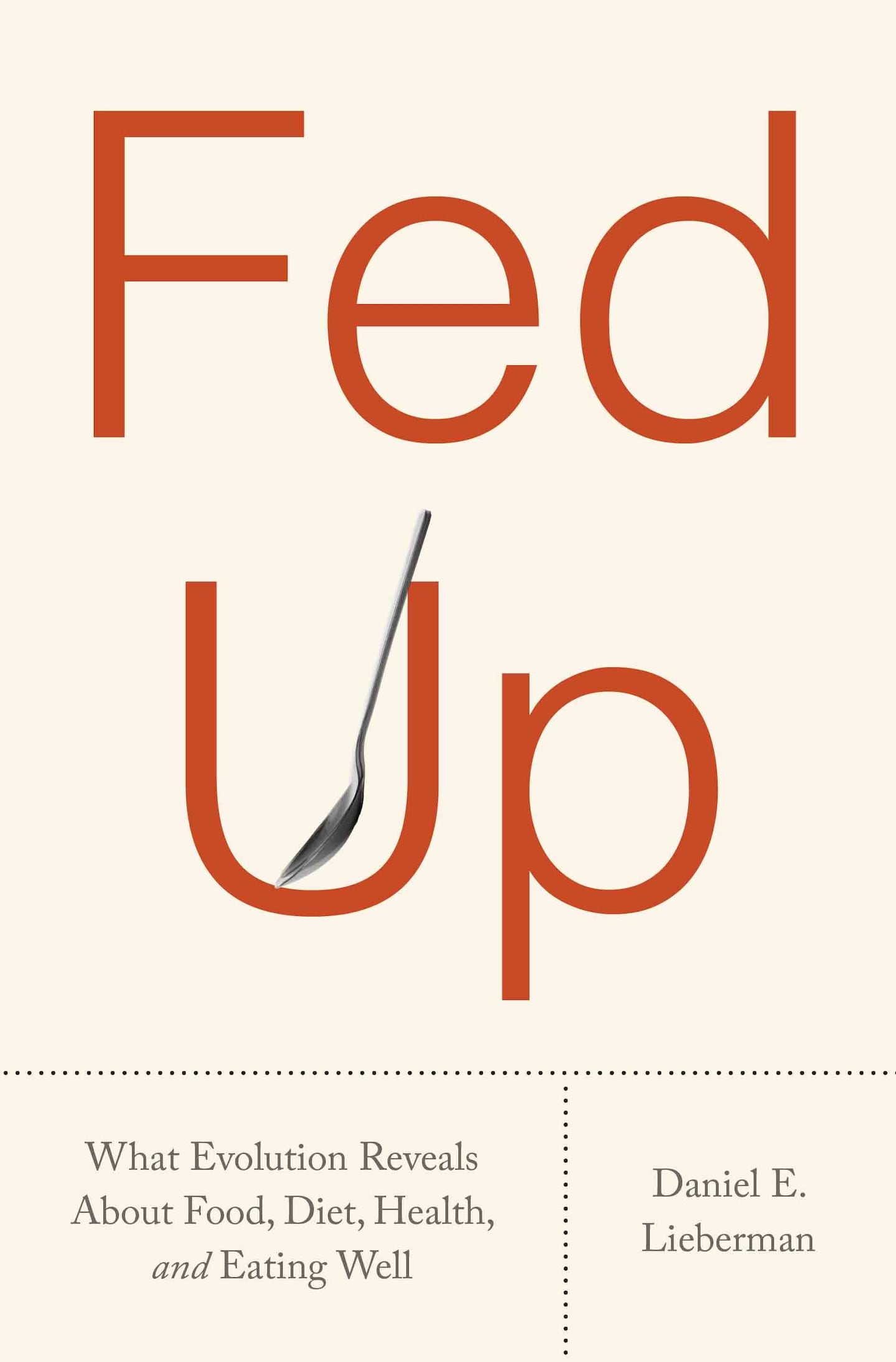
Daniel E. Lieberman is a professor of human evolutionary biology at Harvard University. This adapted excerpt is from Fed Up: What Evolution Reveals About Food, Diet, Health, and Eating Well Copyright 2026 Daniel E. Lieberman. Send comments to magazine@globe.com
