


Like many patients diagnosed with multiple sclerosis, Angela Arroyo lives with pain,
especially in her legs, making it difficult to walk and get a good night’s sleep
<img src="https://healthylife7.com/wp-content/uploads/2026/08/amir-angela-medium.png” alt=”Amir Tabatabeai helping research participant Angela Arroyo through physical therapy exercises”>
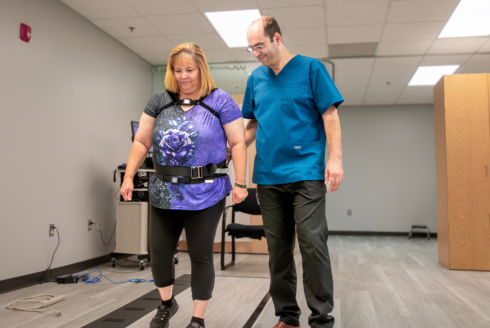
USF Health’s Amir Tabatabaei with research participant Angela Arroyo. Tabatabaei is
researching the effectiveness of dry needling in alle
The Tampa resident was diagnosed with MS a little more than a year ago. Her neurologist
told her about an ongoing USF study exploring a new method to ease the muscle tightness
and lower extremity pain often caused by the disease. Led by Amir Tabatabaei, assistant professor in the USF Health Morsani College of Medicine School of Physical Therapy & Rehabilitation
Sciences, the study is exploring the effectiveness of dry needling
Dry needling involves inserting a thin needle, which is similar to those used in acupuncture,
into myofascial trigger points, or contracted knots in skeletal muscle that reduce
blood flow and increase stiffness. Unlike predetermined points used in acupuncture,
dry needling practitioners use touch to locate the affected areas in the body, a skill
Tabatabaei said takes years to refine
Arroyo was initially hesitant to participate, but she was looking for another option
that didn’t come with the side effects of typical medication therapy, such as fatigue,
and ultimately decided to enroll.
Within a week of starting the treatment, she noticed less pain and improved sleep.
Her husband also noticed a change in her walking
Unlike the fixed points of acupuncture, dry needling practitioners use touch to locate
the body’s affected areas
“It worked. It’s actually helping me,” said Arroyo, who has since completed the study.
“I hope it helps other people.”
Chronic pain is one of the most common and complicated symptoms experienced by people
with MS, yet Tabatabaei said existing treatments often fall short. Medication carries
risks, such as addiction. Exercise therapy, a common rehabilitation option, often
fails because the underlying pain prevents people from participating
Funded by the Consortium of Multiple Sclerosis Centers, Tabatabaei’s study examines the feasibility and safety of dry needling for lower
extremity pain, a common site of MS-related pain
“The final goal of chronic pain management is not only to reduce pain, but also to
improve function,” Tabatabaei said.
Tabatabaei has been a licensed physical therapist since 2011 and has for many years
used dry needling to treat patients with musculoskeletal and neurological disorders.
Working closely with neurologists and pain specialists also highlighted gaps in chronic
pain management, which inspired his master’s and doctoral research on dry needling
for neck and lower back pain. He found that people with MS and chronic lower extremity
pain walked worse than those without dry needling, which helped him focus the study
on the legs. His current clinical research is a natural extension that builds on those
findings.
Chronic pain is a common symptom of MS, and dry needling offers a potential treatment
option without the drawbacks of medication and exercise therapy
Participants in the study complete nine visits. The first six are dedicated to dry
needling sessions that target muscles in the lower and upper legs. Patients spend
the remaining three visits on a walkway mat that tracks gait and a balance test that
measures postural sway – allowing researchers to assess the patient’s muscle function,
mobility and pain.
Because leg pain can keep people with MS from walking and contributes to a more sedentary
lifestyle, determining if dry needling improves mobility and balance is a central
question of the study
The research is being conducted in partnership with the USF Health Comprehensive MS Center, which treats more than 3,000 people with MS annually
Grace Tucker, a third-year biomedical sciences student and research assistant on the
study, helps screen participants and administers cognitive and physical assessments.
Through that work, she has seen how closely pain and everyday activities are connected
for people with MS and believes the study will spark further research into dry needling
across the field
“Dry needling is something that’s new and upcoming,” Tucker said. “Every assessment
gives us another piece of the picture. Our hope is that this research lets us better
understand if dry needling can improve how participants feel and ultimately improve
their quality of life.”
Tabatabaei and his team continue to recruit participants. Eligible patients must have
lower-extremity pain lasting three months or more, regardless of severity
“Our long-term goal is a paradigm shift in chronic pain management for people with
multiple sclerosis,” he said
