


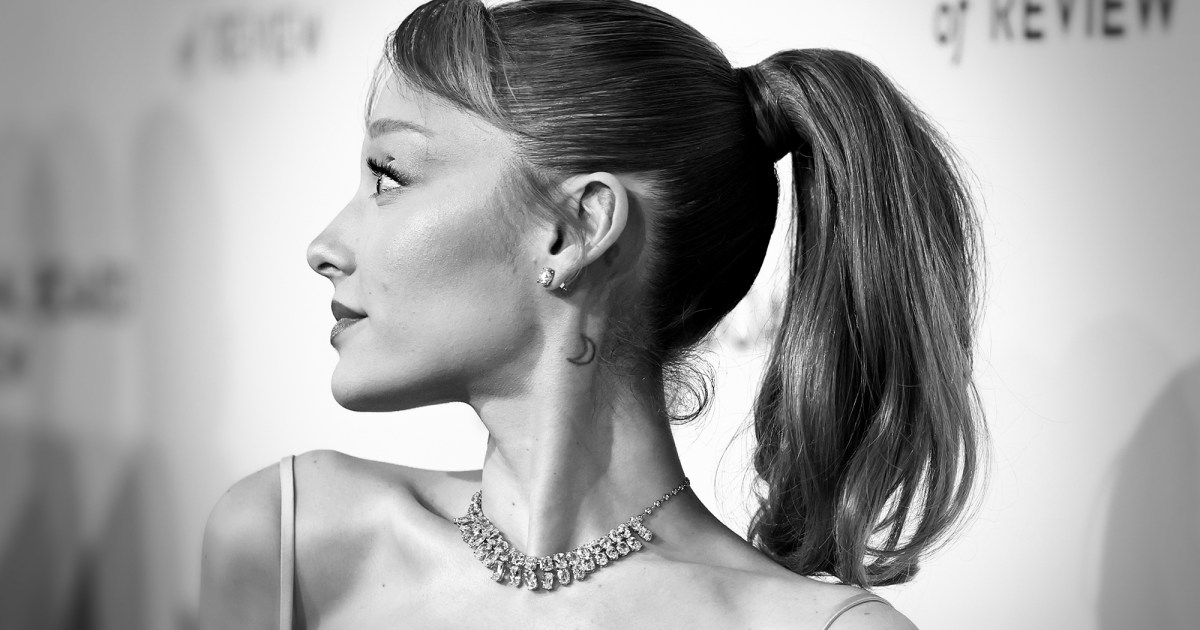
Mother Jones illustration; Jamie McCarthy/Getty
Get your news from a source that’s not owned and controlled by oligarchs. Sign up for the free Mother Jones Daily.
On July 31, in the final days of the North American leg of her tour, Ariana Grande released the music video for “Petal,” her newest single from an album of the same name. The video instantly reignited the years-long discourse over Grande’s body into something of a new low,with many presenting the video as irrefutable evidence that the singer is suffering from an eating disorder
Reactions to those opinions, by turns emotional and censorious, have been intense. They revealedquestions about a public unable to cope collectively with a woman’s body. Are such comments inherently sexist? Do well-meaning instructions warning us to refrain from speculation ever have exceptions? What does it mean to express “concern” for someone in the public eye whom we don’t personally know? How does the frenzied discourse land for people with eating disorders?
I reached out to Dr. Rebecca Boswell, a director at Penn Medicine Princeton’s Center for Eating Disorders, to explain the complications of navigating these fraught conversations, and what patients with eating disorders often hear when a celebrity’s weight makes headlines
There’s been intense debate about the politics of talking about people’s bodies. On one hand, such commentary is often sexist; we aren’t privy to larger dynamics that may be going on with someone. But do we have a responsibility to acknowledge that some appearances may not be healthy?
Many things can be true at the same time, and there’s truth in all sides of this debate. The media has a long history of idealizing and visually showcasing thin bodies in a way that can be extremely harmful to young, vulnerable people and to folks with eating disorder histories or active eating disorders. We know that media coverage and celebrity coverage can play a role in the development and maintenance of eating disorders, and that it’s a major risk factor for the development of body image concerns.
“Every time there’s a media story about someone losing weight or being on a GLP one, therapists hear about it.”
That context makes it important to have responsible reporting around other people’s bodies, especially because so much of this discourse centers around women and women’s bodies. It’s a bit of a Goldilocks phenomenon: What’s too hot? What’s too cold? What’s too big? What’s too small? That can leave folks feeling like there’s no right way to exist in a body. That being said, when there are really concerning things happening or something seems noticeably different, there are helpful and unhelpful ways to express concern.
What do you think when you read all the online diagnosing?
We can’t look at someone and assume things about their health or their mental status. That really is reserved for physicians and people who know someone well and can see changes in behavior or health status. Because someone can lose a lot of weight and have cancer, right? Or someone can be very malnourished in a larger body. There is no one-to-one correlation between thinness and health, and it’s doctors who can make good evaluations with physical exams to discern if someone is experiencing malnutrition or eating-related problems. So can family members.
When it comes to public messaging around concern, again, multiple things can be true. It can be true that it’s powerful when the public expresses concern about someone in the public eye, and that may help them and their teams to evaluate whether there’s a risk or a problem. But it can also be the case that expressing concern garners a lot of clicks, chatter, and a lot of revenue. It also tends to highlight surveillance around women’s bodies in a way that can still be really difficult for folks who have experienced that surveillance themselves, either from family members or from the world in general.
“It’s never a positive effect. What I hear is, ‘This is a really difficult thing to visually have to see, even when people are talking about how negative this is.’ I often hear people saying that the conversations reminds t hem of when they were really sick, and that’s really difficult.”
How does that discourse typically affect someone with eating difficulties?
Every time there’s a media story about someone losing weight or being on a GLP-1, therapists hear about it. What we hear can range from “I’m so mad that I have to work on my recovery, and this person’s being glamorized for changing their body in such a profound way,” to “This makes it so much harder for me to stay committed to treatment.” There’s also “It’s so unfair that her people get to live in this like weight loss world, and I’m trying to live outside of it.”
I also hear a lot of sadness around the way that people’s bodies are judged and evaluated, not just in the context of media and culture. It can remind people of their private personal experiences of being judged or bullied or excluded because of the way that they look, and be really retraumatizing
What about negative reactions to extreme weight loss? Can public concerns when someone famous looks so visibly [too?] thin ever help people with eating disorders?
It’s never a positive effect. What I hear is, “This is a really difficult thing to visually have to see, even when people are talking about how negative this is.” I often hear people saying that the conversations remind them of when they were really sick, and that’s really difficult. They’ll say, “Can’t we just live and like not be evaluated based on our bodies?” They will also often bring up how they would have preferred people telling them that they were concerned about their weight.
I hear from people that it is hard when you’re very ill with an eating disorder to accept the possibility of needing care, and that expressions of concern from loved ones make a big difference—while public or group scrutiny is challenging
What exactly happens to the body when an eating disorder is identified?
Different eating disorder symptoms affect the body differently. Intake restriction and prolonged malnutrition have profound effects on every body system. It affects bone density in a way that is often not reversible. It affects GI system function. It affects your kidneys, your liver, and causes cardiac stress. It can even shrink the size of your brain
The way that the body adapts during malnutrition is incredibly survival-oriented. It slows everything down and shuts everything off to keep the machine running as long as possible. That is an enormous stressor on the body and requires really significant nutritional rehabilitation to repair tissue damage where it’s repairable, and bring your body back to a healthful state. The [real harm with malnutrition] is the speed and the amount of weight loss that really is most strongly correlated with those physical effects, regardless of the body size you started in.
GLP-1’s are everywhere. We have corners of the internet that outright promote anorexia. Is the discourse around body image worse than ever?
I do think that with the rise of GLP-1s, there’s been an increased focus on thinness in the media and the internet in a way that surveils and glamorizes thin bodies. I think that has a negative effect, not just on people with eating disorders, but on children and youth who are vulnerable to developing [eating difficulties]
You talked about the role of responsible reporting when writing about a public figure’s appearance. What does that look like?
That is where the nuance comes in. There have been studies that show, for example, articles that express concern in a kind and thoughtful way, but featuring really sensational pictures, can worsen people’s body image. There’s responsibility around the visualising of the story. There are kind ways to talk about concern that don’t involve [judgements] of like, “This person looks so bad or good” or “Go eat a burger.” Those kinds of comments are not useful
Personally, I think there’s a lot of good, feminist intentions advising us against commenting on a woman’s body. But I also think that guidance can ignore the way that most of us, especially young people, discover images, which is on social media
There’s a difference between observing and surveilling, between observing and judging. It is possible to observe variation in a non-judgemental way; that is a mindful, neutral practice. But once judgment comes in, that starts to bring up questions around what’s right and what’s wrong, and that’s where I think the harm comes in, especially part of the narrative around women’s bodies. It’s very uncommon to hear neutral observations around women’s bodies without judgement or shame. That ultimately detracts from women’s achievements, internal talents, and their leadership.
One middle ground I’ve seen being tossed around is that anyone concerned about a celebrity’s weight should reserve this concern for private conversations. What advice do you have for navigating these conversations, especially when talking to our kids?
Private conversations are incredibly powerful when it comes to suspected eating disorders and malnutrition because they come from a place of known love, concern, and respect. Many people who are experiencing problems with nutrition and eating may have limited insight into the severity of their problem. So loving support matters. Typically, I recommend that people focus on behavior and not appearance, because appearance can be really difficult for people to feel like that’s the focus of their loved one’s concern. So instead of saying, “You look very thin,” say, “I’ve noticed that you’ve been skipping meals. I’m worried about your health. I care about you. Is there anything I can do to help you?”
[When it comes to talking about a celebrity,] start by emphasizing that bodies come in all shapes and sizes. That people can be healthy with any body shape and size. Sometimes people can look visibly sick, and we don’t know why. That’s why health is private. We don’t always get to know what’s going on with people, even when they’re public figures. I might also ask, “How does this image make you feel about your body?”
