


Nursing course turns rural healthcare gaps into real-world lessons
Published Aug 10, 2026 by
- Benjamin Abel
Filed under:
- ECU nursing students are studying rural healthcare disparities and barriers to emergency care in eastern North Carolina.
- Students examined common rural medical emergencies and challenges including hospital closures, transportation and limited healthcare access.
- The project prepares future nurses to advocate for equitable, effective rural healthcare.
In Martin County, a medical emergency used to mean a five-minute drive to the hospital. Then Martin General shut down, turning an already stressful situation into a half-hour ordeal
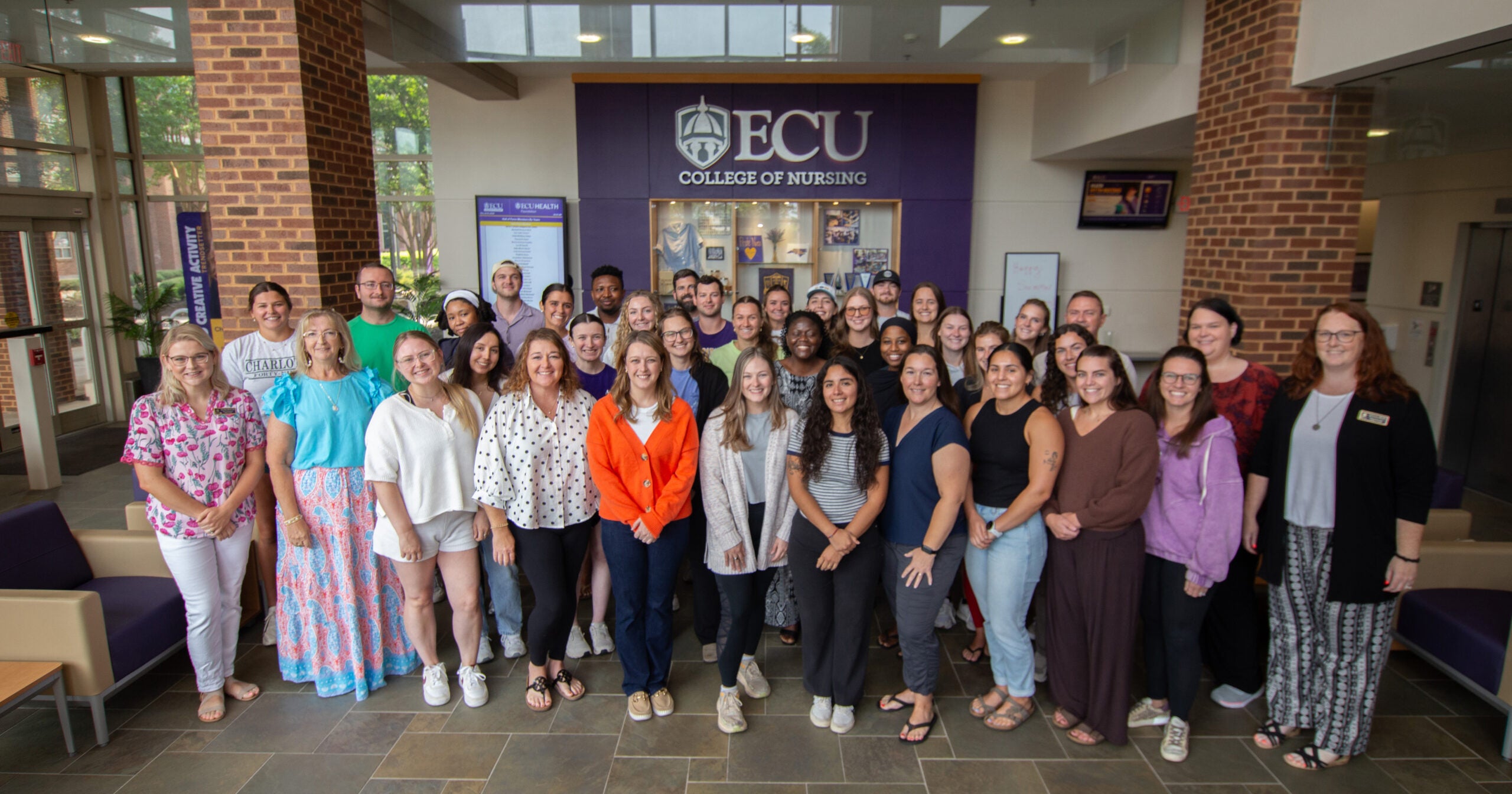
Lynne Modlin’s 39 accelerated BSN students used the summer to explore the challenges of healthcare delivery in rural communities with limited medical infrastructure
East Carolina University’s Lynne Modlin designed a summer research project for her Accelerated Bachelor of Science in Nursing students, challenging them to learn about six case scenarios that are common in rural communities: heart attack, stroke, asthma, overdose, seizures and diabetic emergencies. But in July, in the middle of Modlin’s class, the General Assemblyallocated$25 million to partially fundECU Health’s plan to make the former Martin General Hospital into the state’s first rural emergency hospital.
Modlin said she didn’t change anything in her lesson plans even with the allocated funding. When the hospital reopens, it will be a boon to the county, but eastern North Carolina is still very big, and very rural. And in a lot of need
Modlin asked her students to evaluate the existing healthcare re advocacy, policy improvement and equitable access to care. She chose Martin County because it represents the midway between the haves and the have-nots — rural but still relatively close to a Level 1 trauma center in Greenville
A Teacher’s Stake
The gaps in rural healthcare aren’t an academic exercise for Modlin — it’s part of her lived experience. She once sped along back roads with her son-in-law who couldn’t breathe because of asthma. He needed the expertise of an emergency department at least 20 minutes from home
“He was 24 when this happened. Younger people can compensate so well that you don’t realize how serious the situation is,” Modlin said. “I thought we were going to lose him.”
“The case scenario demonstrates a huge problem and asks the students, ‘How can we advocate to get access to rural areas? How can we advocate for better healthcare management,’” Modlin said.
Modlin, clinical associate professor in the ECU College of Nursing, usually teaches traditional undergraduates. The life skills they might lack, ABSN students often have, which afforded Modlin ways of teaching that she couldn’t normally explore
“Their age and maturity contribute to the depth of the assignment. They’ve had more experiences with life, careers and families who’ve had problems with illnesses, and hopefully that maturity allows them to realize aspects of care other than just the disease like the financial burdens, transportation challenges and community reat the traditional student might not pick up on initially.”
Learning Rural Healthcare
Modlin’s students have life experience, but needed to get up to speed on the state of healthcare in North Carolina
Emily Reames had provided plenty of hands-on care at a major hospital in Charlotte as a recreational therapist. After the COVID-19 pandemic, she tried her hand at academia but learned that wasn’t her path
“I missed patient care, but I didn’t want to branch into behavioral health,” Reames said. “I wanted to get back to more physical, hands-on patient care so I went this route.”
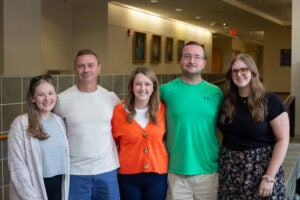
Lynne Modlin’s ABSN students, from left — Naomi Hunt, Clay Hicks, Emily Reames, Tristan Fields, Kaitlyn Seagraves — pose for a photo after class
She had worked with patients who were returning to rural parts of the state, much like Martin County, where she lived after Martin General Hospital closed. She experienced firsthand the challenges of getting an appointment when she needed care from a neurologist
“It took me two years to get seen, and people had been dealing with that long before I ever moved there, so it gave me a greater understanding for how difficult it is to get help for what you need,” Reames said
Clay Hicks recently retired from a 30-year career with the Raleigh Fire Department. He was trained as an EMT and had cared for patients and still wanted to give back to his community
Living in Wake County, Hicks said he never had to call for a helicopter because there are so many trauma hospitals just down the road
Michael Dellaripa is originally from Richmond, Va., and graduated from the University of Virginia with a biomedical engineering degree. After school he worked with patients in clinical research, but his career evolved, taking him away from working with people
“I missed patients and recognized this as an opportunity to get reengaged. That’s what led me here,” Dellaripa said
Dellaripa worked in rural communities in Virginia, so he had a broad understanding of the challenges, but this course’s deep dive has shifted the way he appreciates the challenges rural communities face.
“When I drive home to Virginia, going through Martin County, I like to go through Oak City. I feel more intimately connected to those people now,” Dellaripa said
Georgia native Naomi Hunt now lives in New Bern — not exactly a rural community, but she passes through many on her commutes. She was a double major in history and Spanish and found her way into classrooms both in North Carolina and overseas. She loved it, but also “couldn’t do it anymore. My mom’s a nurse, grandma’s a nurse, so I think this is where I belong.”
Hunt knows firsthand that disparities in rural healthcare delivery didn’t just happen. Her grandfather was raised in Pitt County and when he had a heart attack many years ago, the hospital wasn’t equipped to help him and there were no air ambulances. Ultimately a National Guard crew airlifted him to Chapel Hill where he received treatment.
“It’s scarily similar to what we’re dealing with now,” Hunt said
“EMTs are doing literally everything they can but at some point, you need someone who can perform these other services.” Hunt said
Learning Advocacy
Arielle Leach lives in Chocowinity and worked in public health before nursing school. She is from rural Northampton County, which Modlin’s course helped her to lean into
“We think we know what the patient needs, but we don’t know what they have access to. Telling somebody to come to their follow-up appointment is easy to say, but understanding what they might have to go through to get there is really something that we need to take into consideration,” Leach said. “They might not be able to make that appointment if they have to drive 45 minutes to get there.”
Dellaripa has learned that the downward spiral of rural communities — aging populations and dwindling tax rolls — stack upon one another. He doesn’t know the solution but was adamant that having a clear-eyed understanding of the problem is the first step
Moving Forward
Modlin’s students will graduate in December, and all said their appreciation of exploring the many rural healthcare delivery challenges changed the way they plan to approach the next chapters of their professional lives
“Even if they are in Raleigh or Charlotte and have someone come in from a rural community, I hope they have a different perspective on how their patient’s needs will be different than someone living in the city,” Modlin said. “Understanding those barriers rural communities often face allows nurses to provide more compassionate, equitable and effective care.”
Money is a factor in how healthcare is delivered, Hicks acknowledged — “from the hospital president down to the janitor, none of us are going to work for free” — but he said that doesn’t take away from the fact that people need care
“ECU Health just got this infusion of money from the legislature,” Hicks said. “Hopefully there’ll be more, but how to best use that money is complicated.”
More Blogs
Trustees elect officers in first meeting of academic yearECU vocal program offers oft-missing science to singingMedical school welcomes in thriving physician assistant studies departmentNursing course turns rural healthcare gaps into real-world lessonsUndergraduate researchers show promise, research resultsSky-high learning: Nursing students join elite pediatric transport crew
