


Consuelo Thiers
August 13th, 2026
What Andy Burnham’s psychological profile tells us about his foreign policy
Estimated reading time: 6 minutes
LSE British Politics
Informed debate for better governance
What Andy Burnham’s psychological profile tells us about his foreign policy
0 comments
Estimated reading time: 6 minutes
A country’s foreign policy is determined by structural factors, the ideology of the Party in power, but also by the personality of leaders. Consuelo Thiers looks at the psychological profile of Andy Burnham, and contrasts it to that of Keir Starmer
Enjoying this post? Then sign up to our newsletter and receive a weekly roundup of all our articles
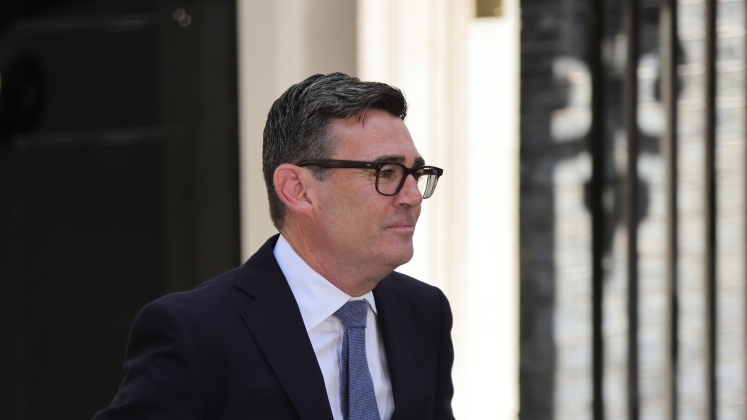
Andy Burnham takes office with almost no public record on foreign and security policy. He does so at a time of increasing global insecurity: wars in Europe and the Middle East, the rise of illiberal democracies, shifting alliances, and mounting economic pressures. Existing assessments of how he might act remain largely speculative rather than grounded in systematic psychological analysis
Research in political psychology and foreign policy analysis offers a systematic way to assess leaders’ personalities and provide insight into their decision-making styles. This piece applies that approach to Burnham, drawing on decades of research profiling political leaders, to offer some insight into how he may handle the challenges of his new position. It also compares Burnham to other past UK leaders and specifically to Keir Starmer
Why personality matters in foreign policy
Political leaders in top government positions can exert considerable influence over foreign policy, especially when decisions are made under conditions of uncertainty or time pressure. Their personalities, beliefs and motivations shape how they interpret constraints, assess threats and respond to crises. Understanding these psychological characteristics is central not only to explaining leaders’ past choices, but also to anticipating how they may behave in future situations. In fact, studies have linked personality traits to leaders’ willingness to violate international norms, escalate or de-escalate conflicts, go to war, and manage crises. Political psychologists have also worked directly with governments during conflicts and complex peace negotiations.
Since leaders are rarely accessible for direct psychological evaluations, researchers use what are called at-a-distance assessment techniques, based on the idea that how leaders speak reveals their psychology; the more a leader uses certain words or phrases, the more central they are to their thinking and who they are. The most widely used of these approaches is the Leadership Trait Analysis, developed by Margaret Hermann, which identifies seven traits relevant to leaders’ behaviour in foreign policy. This analysis was applied to Burnham’s interviews from 2020 onwards, since spontaneous material is less shaped by speechwriters. His scores were compared against a sample of past UK leaders and against Keir Starmer specifically.
Burnham’s profile stands out from a comparative angle: on most traits, his scores sit either well above or well below the mean of past UK leaders
A few elements are worth noting. Leaders react to context, and the shift from mayor to prime minister is a major change that could affect Burnham’s style in ways this profile cannot predict. Foreign policy is also rarely shaped by the prime minister alone: Ed Miliband, now Foreign Secretary, will bring his own psychology and decision-making style to the role, particularly in areas where Burnham has less background or experience
Burnham’s personality profile
Burnham’s profile stands out from a comparative angle: on most traits, his scores sit either well above or well below the mean of past UK leaders. He shows a very high belief in his ability to control events, a trait associated with leaders who take responsibility for initiating action, stay closely involved in policymaking, and seek control over situations to make sure things happen the way they want. He is also highly focused on relationships and group morale, often at the expense of getting tasks done; leaders with this combination tend to be attuned to what people want and try to provide it, moving forward only once the group is ready, prioritising camaraderie, loyalty and collegiality.
Burnham scores high on self-confidence too, which tends to go with trusting one’s own capacity to cope with people and situations, and filtering information through a strong sense of personal value. He also scores high on need for power, a trait associated with gaining and keeping control and influence, and with spotting opportunities and the tactics to seize them. His score on conceptual complexity is high as well, suggesting an ability to hold several perspectives at once rather than seeing things in black and white, and a tendency to gather more information, including opposing views, before deciding. Finally, his distrust of others and in-group bias are moderate, closer to the norm, pointing to a balanced reading of the world, judged case by case rather than framed as either confrontational or cooperative by default.
How does Burnham compare to Starmer
Starmer’s handling of foreign policy has drawn a mixed response: some praised his firm stance on Ukraine and his response to US pressure to join the war against Iran, while others criticised what looked like a soft approach to Trump, especially early in his presidency. Starmer and Burnham share some characteristics but differ considerably in others. Both have a high perception of their capacity to control events, along with high self-confidence and need for power, which makes them both assertive and willing to push back against constraints in their environment.
Burnham, however, is considerably less distrustful than Starmer, making him less prone to suspicion of others and to hawkish decision-making, as well as more inclined to collaborate with other leaders and countries. He is also more conceptually complex, which gives him more flexibility to weigh up the pros and cons of a situation, though it could also make him slower to decide. Burnham is more relationship-oriented than Starmer, whose style was more balanced between achieving tasks and maintaining relationships; this may give Burnham a greater ability to bring an audience with him, but could also make him less inclined than Starmer to make hard decisions when needed.
What can we expect from Burnham on the world stage?
We can expect Burnham to be active, to challenge constraints, and to be skilful in exerting direct and indirect influence to achieve what he wants. When facing a potential security crisis, he will likely be personally involved in moments of acute pressure rather than delegating to ministers or officials. His openness to receiving information and weighing different options before deciding means he is likely to lean on the institutional machinery built for that purpose, such as security and foreign policy bureaucracies, rather than a small circle of trusted advisers.
Burnham, however, is considerably less distrustful than Starmer, making him less prone to suspicion of others and to hawkish decision-making, as well as more inclined to collaborate with other leaders and countries
His relationship-oriented style points to what is considered a directive leadership style: leaders who push their own agenda but stay attuned to how their actions land with others, adjusting where it helps protect their standing and that of the country. In practice, this suggests Burnham will consult widely and pay attention to how ministers, allies, and the public read his decisions, without that stopping him from asserting what he wants. This could help him build stronger relationships with Europe and other allies, but his strong concern with maintaining support among his base may, for instance, pull him further from Washington at a moment when the relationship with Trump is already strained. Balancing that tension is likely to be one of the most relevant tests of his time in office.
Burnham’s early months will be watched closely by allies and observers still trying to work out who he is. The profile presented here will not settle that question definitively; no psychological assessment can, but it offers a more systematic starting point than guesswork and a clearer basis for understanding the choices he makes once in office
Enjoyed this post? Sign up to our newsletter and receive a weekly roundup of all our articles
All articles posted on this blog give the views of the author(s), and not the position of LSE British Politics and Policy, nor of the London School of Economics and Political Science
Image credit: repic on Shutterstock

About the author
Consuelo Thiers
Dr Consuelo Thiers is a Lecturer in International Relations at the University of Edinburgh. Her research focuses on the application of psychologically oriented and agent-based approaches to understanding decision-making in International Relations. Her work has been published in International Affairs, Foreign Policy Analysis, International Studies Quarterly and the British Journal of Politics and International Relations
Posted In:
Foreign Policy and Defence
