


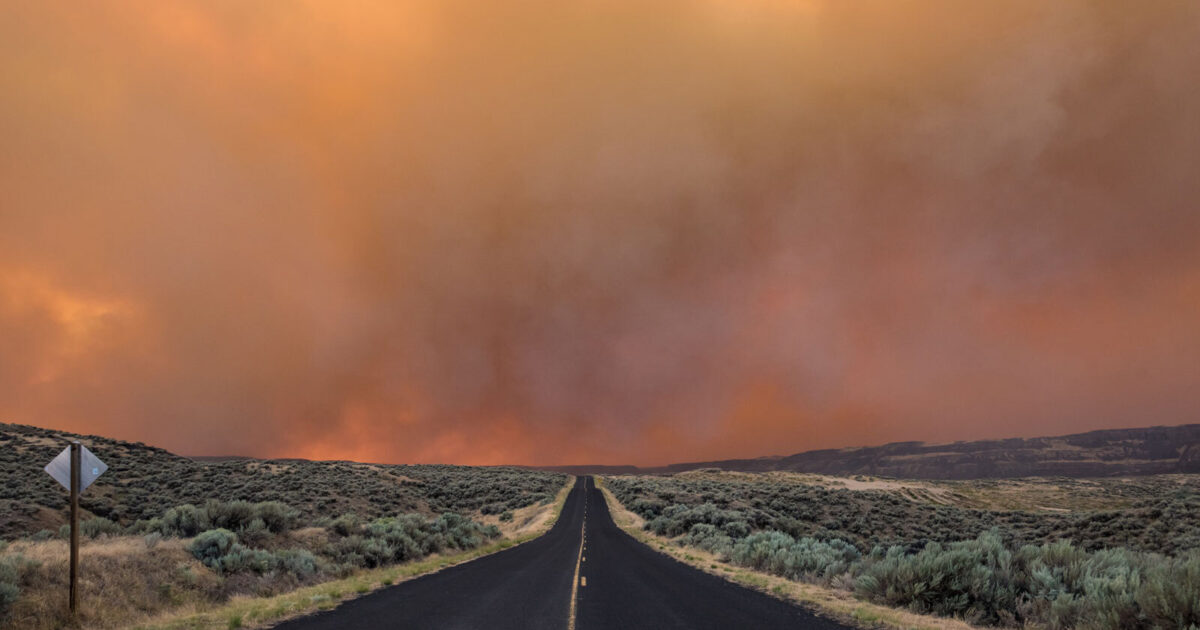
It seems like the entire state is on fire right now. Unprecedented fires in Spokane and Stevens counties have displaced WSNA members and ravaged entire communities, while additional wildfires in the Upper Cascades are again creating hazardous conditions for our members throughout Central Washington. Western Washington isn’t immune to the effects of smoke and heat
Extreme temperatures and air pollution from smoke and smog can exacerbate chronic health conditions and cause acute health problems. They can cause dehydration, make it difficult to exercise, and interact with certain medications.
For nurses, it is important to know the potential effects.
The National Center on Aging now estimates that more than 80% of adults over age 65 in the United States have at least one chronic condition (e.g., respiratory disease, cardiovascular disease, diabetes, cancer, obesity, and dementia). Managing these conditions can become more challenging when it gets very hot or very smoky.
These conditions can also make it challenging to exercise, which is a cornerstone of many chronic disease management programs and an important component of good overall health.
Extreme heat can worsen cardiac and kidney conditions, such as heart failure, arrhythmias, and chronic kidney disease. Maintaining proper hydration and electrolyte balance in this population can be challenging due to its metabolic needs.
Air pollution can exacerbate chronic respiratory conditions such as asthma, COPD/ emphysema, and obstructive sleep apnea. Patients may need to use rescue inhalers or other PRN medications more frequently and may be more at risk of heat-related illnesses if their homes do not have air conditioning.
Patients with dementia or cognitive impairment are also at increased risk when the thermometer rises. They may not recognize signs of dehydration and need additional assistance to stay hydrated. This can take the form of more frequent reminders to drink cool liquids or eat food with a higher water content.
Certain medications can also cause increased heat sensitivity. These include SSRI/SNRIs, diuretics, anticholinergics, beta blockers, atypical antipsychotics, and tricyclic antidepressants. (Note: This is not a complete list. Patients should talk with a healthcare provider if they have questions.)
Other medications that have a narrow therapeutic window, such as lithium, can cause toxicity if the patient is dehydrated. In children and adolescents, certain antihistamines and ADHD medications can increase the risk of heat-related illnesses.
Additionally, medications can degrade in higher temperatures if not stored properly — for example, a medication left in a hot car. Special care should be taken with medications such as insulin, rescue inhalers, and EpiPens to ensure package directions are followed for storage so they work properly.
Other medications can increase the skin’s sensitivity to the sun. These can include antifungals and certain antibiotics. Sun avoidance when possible and protective clothing and broad-spectrum sunscreen when sun exposure cannot be avoided are highly recommended.
Below are reto stay safe when the temperatures rise and the air quality goes down.
- CDC: Heat and Medications — Guidance for Clinicians
- CDC: Safety Guidelines: Wildfires and Wildfire Smoke
- Washington DOH: Protect Yourself and Others (toolkit available in multiple languages)
- Washington DOH: Hot Weather Precautions
References
Intergovernmental Panel on Climate Change. (2022). Climate change 2022: Impacts, Adaptation, and vulnerability: Contribution of Working Group II to the Sixth Assessment Report of the Intergovernmental Panel on Climate Change (H.-O. Pörtner, D. C. Roberts, M. Tignor, E. S. Poloczanska, K. Mintenbeck, A. Alegría, M. Craig, S. Langsdorf, S. Löschke, V. Möller, A. Okem, & B. Rama [Eds.]). Cambridge University Press. https://doi.org/10.1017/9781009325844
Schenk, E., Richards, C. A., & Eide, P. (2023, July). A warming planet and human health
American Nurse Journal,18(7), 6–12. https://doi.org/10.1017/9781009325844
Want to help WSNA members affected by wildfires?
Consider donating to our emergency assistance fund
Donate now
