


Key points
- It is possible to predict to some extent adult political orientation from childhood experiences.
- Attending Fourth of July celebrations may have effects below conscious awareness.
- There are different kinds of patriotism with contrasting attitudes towards criticizing one’s country.
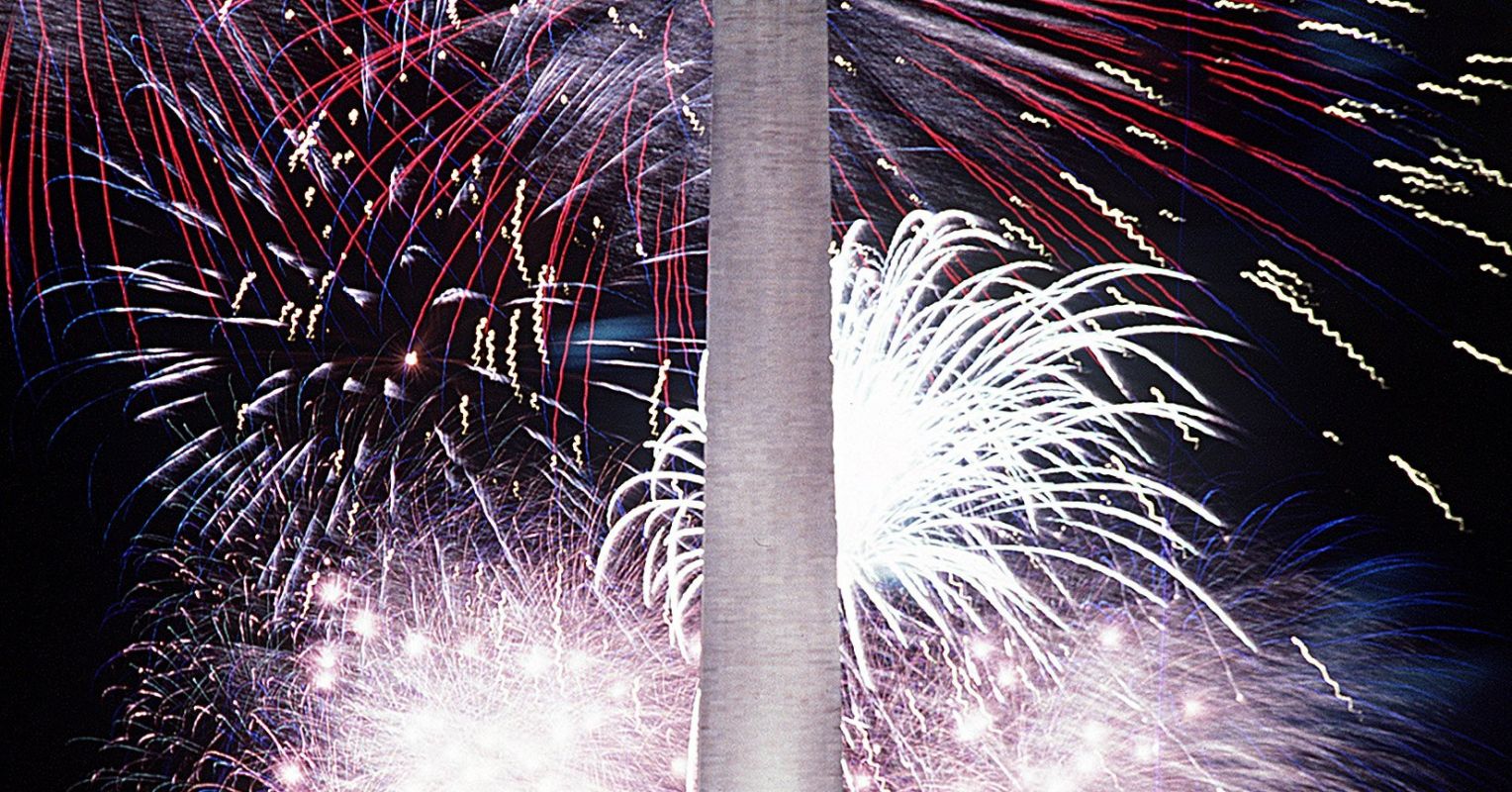
Fourth of July celebrations costing millions of dollars and involving possibly hundreds of millions of US citizens of all ages, will dominate American consciousness at this time
But is it also possible that beneath the surface, even at an unconscious level, future political attitudes are also being shaped?
Economist researchers Andreas Madestam of Bocconi University, Italy, and David Yanagizawa-Drott of the Harvard Kennedy School, have published a study, involving massive amounts of data, which suggests that attending Fourth of July celebrations as a child is more likely, in a small yet statistically significant way, to drive you towards a Republican Party political orientation
They contend that there is something about patriotism and nationalistic celebrations that appears to shift people towards the right, politically. They point out that Fourth of July celebrations are traditionally considered patriotic in nature
The authors report previous survey evidence findings that Republicans see themselves as more patriotic, attend Fourth of July events to a greater extent, and also view the holiday as more important compared to Democrats
The authors quote psychology findings that exposure to patriotic symbols, such as the American flag, shifts political support toward the Republicans
The objective of the study conducted by Madestam and Yanagizawa-Drott, was to investigate how past childhood experiences of Fourth of July festivities might yet shape adult political preferences and behavior
They found a way to measure the likelihood that you as a child attended outdoor Fourth of July celebrations, using whether it rained that day or not as the key measure as to whether attendance was likely or not
Using absence of rainfall as a proxy measure for participation in Fourth of July celebratory events, they find that days without rain on the Fourth of July in childhood, which means more likely attendance at outdoor festivities, significantly shifts adult views and voting in favor of Republicans, and also increases turnout in presidential elections
The effects they estimate are highly persistent throughout life and originate in early age
The evidence from their study, the authors contend, is that political views and behavior partly also derive from social and cultural experience in early childhood, and that Fourth of July events partly yet significantly shapes the political landscape in the United States
The researchers showed that attending Fourth of July celebrations as a child has a significant impact on people’s political preferences later in life. The likelihood that an adult at the sample mean age of 39 identifies as a Republican increases by 0.61 percentage points for each rain-free Fourth of July in childhood
They also find that political preferences are formed by exposure to rain-free Fourth of July celebrations as early as ages 4-8
They also calculated whether rain on the 2nd, 3rd, 5th, and 6th of July affects such adult political outcomes. They found no effects, indicating that their findings are driven by weather affecting participation on Fourth of July, rather than atmospheric conditions in early July influencing the outcomes for reasons unrelated to the celebrations
While statistically significant, it is important to also appreciate that the effect is relatively small
For example, having Republican parents in their sample makes a person 44 percentage points more likely to identify as a Republican as an adult. By comparison, the impact of a rain-free childhood Fourth of July on partisanship is 1/70 in magnitude of the effect of having Republican parents. However, they also argue that the effect they have uncovered may be cumulative, which is that repeated attendance over a long period of time could have a magnified effect
Politics Essential Reads

In the United States, Political Belief Change Feels Risky

The Politics of Climate Possibility
The key innovation of this study, according to the authors, was to exploit random day-to-day variation in precipitation to estimate Fourth of July effects
They contend that using daily rainfall data has two advantages: First, rain deters people from participating in the celebrations, most of which are held outdoors. While there is no data on attendance rates throughout the 20th century, the authors show that rain increases the likelihood that Fourth of July events will be cancelled, implying that fewer people attend the celebrations. In addition, even if celebrations are not called off, several press accounts from festivities across the U.S. report that rainfall reduces the number of people who participate.
So the study used the absence of rain as a proxy measure for participation in holiday celebrations on Fourth of July
The data on rainfall used in the study came from National Oceanic and Atmospheric Administration (NOAA) National Data Centers; the data on political preferences and political behavior is taken from the American National Election Studies (ANES); and the newspaper data comes from the NewsLibrary website
The ANES project, dating back to 1948 and jointly run by Stanford University and the University of Michigan, is widely considered the “gold standard” for research on American elections. ANES holds survey data on partisanship, voting behavior, and preferences for different policies. It also includes demographics, such as education, income, age, race, and marriage status. The NOAA dataset comprises daily rainfall from approximately 18,000 weather stations for each July between 1920 and 2008
The study proceeded in several steps to match the rainfall and the ANES
The study found there is no evidence that weather on other days around Fourth of July affects political partisanship, but nice weather on Fourth of July during childhood causes individuals to identify more with the Republican party, consistent with the idea that participation in Fourth of July celebrations shifts preferences toward the political right
The authors of the study point out that the historical function of Independence Day was perhaps important in helping the scattered citizens of the 13 original states view themselves as part of a single nation
However, while it may have served such a useful psychological function in the past, given the precarious circumstances under which the US was founded, a key question for Americans now could be: What remains its psychological function in the modern world, given the power and prosperity of the contemporary nation?
Modern thinking suggests two distinct kinds of patriotism: ‘blind’ and ‘constructive’
Blind patriotism is staunch yet unquestioning allegiance to the nation combined with rejection of any questioning of ‘us’. Constructive patriotism is characterized by critical loyalty, involving criticism intended to improve the country
Blind patriotism refuses to acknowledge the nation’s wronging of others. Constructive patriots instead are keen to identify and correct their country’s shortcomings
Being patriotic shouldn’t mean also being in denial of where your country is going awry, so perhaps one challenge posed by this current research is whether Fourth of July celebrations foster more blind or constructive patriotism?
Madestam, Andreas, and David Yanagizawa-Drott. 2012. Shaping the Nation: The Effect of Fourth of July on Political Preferences and Behavior in the United States. HKS Faculty Research Working Paper Series RWP12-034, John F. Kennedy School of Government, Harvard University. https://dash.harvard.edu/entities/publication/73120378-a438-6bd4-e053-0…
Handbook of Patriotism. Editors: Mitja Sardoč. A Review and Integration of Research on Blind and Constructive Patriotism Reference work entry First Online: 28 July 2020 pp 613–631 Robert T. Schatz. springer.com/rwe/10.1007/978-3-319-54484-7_30
Carter, Travis J., Melissa J. Ferguson and Ran R. Hassin. 2011. “A Single Exposure to the American Flag Shifts Support Toward Republicanism up to 8 Months Later.” Psychological Science 22(8):1011–1018
Hassin, Ran R., Melissa J. Ferguson, Daniella Shidlovski and Tamar Gross. 2007. “Subliminal Exposure to National Flags Affects Political Thought and Behavior.” Proceedings of the National Academy of Sciences 104(50):19757–19761
Houston Chronicle. 2003. “Fourth of July Festitivities Were a Blast, But Inclement Weather Dampens Turnout for Red, Hot and Blue Bash.”
Travers, Len. 1997. Celebrating the Fourth: Independence Day and the Rites of Nationalism in the Early Republic. University of Massachusetts Press
Washington Times. 2004. “Downpour Breaks July Fourth Record: Rain Keeps Crowds Thin, Ends Some Festivities.”
