


ByJennifer Leither
August 13, 2026 at 4:06 PM
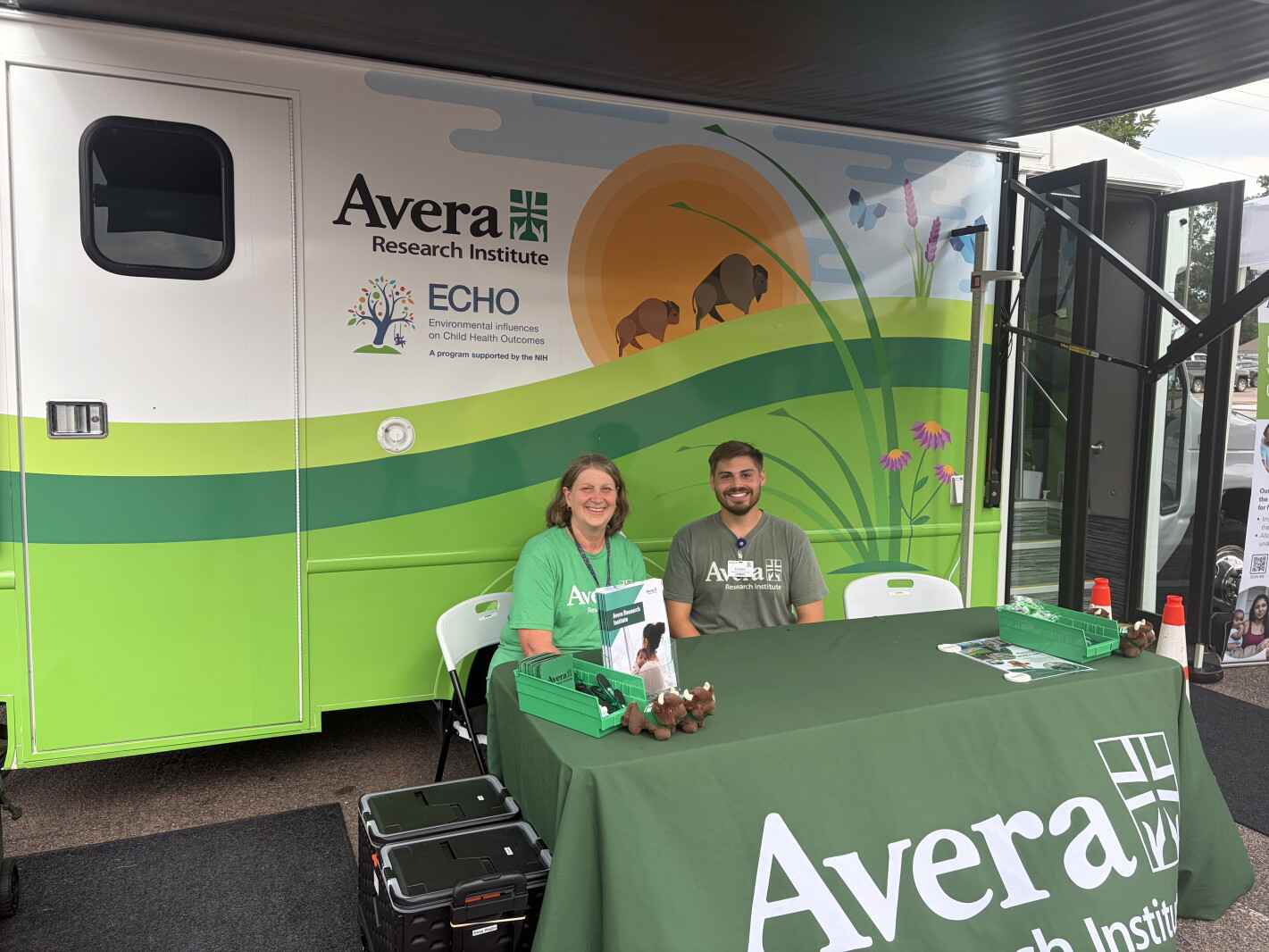
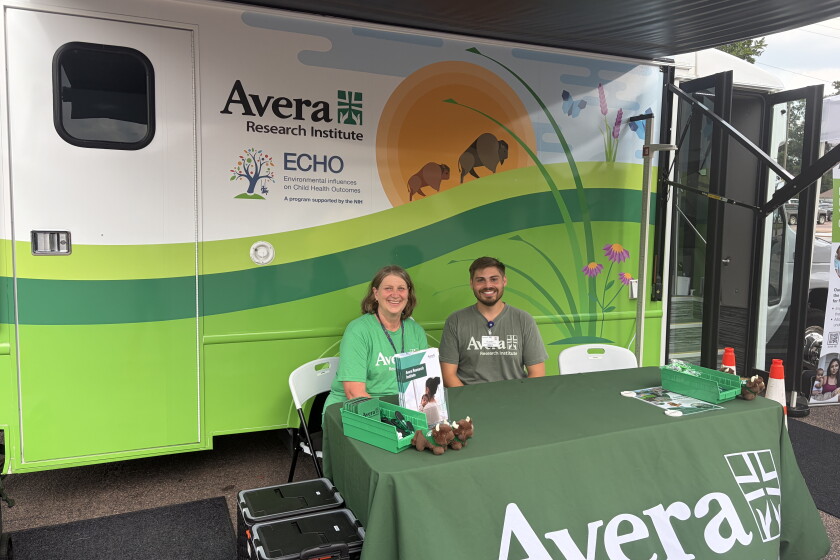
Avera Queen of Peace Hospital had an unusual visitor this week — a 25-foot mobile research unit designed to bring clinical studies directly to rural communities
The Avera Research Institute’s mobile unit stopped in Mitchell on Aug. 11-12 as part of a summer tour through South Dakota, Iowa and Minnesota. The vehicle functions as a research clinic on wheels, allowing researchers to conduct study visits and connect with participants without requiring them to travel to one of Avera’s larger research locations
Clinical researchers from Avera’s Sioux Falls and Rapid City offices spent two days in Mitchell meeting with study participants and community members
“It’s really kind of a rolling site for us to go to those people that aren’t able to come see us in person,” said Dustin Prouty, a clinical research coordinator with the Avera Research Institute
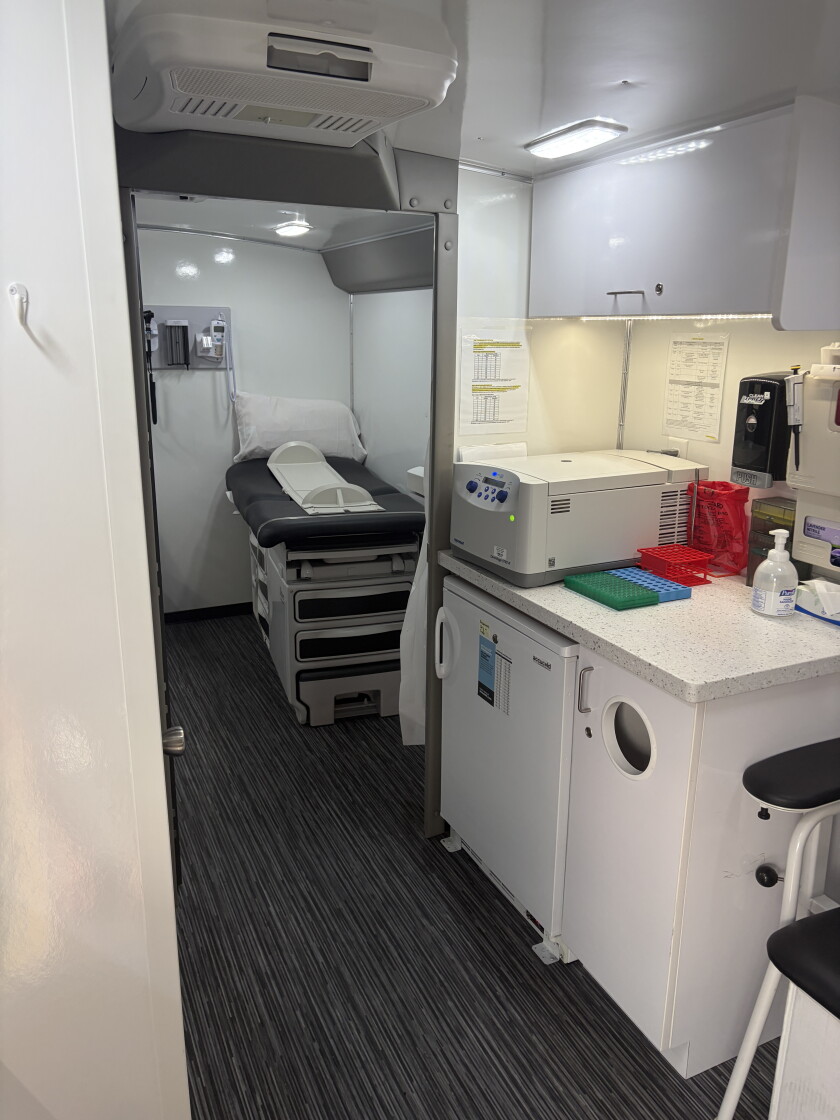
The mobile unit has two private clinic rooms, allowing researchers to work with separate families at the same time. It also is equipped for physical assessments, including height, weight and body fat measurements, as well as blood collection and processing
That capability is particularly important for the Environmental influences on Child Health Outcomes, or ECHO, study, one of the primary studies supported by the Mitchell visit
ECHO is a nationwide, National Institutes of Health-funded study examining how environmental factors early in life affect children’s health and development. Researchers are studying areas including childhood obesity, asthma and other airway conditions, neurodevelopment and overall positive health
The Avera Research Institute has enrolled more than 3,000 South Dakota children in the study. Participants are followed from pregnancy through childhood and into young adulthood
To enroll in ECHO, mothers must be less than 20 weeks pregnant. The study follows the child over time, collecting information about sleep, nutrition, allergens, stress and other environmental influences
The long-term nature of the study makes accessibility important, particularly for families who live outside larger communities
Avera Research Institute has offices in Sioux Falls, Rapid City, Pine Ridge and Pierre, but those locations can still be a significant drive for families elsewhere in the state. The mobile unit allows researchers to bring study visits closer to participants
“The unit offers us to reach participants in locations that it’s hard to get to our physical site locations,” Prouty said
The mobile clinic also allows researchers to collect information that cannot be gathered remotely
Some study components can be completed at home with mailed equipment, but procedures such as blood draws require an in-person visit. Inside the mobile unit, researchers have the equipment necessary to collect, process and safely store biological samples
That allows researchers to gather more complete information while reducing the travel burden placed on participants
The mobile unit was established through funding connected to a large NIH grant. In September 2023, the Avera Research Institute received $58 million over seven years for research focused on the health of mothers and children, particularly those in American Indian and rural communities. Of that funding, $47 million was designated for the second cycle of ECHO, with a portion also going toward the mobile unit
For ECHO, bringing the study into rural communities is about more than convenience. Researchers say it helps ensure rural populations are represented in national health research
“We want to ensure that all communities are represented in the ECHO study, which looks at a wide array of environmental factors and how they influence children’s health and development,” said Christine Hockett, PhD, director of community research and a multiple principal investigator on ECHO. “The Mobile Unit helps increase participation in the study by reducing barriers such as travel.”
Rural communities can have different lifestyles and environmental exposures than densely populated areas. Air and water quality, agricultural environments and other aspects of rural life can differ from what researchers see in larger population centers
“Our mission is to bring cutting-edge research to the prairie,” Prouty said
The mobile unit also serves another purpose: helping researchers build awareness and trust in the communities they visit
Lorie Miller, who works with the research institute, said community awareness is an important part of recruiting participants
“Part of it is just getting the awareness out that we exist,” Miller said
Reaching people through phone calls, emails and text messages can be challenging, as unsolicited messages can easily be mistaken for scams. The mobile unit gives researchers a chance to meet residents face to face
“You get texts, calls, scams nowadays,” Prouty said. “So this is really to show our face, and say, ‘Yes, this is a real thing. We’re here.’”
The Mitchell visit also allowed researchers to screen and enroll new ECHO participants
The strict enrollment window means not everyone who expresses interest will qualify. Parents sometimes stop by hoping to enroll a child who has already been born, only to learn that participation must begin during pregnancy
The mobile unit is part of a broader effort by the Avera Research Institute to make research opportunities available beyond its primary locations. The institute also conducts programs such as Avera Healthy Start, which provides education and incentives to pregnant women and families, including those in rural areas
The summer tour has taken the mobile unit through several communities, including stops in Iowa and South Dakota. After Mitchell, the unit was scheduled to continue to Marshall, Minnesota
The researchers plan to return to Mitchell on Sept. 29 for a community engagement event. The visit will give residents another opportunity to learn about the research institute, ask questions and find out whether they may qualify for one of its studies
For families who participate in ECHO, the research is not necessarily about receiving an immediate personal health benefit. Instead, participants contribute information researchers hope will improve understanding of children’s health and help shape care for future generations
“The participants in this study, they are not going to find individual results,” Prouty said. “This is not going to improve their health. But they’re doing it so they can improve the health for children in generations to come.”
By
Jennifer Leither
Jennifer Leither joined the Mitchell Republic in April 2024. She was raised in Sioux Falls, S.D. where she attended Lincoln High School. She continued her education at South Dakota State University, graduating in December 2000 with a bachelor’s degree in Journalism. During her time in college, Leither worked as a reporter for the campus newpaper, The Collegian. She also interned for Anderson Publications in Canistota, SD the summer of 2000. Upon graduation, Leither continued to reside in the Sioux Falls area and worked as a freelance writer for the Argus Leader for a number of years./jennifer-leither

Local
Back in Time Aug. 15: Auto Collision Works
16h ago
· By Staff reports
Local
Councilmen weigh in on recent cybersecurity event at Mitchell City Hall
1d ago
· By Marshall Mitchell
Local
DWU music department strikes a chord with facility renovations, new programs
1d ago
· By Erik Kaufman
Get Local
‘;
let script = document.createElement(“script”);
script.setAttribute(“data-widget-type”, “featured_jobs”);
script.setAttribute(“src”, “//widgets.recruitology.com/scripts/” + jobshqID +”.js”);
document.getElementById(“jobsHQ-hotjobs-list”).appendChild(script);
}
}
init()
Local
DWU music department strikes a chord with facility renovations, new programs
1d ago
· By Erik Kaufman
Sports
Second-generation leadership carries on Friends of Amateur Baseball program legacy
1d ago
· By Landon Dierks
Local
New lawsuit sparked in Mitchell baseball hazing case
1d ago
· By Luke Hagen
Local
LifeQuest clients find freedom and independence in new Cottage Bend homes
1d ago
· By Marshall Mitchell
