


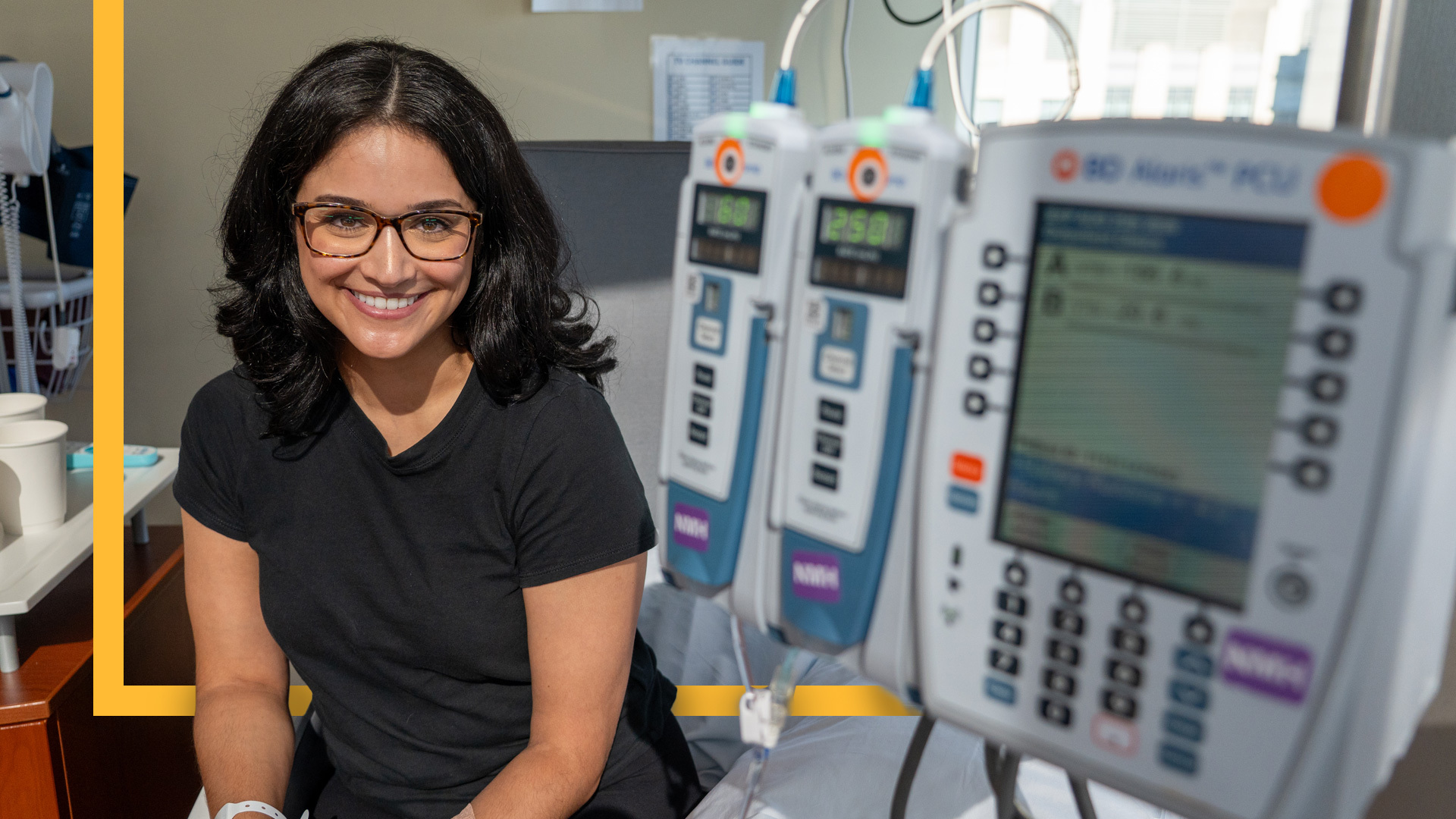
The first sign that something was wrong with Marissa Humayun came one morning in March 2023, when she woke up with a drooping eyelid
At 26, Humayun was young, healthy and working a corporate job in Chicago. She figured she was tired. Maybe she had stayed out too late or spent too much time staring at screens
But the eyelid stayed drooped

Download the Straight Arrow app today to get the stories that matter free from manipulation, bias or agenda.™
Her parents urged her to seek medical attention. A friend who was a physician assistant told her it wasn’t normal and recommended she go to an emergency room
Doctors initially treated Humayun as a possible stroke patient. Tests ruled that out, but she said doctors mentioned a rare neurological disorder called myasthenia gravis and then largely dismissed the possibility because of her age and sex
Over the next six weeks, she visited optometrists and ophthalmologists, underwent imaging and eventually saw a neuro-ophthalmologist
Within about 10 minutes, Humayun said, the specialist recognized what others had missed: She had ocular myasthenia gravis, an autoimmune disorder that causes weakness in the muscles controlling the eyes
“It kind of hit me like a freight train,” Humayun said
Download the Straight Arrow app today to get the stories that matter free from manipulation, bias or agenda.™
Point phone camera here
For Humayun, the disease has remained limited to her eyes. But myasthenia gravis can affect muscles throughout the body, causing difficulty with movement, chewing, swallowing, speaking and, in severe cases, breathing
The disorder is characterized by muscle weakness that worsens with activity and improves with rest. Someone can feel relatively normal in the morning and become increasingly debilitated as the day wears on
Dr. Ankit Bharat, chief of thoracic surgery at Northwestern Medicine, said myasthenia gravis disproportionately affects younger women, while men who develop the disease are more often older
Humayun’s experience also illustrates why the disease can be difficult to diagnose
“You could be fine one minute and not fine the next,” she said
Bharat said the nonspecific nature of the symptoms can lead to delays in diagnosis, particularly among young people who report fatigue or weakness
After her diagnosis in 2023, Humayun was referred to Bharat for a thymectomy, a procedure to remove the thymus gland
The thymus sits behind the breastbone and in front of the heart. It plays an important role in developing the immune system early in life but normally shrinks and is replaced by fatty tissue after adolescence
In myasthenia gravis, researchers have long suspected that the thymus can contribute to the autoimmune response. Removing it can reduce symptoms for many patients
At Northwestern, Bharat performs thymectomies robotically, using several small incisions rather than opening the breastbone. Humayun underwent the procedure in July 2023
She also donated her thymus to Bharat’s research
Through the donation, Bharat and his colleagues found evidence that the thymus can produce abnormal immune cells involved in myasthenia gravis. More significantly, the researchers found that some of those cells can persist and escape into other parts of the body
Those cells, Bharat said, can essentially become “immortal,” remaining hidden after the thymus is removed and later producing antibodies associated with the disease
That could help explain why some patients relapse after a thymectomy
About 30% to 40% of patients can experience recurrence, he said, although many patients benefit from thymectomy and may not have symptoms return
The discovery also points toward a possible new approach to treatment
Researchers identified a pathway that appears to help make the abnormal immune cells persist. Bharat said that pathway could potentially be targeted with drugs
No such drug currently exists, and additional research is needed. But if scientists can develop a treatment that selectively eliminates or disables those cells, it could offer an alternative to broad immunosuppression
For Humayun, that possibility matters
She began infusion therapy in December 2024. The treatment suppresses her immune system and has kept her largely free of the eye symptoms that once disrupted her life. But it has also left her more susceptible to infections and other side effects
“It’s this weird trade-off of, do you want the symptoms of your disease or are you going to accept the side effects of the medications that you’re on and have no symptoms?” she said
A treatment aimed specifically at the cells driving myasthenia gravis could eventually reduce that trade-off, Bharat said
“If we had a drug that can just selectively kill those bad actors, then her symptoms will go away, and she’s not going to need any immunosuppression,” he said
The findings could eventually raise questions about other autoimmune diseases, but Bharat cautioned against drawing conclusions beyond the research
The thymus has been investigated in connection with other autoimmune conditions, he said, but the evidence is not yet strong enough to say the same mechanism is responsible
Humayun said she has learned not to take her health for granted
Before her diagnosis, she had no warning that an autoimmune disease was coming. She recalled going through a particularly stressful period in the months before her first symptoms but said she does not know whether it played any role
Now, even when her symptoms are controlled, she structures her days around the possibility of fatigue. She takes medication, rests her eyes during work and wears dark sunglasses outside. Exercise and other activities require some planning
Still, she considers herself fortunate
She describes her life as “2.0” — mostly normal, but with a new awareness of what her body requires
She also writes about her experience with myasthenia gravis and has volunteered for research and public-awareness efforts. The goal, she said, is to help other patients recognize the disease and encourage more research into autoimmune disorders
The disease remains relatively rare, but Humayun said patients can benefit from sharing their experiences
“The rare disease community is small but mighty,” she said. “So we all have to stick together.”
Bharat hopes the research can ultimately lead to treatments that are more precise than today’s broad immune suppression and perhaps prevent patients from needing surgery in the first place
For Humayun, the research has given an unexpected meaning to a piece of her own body that she once thought of as little more than an unnecessary gland
Her thymus is now in a laboratory
“She’s no longer with us,” Humayun joked of the gland. “She’s in a lab with Dr. Bharat.”
And, she said, she is grateful that something that once seemed like a setback may help researchers understand why the disease comes back — and how, someday, to stop it
- Media Miss: Inside the algorithms and agendas shaping what you see
- Confidential Informant: Your essential guide to privacy in a world under surveillance
- Health(y) Discourse: Our health scientist provides the antidote to wellness hype
