


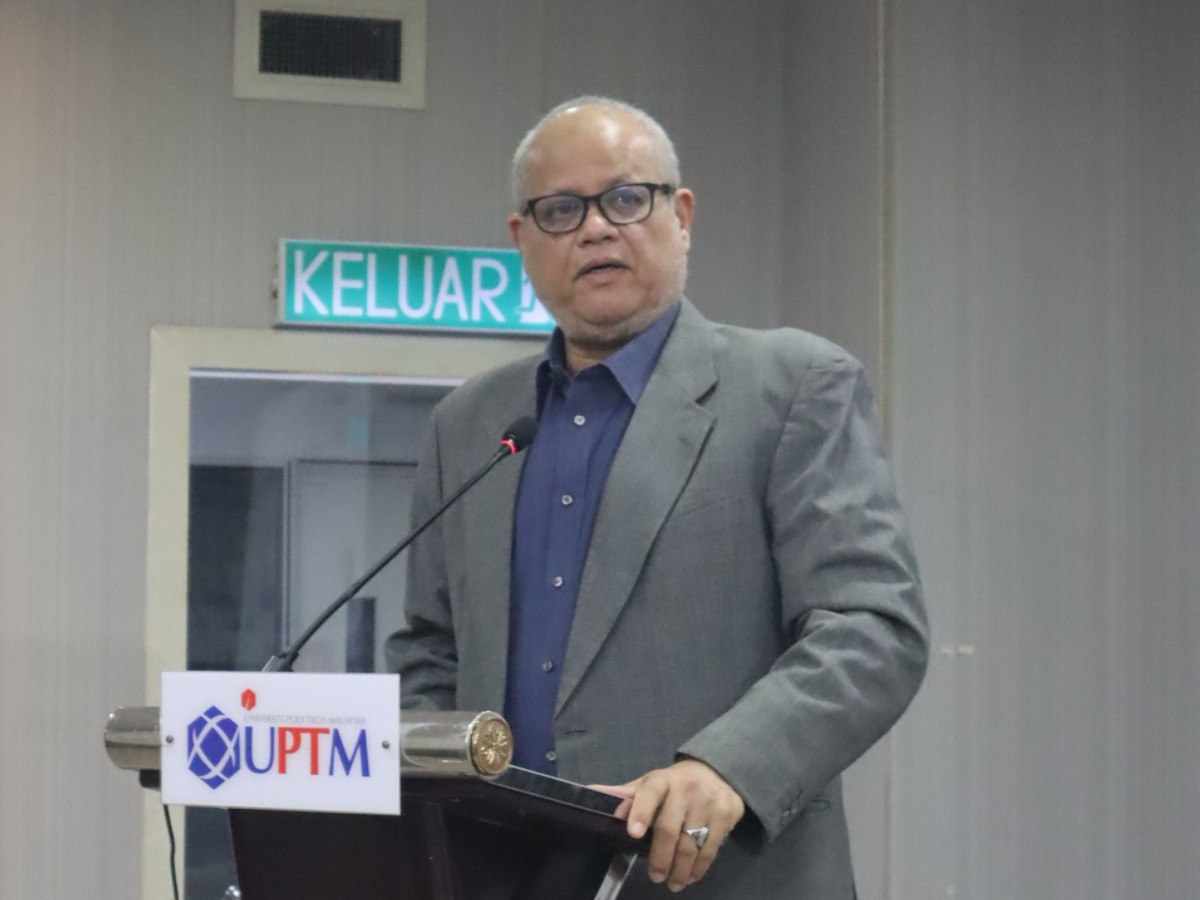
August 17 — Prof Emeritus Dr Syed Mohamed Aljunid Syed Junid has called for a cancellation of MediAsas because of the proposed medical plan’s exclusion of pre-existing conditions and seven-year “no look-back” moratorium
The health financing expert said the government-designed “base” medical and health insurance/takaful (MHIT) product – slated for public launch in January 2027 – was essentially no different from existing private health insurance, despite being touted as part of Malaysia’s health financing reform
“The whole thing has to be scrapped. If I were the health minister, the first thing I would do on my first day would be to stop MediAsas. It’s rubbish,” Dr Syed Aljunid told a forum co-organised by Yayasan Angkatan Bakti Insan Medikal (ABIMedik) at Universiti Poly-Tech Malaysia (UPTM) here last Friday on the health care system
According to a July 29 “pilot” FAQ by Bank Negara Malaysia (BNM), MediAsas has 35 major exclusions, such as pre-existing conditions, congenital conditions, and mental disorders, that are standard in the market
MediAsas’ “no look-back” protection only takes effect after seven continuous years from a policy’s risk commencement date, leaving policyholders potentially exposed to disputes over their medical history during that period
“But we do not know how this will be enforced,” Dr Syed Aljunid said. “I’m afraid that they might deny claims submitted after three years.”
Some insurance/takaful agents interpret MediAsas’ “no look-back” provision as a seven-year waiting period, far longer than a conventional but unwritten two-year contestability period for other medical plans in the market, regardless of 120-day waiting periods stated in policy contracts for specified illnesses
According to BNM’s FAQ, even after seven years, claims can still be denied if the ITO establishes that non-disclosure or misrepresentation was “fraudulent, deliberate, or reckless” or if the claim relates to a pre-defined medical condition, like all cancers and major cardiovascular conditions, among others, that a policyholder had before buying MediAsas
When asked at the ABIMedik forum to clarify the seven-year “no look-back” moratorium, Dr Muhammed Anis Abd Wahab – who is with the Ministry of Health’s (MOH) Health Transformation Office and is currently seconded to ProtectHealth Corporation – passed the buck to the central bank
“ProtectHealth doesn’t play a role in that, not even MOH. It’s very much a Bank Negara policy. ProtectHealth’s role in MediAsas is to help develop the DRG (diagnosis-related groups). It’s to ensure, in essence, that there’s a new payment mechanism introduced in our health insurance,” he said
MediAsas is fully underwritten, which means that insurance and takaful operators (ITOs) assess an applicant’s medical history based on voluntary disclosures before deciding whether to offer coverage, charge higher premiums, or determine specific exclusions. The government isn’t mandating pre-policy medical check-ups for everyone who wishes to purchase MediAsas
Health Minister Dzulkefly Ahmad reportedly said last February that MediAsas, known as Base MHIT then, would be offered to individuals with “stable and controlled” pre-existing conditions, including those with <a href="https://healthylife7.com/u-s-commander-says-mental-health-a-priority-aboard-uss-lincoln/" title="U.S. commander says mental health a priority aboard USS Lincoln”>mental health issues. He also touted the “no look-back” provision
But the “stable and controlled” phrase didn’t make it to BNM’s FAQ that left it to ITOs to “determine insurability” of MediAsas applicants who declare pre-existing illness, based on additional medical assessments. Neither did the document set a limit on premium-loading
In comments to Free Malaysia Todaypublished last Friday, BNM deputy governor Aznan Abdul Aziz claimed that MediAsas was intended to be more inclusive than other health insurance products for people with “stable, well-managed conditions”, but did not provide a definition
Millions Have Chronic Conditions, ‘Everybody Should Be Included’
Dr Syed Aljunid said MediAsas’ exclusion of pre-existing conditions could leave large numbers of Malaysians with chronic illnesses disqualified from coverage under the scheme that is targeted at uninsured individuals and those looking to downgrade their existing medical plans
“That is why we proposed that everybody should be included and that there should be no exclusions. The issue of exclusions did not arise during discussions when the product was being developed. But suddenly, when it was announced, there were exclusions
“This means that the so-called MediAsas is not suitable to be used as a health financing scheme,” the professor of health economics, policy and management at IMU University told the ABIMedik forum
The Star reported in November 2025 that Malaysia ranked 13th globally and highest in Southeast Asia for diabetes prevalence, with 21 per cent of adults living with the disease
Meanwhile, the National Health and Morbidity Survey (NHMS) 2023 found that 29.2 per cent of adults had hypertension, 33.3 per cent had high cholesterol, and 54.4 per cent were overweight or obese. Two in five adults with diabetes were unaware of their diabetic status
The survey also found that nearly 2.3 million adults were living with three of four major chronic conditions – diabetes, hypertension, high cholesterol or obesity – while more than half a million adults, or 2.5 per cent, had all four
Dr Syed Aljunid said MediAsas’ use of risk-rating – like regular health insurance – could further encourage insurers to select lower-risk customers, while leaving people with non-communicable diseases (NCDs) dependent on the public health care system, a practice he described as “cream skimming”
“They only take people who are low risk. The high-risk people are told to go to MOH and use public facilities, so it will not solve the problem
“If you don’t let them in, almost two-thirds of our population could be left out of the scheme – people with hypertension, diabetes, and other conditions.”
He said a national health financing scheme should instead use community rating, where people are not excluded based on their individual health risks
MediAsas – which has an RM100,000 annual limit for those aged 59 years and younger, and RM150,000 for 60-year-olds and older under its standard plan – could potentially work as a top-up product, Dr Syed Aljunid said
But he warned policymakers not to try to solve health financing by simply choosing the easiest components to implement
“You can make it a top-up, but sometimes policymakers say, ‘Oh, let’s take the low-hanging fruit’ because it’s easier. But then you get unripe fruit. That’s the problem
“Everybody wants to find an easy way. There’s no simple way to solve a health financing scheme. You cannot just pick and choose what is convenient. Otherwise, people wouldn’t have been studying this since the 1980s
“So, the whole package is not what has been discussed before,” added Dr Syed Aljunid, referring to MediAsas
Bank Negara Should Protect Consumers, Not Insurance Industry
Dr Syed Aljunid criticised the central bank for what he described as its focus on protecting private insurers, rather than ensuring access to health financing for the public
“I think we are being taken for a ride. Bank Negara made a statement that was rather disappointing. Bank Negara said that ‘our business is to protect private insurance’. They are supposed to protect the population; that is what should happen
“The problem is, Bank Negara is supposed to be the regulator. Why are you siding with these people and letting the rakyat get taken for a ride as well? This is the worst scenario that we are seeing now.”
BNM governor Abdul Rasheed Ghaffour told a Public Accounts Committee (PAC) inquiry last year into health insurance and private hospital charges that the central bank was mandated to protect the insurance and bank industries
Central banks have historically intervened to protect the financial sector during major financial crises, including through emergency support for banks and insurers
Dr Syed Aljunid also questioned whether focusing on private insurance could significantly improve Malaysia’s overall health financing, given that private insurance accounts for only a small share of total health expenditure
“Remember, private insurance in this country only contributes 8 per cent of total health expenditure. If you want to raise enough funds and improve access to health financing, you don’t talk about this 8 per cent. It’s the other 92 per cent that you need to cover, not through this method.”
