


Alzheimer’s research is latest casualty in Trump administration war against ‘DEI’
Grant cancellations at leading research institutions appear to target study of impacts of racism on brain health
A new round of scientific grant cancellations has hit brain health and Alzheimer’s disease research at two leading research institutions, Emory University and the University of Pittsburgh
The latest cancellations are the Trump administration’s most recent effort to remove disfavored topics from the National Institutes of Health (NIH) $47bn scientific portfolio – and appear to target the study of the impacts of racism
“This kind of clear political interference – that’s not a good way to do science,” said Ann Cohen, an associate professor of psychiatry at the University of Pittsburgh, whose grant was canceled. “I haven’t even thought much about the why this is being done because it’s so scientifically wrong that I can’t get past that piece.”
‘Just cruel’: Medicaid halt in California and Minnesota plunges caregivers and disabled people into uncertainty
Read more
Cohen, and all researchers the Guardian interviewed, spoke in their personal capacity
The Guardian has contacted representatives of the US Department of Health and Human Services, which oversees the NIH, for an explanation of the cancellations. It did not receive a response
At least three grants were canceled between the two institutions. In total, the cancellations represent $15m in grants that were meant to study how discrimination affects long-term brain health – millions of which have already been invested in the work
“Those things we’re measuring are scientifically valid concepts,” said University of Pittsburgh associate professor of epidemiology Andrea Rosso, who co-led a grant canceled by the administration. “Whoever was doing this saw the words they didn’t like in our grant.”
An estimated 7.4 million people in the US live with Alzheimer’s disease or dementia. The disease primarily affects older people, but is not considered a normal part of ageing. Although a majority of those people living with Alzheimer’s disease are white, Black Americans are twice as likely to develop it or dementia
“We don’t actually measure structural racism. We use that as a framing for why one population is at such high risk,” said Rosso. “We can’t come up with an intervention that’s going to stop structural racism – wish we could.”
The cancellations are the Trump administration’s latest disruption of scientific research, including Alzheimer’s disease research. In the spring of 2025, the administration canceled billions of dollars in federal grants with a perceived connection to “DEI”, or diversity, equity and inclusion. That kicked off lawsuits from major research institutions
A federal judge ruled those cancellations were illegal and ordered their reinstatement. However, the Trump administration won in a shadow docket ruling from the supreme court, when justices voted 5-4 in an unsigned ruling that allowed the administration to cancel $783m in NIH funding
Grants targeted in this round of cancellations are not covered by that litigation. As a result, one leading attorney argued these cancellations represent a new round of “test cases” – a legal strategy the administration may be hoping is more legally defensible
“The administration, particularly [HHS] Secretary Kennedy, has followed a very clear pattern,” said Lawrence Gostin, a professor of global health law at Georgetown Law. “They do something that’s clearly unlawful, they get slapped down by a federal court and then they try to cobble together a strategy that does basically the same thing but is legally defensible. I think that’s what’s going on here.”
NIH grants are typically awarded for several years and have regular check-ins with the funding institution. But Cohen and Rosso all had grants delayed for months in 2025 – at the time, the administration held up $65m in funding for a group of leading Alzheimer’s disease research centers nationally. Then, this winter, grants expected in January and February at both institutions did not come until June 2026
“At the time, we were basically trying to run the study on a shoestring, and a lot of people didn’t get paid,” said Negar Fani, associate professor of psychiatry at Emory University
skip past newsletter promotion
Funds were awarded in June this year, but letters contained new termination language. By the end of July, the group had been notified their grants were canceled
“We were running on fumes until we could get the second year of funds; those came in June, but the termination followed one month later,” said Fani
At Pittsburgh, a canceled grant led by Rosso studied how Alzheimer’s disease risk was affected in people who live in divested, predominantly African American neighborhoods. Cohen’s canceled grant studied socially driven Alzheimer’s disease risk factors by collecting surveys, brain imaging and blood samples. Those risk factors were once framed as “individual”, but have increasingly come to be seen as outside individual patients’ control
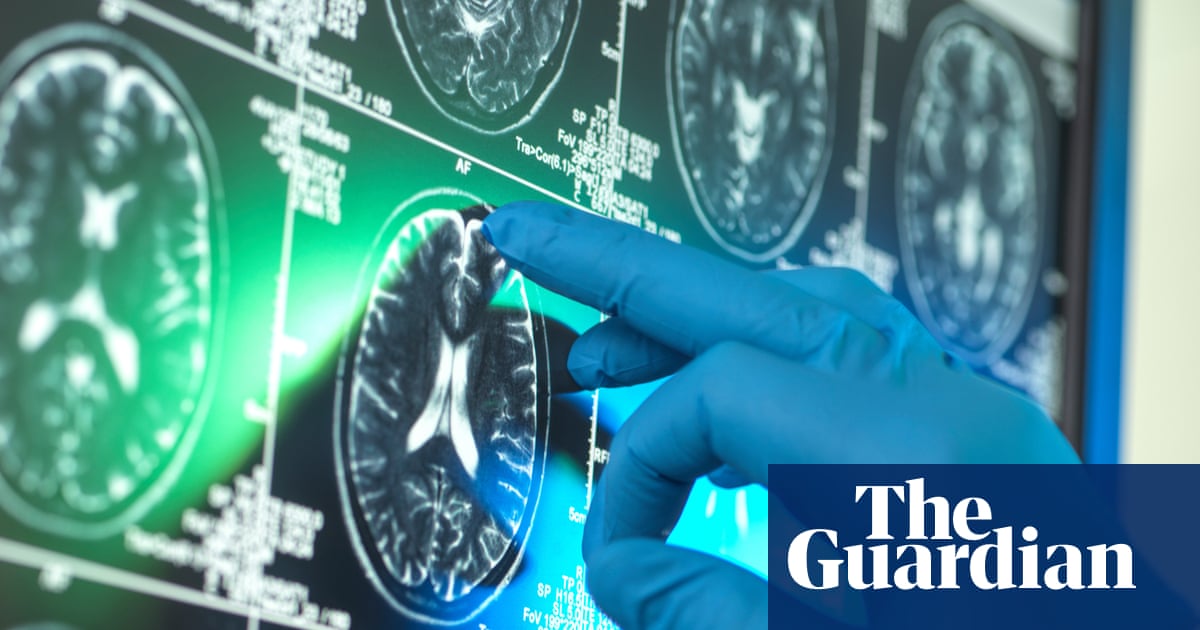
At Emory, a grant led by Fani studied the impact of racial discrimination on the white matter of the brain, in part surveying participants’ self-reported incidences of discrimination, and outfitting them with wearable devices, performing MRIs and conducting a sophisticated data fusion analysis
The NIH’s director, Dr Jay Bhattacharya, said in letters described to the Guardian that “the project no longer effectuates NIH’s priorities”, and that “the lack of concrete, objective and measurable variables is not in alignment with NIH’s priorities”. In more than one letter, the cancellation focused on the fact that research included surveys, including self-reports of discrimination
“What’s most frustrating to me about all of this is this assertion that – in the most basic way – the assertion that our outcomes are not measurable or scientific,” Cohen said. “[It] demonstrates a lack of understanding of our outcomes versus our exposures – that’s epidemiology 101.”
A letter to Fani similarly emphasized the inclusion of surveys as problematic
“It was saying that self-reported measures are not scientifically valid, and as a scientist that would rule out a large portion of our entire field,” said Fani. “We ask people about their trauma, and symptoms, and depression, to lifestyle, to their reports about alcohol and substance abuse, their reports about physical pain and medication usage
“Those perceptions get under the skin, into the brain, and affect in real ways health.”
Explore more on these topicsShare
Reuse this content
