


Download PDF
Abstract
Urban populations in early modern to modern Japan depended strongly on rice and marine fish, raising the question of whether such apparently simple diets provided sufficient mineral availability in everyday life. Here, we analyze human hair preserved in historical book covers to reconstruct elemental exposure among urban commoners from the seventeenth to nineteenth centuries. Screening approximately 70,000 volumes allowed individual hair samples to be linked to specific cities and years through colophon records, enabling a rare population-scale reconstruction from abundant and well-dated materials. Multi-element analyses showed that several elements, including essential ones, were consistently higher in historical hair than in contemporary reference populations, indicating greater mineral availability in past diets. Carbon and nitrogen isotope data confirmed strong reliance on C3 staples, particularly rice, with marine fish providing a major and increasing nitrogen source. Interpreted together, the elemental and isotopic patterns suggest effects of rice polishing, marine resources, salt preservation, cookware, and other material practices. These findings show that historical books can preserve bioarchives for reconstructing everyday diet and material culture, and they indicate that urban commoners in early modern to modern Japan had substantially greater dietary mineral availability than contemporary populations, despite apparently simple diets centered on rice and marine fish.
Subjects
Introduction
Mineral availability has been a persistent determinant of human nutrition, yet its long-term historical dynamics remain poorly understood. Mineral deficiencies still affect more than two billion people worldwide1,2, and in Japan the intake of several essential minerals remains below recommended levels in contemporary populations3,4. Most discussions of this problem focus on contemporary food systems or on evolutionary contrasts with hunter-gatherer diets5,6,7, but much less is known about how mineral availability changed within later agricultural societies. This gap limits our ability to place present-day micronutrient insufficiency in a longer historical context and to identify the cultural and technological processes that have shaped mineral availability in everyday diets.
Reconstructing historical mineral nutrition is challenging because few archives preserve both biological material and reliable temporal context. Bones and teeth provide valuable long-term records, but they integrate information over broad portions of the life course and are often constrained by sample availability, preservation, and ethical considerations8,9. Hair offers a complementary archive because it records dietary and environmental signals over shorter timescales and is well suited to both multi-element and stable isotope analyses10,11,12,13,14. However, well-dated historical hair samples are rare, and this limitation has hindered population-scale reconstructions of past dietary mineral availability.
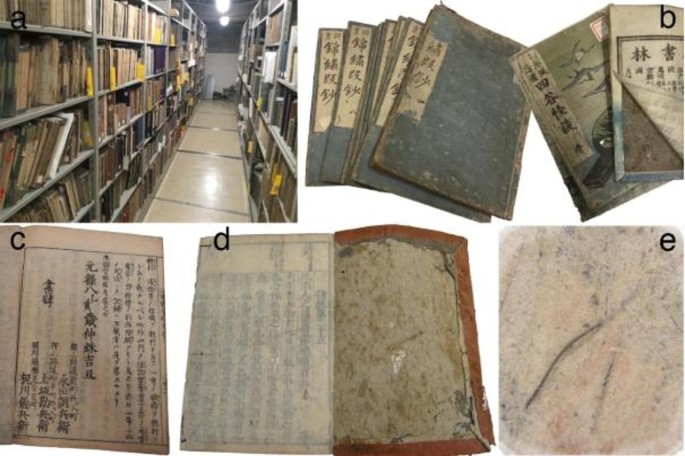
In early modern to modern Japan (17th to 19th centuries), human hair embedded in the recycled paperboard of historical book covers provides an unusual archive for reconstructing past diets (Fig. 1). Because such books often preserve colophon information on year and place of publication, the associated hair can be anchored to specific historical contexts at a scale rarely achievable with other biological materials. Our previous pilot study using stable isotope analysis of book-embedded hair showed that urban diets in this period relied strongly on C3 staples, especially rice, together with marine fish as a dominant nitrogen source15. This pattern contrasts with isotope data from contemporary Japanese populations16,17, which reflect dietary inputs from more diversified food sources16,17,18,19,20, while remaining broadly consistent with historical scholarship emphasizing the centrality of rice and the relatively limited role of mammalian meat in Japanese food culture21,22. This finding raises the further question of whether such apparently simple diets were nonetheless sufficient to sustain substantial mineral availability.
Historical books preserving embedded hair. a: Shelves at Ryukoku University Omiya Library that house approximately 70,000 volumes printed in early modern to modern Japan. b: Two sets of traditional Japanese books. c: The colophon, usually found on the last page, which provides bibliographic information such as the year and place of publication, but does not necessarily indicate the actual year and place of printing. d: Recycled thick paperboard used exclusively for the front and back covers, in which hair is embedded; this board is originally covered with high-quality paper. e: Close-up of hair embedded in the recycled thick paperboard.
Here, we use particle-induced X-ray emission (PIXE)-based multi-element analysis of hair identified through screening of approximately 70,000 volumes, complemented by stable isotope measurements that provide dietary context, to reconstruct elemental patterns in early modern to modern Japan. Because the hairs were embedded in recycled paperboard and traditional papermaking materials were not mineral-rich, contamination is unlikely to have been a major influence. Contrary to the expectation that such apparently simple diets might have been mineral-poor, we find that historical hair contains substantially higher concentrations of multiple elements, including essential ones, than contemporary reference populations, indicating markedly different elemental exposure associated with everyday diets. These elemental patterns, interpreted together with isotope evidence, point to the combined importance of rice polishing, marine resources, salt preservation, cookware, and other material practices in shaping mineral availability. More broadly, our results show that historical books can preserve well-dated bioarchives for reconstructing long-term interactions among diet, environment, and culture.
Results
Historical hair reveals mineral-rich diets relative to today
Elemental concentrations in human hair preserved in historical book covers were quantified by PIXE in 104 book sets for ten elements: silicon (Si), sulfur (S), chlorine (Cl), potassium (K), calcium (Ca), manganese (Mn), iron (Fe), copper (Cu), zinc (Zn), and lead (Pb). Linear models comparing 104 historical and 40 contemporary samples from major Japanese cities revealed consistent differences for nine elements, with no difference detected for Si (Fig. 2). Historical hair showed significantly higher concentrations of Cl (F1,134 = 814.79, p < 0.001), K (F1,136 = 505.39, p < 0.001), Ca (F1,136 = 121.39, p < 0.001), Mn (F1,134 = 647.81, p < 0.001), Fe (F1,136 = 232.81, p < 0.001), Cu (F1,136 = 48.73, p < 0.001), and Pb (F1,136 = 346.53, p < 0.001) than contemporary hair, whereas S (F1,136 = 4.73, p = 0.031) and Zn (F1,136 = 38.53, p < 0.001) were higher in contemporary hair (Fig. 2). These results indicate that urban populations in early modern to modern Japan were exposed to higher levels of multiple elements derived from dietary and environmental sources than those observed in contemporary reference populations.
Elemental contents (log10-transformed, except for S) in human hair measured by PIXE analysis, plotted against the bibliographically corrected year of woodblock printing or hair collection. Scatter plots (left) represent hair embedded in book paper, and violin plots (right) represent contemporary hair (2020). Colors indicate the different locations (Kyoto, Osaka, Tokyo, and five other provinces). Lines represent the results of linear models. Multiple lines are shown only when intercepts or slopes differ significantly between locations. Solid lines are used when slopes are significantly different from zero or different between locations. Red asterisks between the scatter and violin plots indicate significant differences between the two eras (hair embedded in book paper and contemporary hair).
The same linear models detected no significant main effects of location for any element (p > 0.05). Interaction effects between era and location were significant for Mn (F2,134 = 4.147, p = 0.018) and Cl (F2,134 = 3.280, p = 0.041), indicating that the magnitude of historical–contemporary differences varied modestly among cities
Temporal trajectories and spatial differences in elemental concentrations
Linear models applied to the historical dataset showed that several elements exhibited significant temporal trends (Fig. 2). K showed a strong decline over time (t = − 7.16, p < 0.001), and Si also decreased modestly (t = − 2.09, p = 0.039). These results indicate gradual shifts in the elemental composition of hair across the study period. A multivariate summary of the historical samples based on Aitchison distances calculated from centered log-ratio–transformed elemental profiles also indicates a temporal shift in overall elemental composition (Fig. S1), but the loadings of individual elements are distributed across multiple directions in ordination space, indicating limited dimensional reduction and supporting the element-specific analyses presented in Fig. 2.
Spatial differences among locations were generally limited. Relative to Kyoto, S concentrations were lower in the five other provinces (t = − 2.28, p = 0.025), Cl concentrations were lower in Tokyo (t = − 2.44, p = 0.017), and K concentrations were higher in the five other provinces (t = 2.47, p = 0.015). For most elements, however, no significant location effects were detected
A few elements exhibited significant interactions between year and location. Fe decreased over time in Kyoto but increased in Osaka (t = 2.27, p = 0.026), whereas Cu increased in Kyoto but decreased in Tokyo (t = − 2.10, p = 0.038). These patterns suggest that while overall temporal trends were broadly shared, certain elements followed city-specific trajectories
Isotopic evidence of diet and its links to elemental concentrations
Stable isotope ratios of carbon and nitrogen in historical hair from 161 book sets provide context for interpreting the observed elemental patterns. After correction for the Suess effect23,24,25, hair from the early modern to modern period exhibited lower δ13C and higher δ15N values than contemporary Japanese hair (Δ13C = 3.0‰, t = − 68.38, df = 160, p < 0.001; Δ15N = 1.4‰, t = 18.62, df = 160, p < 0.001; Fig. 3a)16,17. For broader reference, these δ13C and δ15N were also lower and higher, respectively, than contemporary populations from Asia, Europe, and the USA17,18,19,20. These values are consistent with diets dominated by C3 plant staples, particularly rice, together with substantial inputs of marine fish nitrogen (Fig. 3b)16,17,26,27.
Carbon and nitrogen stable isotope ratios (δ13C and δ15N) of hair embedded in book paper (solid circles). a, b: δ13C–δ15N plots (means ± SD), shown with hair of contemporary (2000s) people (open circles and cross)16,17,18,19,20(a) and with contemporary (2000s) foods (dashed-line rectangles represent means ± SD area)16,17,26,27(b). c, d: Temporal changes in δ13C (c) and δ15N (d), plotted against the bibliographically corrected year of woodblock printing. Contemporary isotope ratios were adjusted to the atmospheric baseline of the 17th to 19th centuries to account for the Suess effect23,24,25. Trophic discrimination factors specific to human hair (Δ13C = 2.5‰, Δ15N = 4.15‰)16 are added to the foods’ values. Colors represent different locations of book printing. Lines indicate regressions.
Linear models applied to historical isotope data further suggest gradual shifts in dietary composition within the historical period. Hair δ13C declined significantly through time across locations (t = − 2.43, p = 0.016; Fig. 3c), indicating a progressive reduction in C4 plant inputs such as millet and foxtail millet. Differences among cities were modest: δ13C intercepts were lower in Osaka (t = − 2.17, p = 0.031) and higher in Tokyo (t = 2.01, p = 0.046) relative to Kyoto, whereas the five other provinces did not differ significantly (t = 1.15, p > 0.10). In contrast, δ15N increased significantly over time (t = 4.97, p < 0.001; Fig. 3d), consistent with increasing reliance on 15N-enriched nitrogen sources, mainly marine fish. Slopes did not differ among locations, and only a marginal difference in intercepts was detected between Kyoto and Tokyo (t = − 1.92, p = 0.056), implying slightly lower δ15N values in Kyoto.
Relationships between stable isotope ratios and elemental concentrations, assessed by linear regression using δ13C or δ15N as predictors of the 75 historical dataset pooled across all locations, showed selective but informative associations (Fig. 4; Fig. S2). δ13C correlated negatively with Cl (t = − 2.98, p = 0.004). δ15N correlated positively with Mn (t = 2.81, p = 0.006), Fe (t = 2.16, p = 0.034), and Cu (t = 2.22, p = 0.029). No other isotope–element combinations showed significant associations (p > 0.05).
Relationships between stable isotope ratios (δ13C and δ15N) and the selected elemental contents in hair embedded in book paper. Elemental contents were measured by PIXE analysis and log10-transformed. Regression lines are drawn for pooled data across locations. Colors indicate the different locations (Kyoto, Osaka, Tokyo, and five other provinces). Only relationships showing significant correlations are presented; the complete set of isotope–element relationships is provided in Fig. S2
Discussion
Mineral-rich diets in early modern to modern urban Japan
Elemental analyses of human hair preserved in historical book covers reveal that urban populations in early modern to modern Japan were exposed to substantially higher levels of multiple elements than those observed today (Fig. 2). Compared with contemporary reference samples, historical hair showed significantly elevated concentrations of Cl, K, Ca, Mn, Fe, Cu, and Pb, while S and Zn were higher in contemporary hair and Si showed no detectable difference. These differences are large and consistent across locations, with only modest interaction effects between era and location.
This pattern is notable because the isotopic evidence indicates that diets during this period were relatively simple, being dominated by C3 staples (e.g., rice and wheat), with marine fish as the principal nitrogen source (Fig. 3a–b)15. This interpretation is consistent with historical studies of Japanese food culture, which have emphasized the cultural centrality of rice, particularly in urban settings, together with the supplementary role of inexpensive marine fish such as sardine and mackerel in the diets of urban commoners21,22. Despite this apparent dietary narrowness, and despite living in large urban centers long after the transition to agriculture, concentrations of multiple elements in hair were higher than in contemporary populations. The results therefore suggest that mineral availability in early modern to modern diets was not determined by dietary diversity but was shaped by other factors associated with food production, processing, preservation, and preparation. Identifying the mechanisms behind this elevated mineral availability is therefore essential for interpreting long-term dietary change.
More straightforward explanations for selected elements
The elemental concentrations in hair reflect multiple influences associated with food processing, preservation, cooking, and everyday material practices, rather than a single dietary factor. For a small subset of elements, however, the dominant causes can be interpreted more straightforwardly, particularly when they are linked to preservation or non-dietary exposure
Salt preservation provides an easy explanation for the exceptionally high Cl concentrations in historical hair. Before refrigeration, NaCl functioned not only as a seasoning but also as an essential preservative, and historical diets would therefore have been exposed to substantially higher Cl inputs than contemporary diets shaped by salt-reduction efforts. Regional contrasts observed among historical samples are also consistent with this interpretation. Kyoto and the surrounding cultural sphere, including Osaka, developed culinary traditions characterized by salt-fermented fish products such as narezushi, as well as the use of relatively salty usukuchi soy sauce, whereas northern regions relied more heavily on dried fish and milder koikuchi soy sauce22,28,29,30. Tokyo, moreover, depended heavily on salt transported from the Seto Inland Sea over long distances (Fig. 5), at prices substantially higher than in coastal production regions31,32, which may also have influenced local patterns of use.
Historical background of early modern Japan. a: Temporal changes in population sizes of the provinces corresponding to Kyoto (Yamashiro), Osaka (Settsu, Izumi, Kawachi), and Tokyo (Musashi), and those associated with two major fishing grounds, namely Chiba (Awa, Kazusa, Shimousa) and Hokkai (Ezo), based on population estimates adjusted for regime differences in statistical records2. Dashed lines connect estimates based on statistical data from different regimes, with triangles along the X-axis marking regime transitions. b: Map of population density for 1786. Dashed lines of different colors on the map represent maritime distribution routes developed in the three regions. Dotted lines represent five land routes. Red and blue circles indicate major fishing grounds for sardines and herring, respectively. The five areas enclosed by green lines are provinces—other than Kyoto, Osaka, and Tokyo—where book samples used in this study, with hair embedded in the paper, were printed. Pale pink dotted bands mark coastal areas historically renowned for salt production, most prominently along the Seto Inland Sea, which accounted for approximately 80% of national output by 18793. The map was created by the authors in Adobe Illustrator 2023 (version 27.6.1; Adobe, San Jose, CA, USA; https://www.adobe.com/jp/products/illustrator.html).
A second element that can be interpreted more straightforwardly is Pb, which likely reflects non-dietary exposure associated with everyday urban life. Its markedly higher concentrations in historical hair are most plausibly explained by exposure to white face powder (oshiroi), a common cosmetic that contained substantial amounts of lead, consistent with osteoarchaeological evidence of lead contamination in early modern populations33, although other exogenous urban sources of lead cannot be excluded. These patterns suggest that elevated elemental concentrations observed in early modern urban Japan were shaped not simply by what people ate, but by how food was processed, preserved, and prepared, as well as by material practices surrounding daily life.
Isotopic context for dietary mechanisms
The remaining elemental patterns can be interpreted only in the context of the dietary framework revealed by isotope evidence from early modern to modern Japan. Historical hair consistently shows lower δ13C and higher δ15N values than contemporary Japanese hair and other contemporary reference populations (Fig. 3)15, indicating diets dominated by C3 staples such as rice and wheat, together with marine fish as the principal nitrogen source16,17,18,19,20,26,27. This pattern accords with established knowledge of Japanese dietary history, including the long-standing cultural centrality of rice and the limited role of mammalian meat21,22. This interpretation suggests that the likely explanations for the elevated elemental concentrations observed in historical hair should be sought first in these two major dietary components identified by isotope evidence: C3 staples and marine fish.
The clearest signal concerns rice polishing. Si and K, which are concentrated in the outer layers of rice grains and are readily removed during polishing (Table S1)34,35,36, showed higher concentrations in historical hair than in contemporary hair and declined through time across the historical dataset, consistent with the spread and intensification of rice polishing. The higher K concentrations observed in the five other provinces further suggest that rice polishing advanced earlier or more intensively in the major cities than in provincial towns, possibly owing to earlier access to urban infrastructure and milling technology.
At the same time, not all elements in the historical dataset followed the pattern expected from polishing alone. Ca, Mn, Fe, Cu, and Zn are also known to decrease when rice is polished (Table S1)34,35,36, and all of these elements except Zn were higher in historical hair than in contemporary hair. Yet these elements did not show comparable long-term declines in the historical dataset. This discrepancy suggests that dietary mineral availability in early modern to modern urban diets was sustained by additional inputs that offset losses from grain polishing. One plausible contributor is the use of metal cookware, which may have added Fe and Cu during food preparation37. The location-specific temporal trajectories observed for Fe and Cu in the historical dataset likewise imply that changes in food preparation and household material culture did not occur uniformly across regions, but followed distinct local pathways shaped by urban access and culinary practice. These explanations, however, cannot account for the relatively low Zn concentrations or the persistence of Ca and Mn in historical hair. These remaining patterns require further interpretation in light of the isotopic evidence considered below.
Isotopic evidence refining elemental interpretations
Temporal trends in isotope ratios of the historical hair provide further clues to the factors shaping elemental concentrations. They indicate that this dietary system changed gradually rather than abruptly (Fig. 3). The decline in δ13C suggests diminishing contributions of C4 crops such as millet and foxtail millet, consistent with the consolidation of rice-based C3 staples. At the same time, the increase in δ15N indicates growing reliance on 15N-enriched nitrogen sources, most likely marine fish. Although marine foods generally have higher δ13C values than terrestrial C3 staples, the temporal decline in δ13C can still be reconciled with increasing marine inputs if the reduction in C4 plant consumption was the stronger effect. Likewise, the increase in δ15N is unlikely to reflect shifts in the balance between C3 and C4 staples alone, because these crops occupy similar trophic positions, whereas marine fish provide substantially higher δ15N values. Freshwater fish are not emphasized here because their isotope values vary widely with local environmental conditions, and they were likely less important than marine fish in the diets of urban commoners. This interpretation of increasing marine fish contribution parallels the documented expansion of highly productive coastal fisheries, especially the 18th -century sardine fisheries in Chiba and the 19th -century herring fisheries in Hokkaido, enabled by improvements in transport and distribution networks (Fig. 5)38,39. These fisheries were sufficiently productive that fishing regions experienced substantial population concentration during periods of abundant catches (Fig. 5a)40. The modest regional offsets in δ13C, with Osaka earlier and Tokyo later, are also consistent with historical differences in staple crop composition41 and rice-centered distribution systems associated with the land tax system, through which rice collected from rural domains circulated via Osaka as the principal commercial hub linking major urban centers. Taken together, these trends provide an important context for interpreting the element-specific patterns discussed below.
More directly, the isotope–element relationships help refine the elemental interpretations (Fig. 4). The positive associations of δ15N with Mn, Fe, and Cu are particularly informative. These are precisely the elements that did not decline in the way expected from rice polishing alone, suggesting that increasing dependence on marine fish may have compensated for mineral losses associated with refined staples. Marine fish are relatively rich in Mn, Fe, and Cu compared with rice-based staples (Table S1), making them a plausible nutritional source of these elements. Importantly, both elevated δ15N and the persistence of Mn, Fe, and Cu in human hair may reflect not only direct consumption of marine fish but also the widespread historical practice of applying fish-derived fertilizers to paddy fields38,39; these mechanisms are not mutually exclusive. In the present study, these correlations therefore strengthen the interpretation that the mineral richness of early modern urban diets emerged not despite the dominance of rice and fish, but through the mineral contributions of marine resources within a rice-based dietary system.
A different interpretation may apply to Zn, the only trace element that was higher in contemporary hair than in historical samples. Unlike Mn, Fe, and Cu, Zn does not fit the pattern expected from rice polishing or increased fish contribution. Instead, its elevation in contemporary samples may reflect the greater contribution of mammalian meat to contemporary diets. Previous isotopic studies have shown that contemporary Japanese hair exhibits δ13C values shifted toward more Americanized dietary patterns, including increased consumption of beef and pork (Fig. 3)16,17, foods that had been largely excluded from Japanese diets by both cultural taboo and formal prohibition until the end of the early modern period21. This interpretation is consistent with food composition data, because beef and pork contain substantially more Zn than rice-based staples and fish products (Table S1). This explanation suggests that the higher Zn concentrations in contemporary hair may reflect the dietary incorporation of mammalian meat.
Implications for contemporary micronutrient availability
Globally, mineral deficiencies remain a major public health concern, affecting over two billion people1,2. In Japan, national nutrition surveys3 indicate that actual intakes of Ca, Fe, Zn, and Cu remain below the recommended levels set out in national dietary reference standards4. Such widespread insufficiency has sometimes been interpreted as a mismatch between contemporary diets and human physiology, evolved under the diverse and mineral-rich diets of hunter–gatherers from approximately 150,000 to 10,000 years ago5.
Against this broader context, the elevated elemental concentrations observed in our historical hair are noteworthy. They suggest that relatively simple diets in the major cities of early modern to modern Japan supported greater mineral availability, even long after the transition to agriculture but before industrialization transformed food supply, distribution, and preservation systems. As discussed above, this pattern likely reflects a combination of factors related to food processing, preservation, cooking practices, and material culture rather than simple dietary diversity. Historical dietary systems based primarily on rice and marine fish (Fig. 3) appear capable of sustaining substantial mineral availability under certain technological and culinary conditions.
Hair elemental content represents the surplus portion retained after essential absorption and excretion and is therefore not linearly related to total dietary intake. In addition, both deficiency and excess intake can pose health risks5,6. This caution is particularly relevant for elevated Cl, likely reflecting salt preservation, and elevated Pb, likely reflecting exposure to white face powder, rather than nutritional advantage. The present study therefore does not imply that early modern to modern diets were inherently “healthier”, nor does it attempt to reconstruct their exact nutritional composition. Nevertheless, the contrast between historical and contemporary mineral signals remains striking. Rather than prescribing specific dietary practices, these findings highlight how food processing, preservation, and preparation practices can substantially influence mineral availability, offering historical perspective for current discussions of nutritional adequacy.
Books preserving bioarchives: the promise of libraromics
Beyond nutritional implications, this study also illustrates the broader potential of libraromics, the analysis of biological materials preserved within books and other cultural artifacts. Hair embedded in historical book paper preserves biochemical information that is rarely accessible through conventional archaeological materials such as bones or teeth. Compared with such sources, book-derived hair offers several advantages, including minimally destructive sampling procedure described in Materials and methods, stable preservation of biochemical signals in keratin, and the possibility of assembling large datasets from well-dated cultural objects.
These characteristics highlight the scientific value of books preserving biological archives. In an era of large-scale digitization, when the informational value of texts is increasingly separated from the physical objects that contain them, the biological traces preserved in historical materials risk being overlooked. Yet the present results demonstrate that such artifacts can retain biochemical signals reflecting past diets, environments, and human practices. In this sense, the embedded hair functions as a bioarchive, while the book itself serves as a time capsule that preserves this information without the ethical and cultural concerns often associated with excavating human remains.
Several limitations nevertheless warrant consideration. The present dataset is biased toward the three major cities, reflecting the survival and circulation of urban publications, although the inclusion of five provincial towns demonstrates that the approach can extend beyond metropolitan contexts. Individual attributes such as sex and age cannot be determined from the available samples, making large sample sizes essential for population-level inference. Because the recovered hairs lack roots, DNA recovered from them is unlikely to support reliable individual-level identification, including sex determination. PIXE analysis also restricts the set of quantifiable elements due to overlapping X-ray peaks. The specific elements excluded depend on the analytical configuration; in the present study, Na, Mg, and Sr were not quantified. These elements could potentially reveal variation in water sources; this limitation is relatively minor in Japan because most historical books originated from lowland cities characterized by uniformly soft (low-mineral) water. The isotope–element relationships observed here suggest that marine resources played a compensatory role in maintaining mineral availability, although the relative importance of direct fish consumption versus the use of fish-derived fertilizers remains unresolved. Future analyses of historical rice samples may help clarify this distinction. More broadly, expanding libraromic approaches to other archived biological materials may open new opportunities to reconstruct interactions among diet, environment, and cultural practice across historical timescales.
Materials and methods
Historical books and embedded hair samples
This study analyzed human hair embedded in the recycled paperboard used in the covers of traditional Japanese bound books (wahon) produced in Japan during the early modern to modern period (17th to 19th centuries)42,43,44,45. Because many books preserve colophon information indicating the year and place of publication, the embedded hair can be linked to specific cities and time periods (Fig. 1)
In Japan, commercial publishing expanded from the 17th century onward under conditions of long-term political stability and the growth of urban literacy and leisure culture, producing a large volume of printed materials in the three major metropolitan centers of Kyoto, Osaka, and Edo (Tokyo)42,45,46. These cities also formed the principal centers of recycled paperboard production and circulation. From a bibliographical perspective, the embedded hair is thought to have been incorporated incidentally when discarded paper bearing loose hairs was repulped, or to have been mixed intentionally into pulp to reinforce recycled sheets. In both cases, the embedded hair is reasonably interpreted as having originated from people living in the same cities and periods in which the books were produced. This interpretation is supported by the fact that transportation and long-term storage were costly for such inexpensive cover materials, so recycled paper was mostly produced and reused within the same urban commercial systems47. Furthermore, because commercial publishing, paper recycling, and book circulation in this period were concentrated in urban settings, the resulting dataset is interpreted principally as a record of dietary and environmental exposure among urban commoners rather than rural populations.
Potential contamination from materials used in papermaking, paper recycling, or cover production is unlikely to have been a major influence on the elemental compositions of the embedded hairs. In traditional papermaking, the materials used were primarily polysaccharide-based, and hard water was generally avoided because it interfered with sheet formation. In paper recycling, even the use of such polysaccharide-based materials is considered to have been limited. In addition, adhesive in traditional Japanese bookbinding was typically applied only in limited amounts at the outer edges of the cover materials rather than throughout the recycled paperboard itself.
Books examined in this study were selected on a book-set basis, following our pilot study15. A book set is the unit in which volumes of the same title were originally printed, sold, and resold together, and in Japanese woodblock books this unit is more appropriate than individual volumes because volumes within a set derive from the same printing event and share the same recycled cover board context. Among a total of approximately 70,000 volumes screened, 810 book sets were examined in detail, of which 765 sets were from the holdings of the Ryukoku University Omiya Library (Fig. 1a), 23 sets were retained from our pilot study15, 20 sets were newly purchased from secondhand bookstores, and 2 sets were provided as hair-only samples from the Tajimi City Library Local History Room. About half of the surveyed book sets contained extractable hair (403 book sets). When hair was present, small portions were removed from the recycled board using minimally invasive procedures, typically by gently pulling individual hairs out with forceps. This was generally possible without adding moisture, without unintentionally removing surrounding paper fibers, and without breaking the hairs. The recovered specimens were identified as human head hair using, when necessary, microscopic criteria for human hair identification48, including medulla-to-shaft ratio, straight morphology, and unsplit tips.
For each book set, printing year and printing location were determined through bibliographic validation of the colophon15, and only sets with a clearly identified printing city and a discrepancy of less than 10 years between the stated publication year and the estimated printing year were retained for subsequent analyses (n = 233). The reliability of this bibliographic validation was demonstrated in our pilot study, in which independent examinations by two investigators indicated that the estimated printing years differed by less than 30 years15. For analyses of temporal trends in elemental concentrations and stable isotope ratios, the bibliographically corrected printing year was used as the temporal variable. Most validated sets originated from Kyoto, Osaka, and Edo (Tokyo), mirroring the historical concentration of publishing in the three metropolises. Detailed information on the screening outcomes of sampled book sets and recovered hair samples is provided in Fig. S3–S4.
Contemporary reference hair samples
For comparison, contemporary hair samples were collected specifically for PIXE analysis, as stable isotope data for contemporary Japanese populations are already available from a previous study17. Sampling targeted residents of Kyoto, Osaka, and Tokyo across a broad range of ages and both sexes to represent urban population diversity. Potential donors completed a short questionnaire recording age, gender, dietary habits (including whether they were vegetarian or vegan), and birthplace of themselves and their parents. Individuals were excluded if they or their parents were born outside Japan or if they reported vegetarian or vegan diets. Hair was provided anonymously, with each collaborator collecting multiple samples from acquaintances. All methods involving contemporary human participants were carried out in accordance with relevant guidelines and regulations of Ryukoku University and were approved in advance by the Research Ethics Committee for Studies Involving Human Subjects at Ryukoku University (Approval No. 2019-07). Informed consent was obtained from all participants prior to sample collection. Sampling was conducted between January and December 2020, and the collected hair likely reflects dietary practices over the preceding years depending on hair length.
Following collection, 40 samples were selected to maintain diversity within each city, covering individuals aged 18 years to their 60s: 15 in Kyoto (8 females, 7 males), 13 in Osaka (7 females, 6 males), and 12 in Tokyo (7 females, 5 males), with representation across sex and age classes in each city. Thus, the contemporary individuals used as references in this study were urban adult residents with balanced representation across sex and age classes and did not include vegetarians or vegans
Elemental analysis (PIXE)
Elemental concentrations in hair samples were determined using a micro-PIXE analytical system at the electrostatic accelerator facility of the National Institute of Radiological Sciences, Japan49. PIXE provides low-background X-ray spectra and enables simultaneous, essentially non-destructive multi-element analysis of solid biological samples without chemical digestion, making it well suited for individual hairs
Of the 233 bibliographically validated book sets, 104 containing hair strands longer than 2 cm were selected for PIXE analysis based on analytical requirements. PIXE measurements were performed on a single hair from each selected book set, because the analytical setup required one strand long enough to span the opening of the carbon-based sample holder. Hair fragments recovered from the recycled paperboards were first gently cleaned with ethanol to remove loosely attached surface particles. Individual hairs were then mounted on clean carbon-based sample holders and irradiated with a focused proton beam. Characteristic X-rays emitted from the samples were detected and used to quantify elemental concentrations. Elements reliably quantified in this study included Si, S, Cl, K, Ca, Mn, Fe, Cu, Zn, and Pb. Quantification was performed using an external standard method based on reference hair samples previously analyzed by PIXE50,51. Elemental concentrations were calculated from the detected X-ray spectra using standard PIXE analytical protocols. Because the method allows direct analysis of untreated samples, the procedure minimized the risk of elemental loss or contamination associated with wet-chemical preparation.
Each sample was measured once because of the fragility of individual hair strands. Elements with poorly resolved peaks or inconsistent quantification (e.g., Na, Mg, Br, and Hg) were excluded from further analyses. Although Sr was successfully quantified, most measurements were below the limit of quantification, particularly in contemporary hair samples; therefore, Sr was excluded from subsequent analyses. Data for Cl and Mn were unavailable for two samples each because of analytical constraints. Additional technical details of the PIXE settings are provided in Table S2.
Stable isotope analysis
Stable carbon and nitrogen isotope ratios of hair samples were measured using a Delta V Advantage isotope ratio mass spectrometer (Thermo Fisher Scientific, Bremen, Germany) coupled to a Flash EA 1112 elemental analyzer Technology, Ryukoku University. Isotopic analyses were performed using standard EA–IRMS procedures for keratinous materials10,11,15
Of the 233 bibliographically validated book sets, 161 with a total recovered hair length of at least 8 cm were selected for isotope analysis based on analytical requirements. Because our pilot study showed that within-book-set isotopic variation was much smaller than between-book-set variation15, isotope measurements were based on one or more hairs pooled within each book set when necessary to obtain sufficient material. Both isotope and PIXE data were available for 75 sets, with PIXE performed first because it is largely non-destructive. Hair fragments recovered from the recycled paperboards were cleaned using a chloroform–methanol solution (2:1) followed by ultrasonic treatment for 10 min to remove external contaminants, and were subsequently dried at 60 °C for at least 12 h prior to analysis. Cleaned hair samples were cut into small segments and weighed (approximately 0.55–0.65 mg) into tin capsules for isotopic measurement. This mass typically corresponded to hair lengths of approximately 8–12 cm. Because human scalp hair grows at approximately 1 cm per month52, isotope ratios represent dietary inputs integrated over the months preceding hair formation.
Carbon and nitrogen isotope compositions are reported in δ notation relative to international standards (Vienna Pee Dee Belemnite for carbon and atmospheric N2 for nitrogen). Analytical precision, monitored using laboratory reference materials (alanine: δ13C = − 19.6 ± 0.2‰ and δ15N = 1.6 ± 0.2‰, histidine: δ13C = − 10.7 ± 0.2‰ and δ15N = − 7.6 ± 0.2‰), was better than ± 0.2‰ for both δ13C and δ15N. All analyzed samples yielded atomic C/N ratios of 3.09 ± 0.08 (mean ± SD), consistent with the expected range for keratin. To correct for the Suess effect (the decline in atmospheric δ13C resulting from fossil fuel emissions), δ13C values of contemporary reference datasets were adjusted by adding 1.6‰ for the 1980s dataset and 2.0‰ for the 2000s dataset, aligning them with the atmospheric baseline of the early modern to modern period (17th to 19th centuries).
Statistical analyses
Statistical significance was evaluated using a threshold of p < 0.05. All statistical analyses were conducted in R version 4.4.253
Elemental concentrations were compared between historical and contemporary samples using linear models that included era, location, and their interaction as explanatory variables. Because the distributions of most elemental concentrations were approximately log-normal, all elements except S were log10-transformed prior to analysis (Fig. S5). Additive models were used when the interaction term did not improve model fit
Temporal trends in elemental concentrations and stable isotope ratios were examined only for historical hair samples using linear models with corrected printing year, location, and their interaction as explanatory variables. Additive models were used when interaction terms did not improve model fit
Relationships between isotope ratios and elemental concentrations were examined using Pearson correlation analyses to explore potential dietary mechanisms underlying the observed elemental patterns. These analyses focused on associations between δ13C or δ15N and individual elemental concentrations measured in the same historical hair samples
Exploratory analyses of dataset structure and additional bibliographic characteristics of sampled books were conducted during data preparation but are not central to the present study; these analyses, together with extended statistical results, are provided in Fig. S3–S4
Data availability
The original data sheets are provided as Supplementary Information. Additional data are available from the corresponding author upon reasonable request
References
WHO, UNICEF & WFP. Preventing and controlling micronutrient deficiencies in populations affected by an emergency: Multiple vitamin and mineral supplements for pregnant and lactating women, and for children aged 6 to 59 months. WHO/UNICEF/WFP joint statement. (2006). https://www.unhcr.org/sites/default/files/legacy-pdf/45f809482.pdf (Accessed 23 March 2026)
Passarelli, S. et al. Global estimation of dietary micronutrient inadequacies. Lancet Glob Health. 12, e1590–e1599. https://doi.org/10.1016/S2214-109X(24)00276-6 (2024)
Ministry of Health, Labour and Welfare. National Health and Nutrition Survey. https://www.mhlw.go.jp/bunya/kenkou/kenkou_eiyou_chousa.html (Accessed 23 March 2026)
Ministry of Health, Labour and Welfare. Dietary Reference Intakes. https://www.mhlw.go.jp/stf/seisakunitsuite/bunya/kenkou_iryou/kenkou/eiyou/syokuji_kijyun.html (Accessed 23 March 2026)
Mertz, W. The essential trace elements. Science213, 1332–1338 (1981)
Fraga, C. G. Relevance, essentiality and toxicity of trace elements in human health. Mol. Aspects Med.26, 235–244 (2005)
Iannotti, L. L. et al. Child dietary patterns in Homo sapiens evolution: A systematic review. Evol. Med. Public. Health. 10, 371–390 (2022)
Ambrose, S. H. & Katzenberg, M. A. (eds) Biogeochemical Approaches to Paleodietary Analysis (Kluwer Academic/Plenum, 2002)
Lee-Thorp, J. N. On isotopes and old bones. Archaeometry50, 925–950 (2008)
Article
ADS
CAS
Google ScholarMacko, S. A. et al. M. Documenting the diet in ancient human populations through stable isotope analysis of hair. Philos. Trans R Soc. Lond. B Biol. Sci. 354, 65–76 (1999)
O’Connell, T. C. & Hedges, R. E. M. Investigations into the effect of diet on modern human hair isotopic values. Am. J. Phys. Anthropol.108, 409–425 (1999)
Rodushkin, I. & Axelsson, M. D. Application of double focusing sector field ICP-MS for multielemental characterization of human hair and nails. Part II. A study of the inhabitants of northern Sweden. Sci. Total Environ.262, 21–36 (2000)
Kempson, I. M. & Lombi, E. Hair analysis as a biomonitor for toxicology, disease and health status. Chem. Soc. Rev.40, 3915–3940 (2011)
Williams, J. S. & Katzenberg, M. A. Seasonal fluctuations in diet and death during the late horizon: a stable isotopic analysis of hair and nail from the central coast of Peru. J. Archaeol. Sci.39, 41–57 (2012)
Maruyama, A. et al. Hairs in old books isotopically reconstruct the eating habits of early modern Japan. Sci. Rep.8, 12152. https://doi.org/10.1038/s41598-018-30617-0 (2018)
Minagawa, M. Reconstruction of human diet from δ13C and δ15N in contemporary Japanese hair: a stochastic method for estimating multi-5–158 (1992)
Article
ADS
CAS
Google ScholarKusaka, S. et al. Homogeneous diet of contemporary Japanese inferred from stable isotope ratios of hair. Sci. Rep.6, 33122. https://doi.org/10.1038/srep33122 (2016)
Thompson, A. H. et al. Stable isotope analysis of modern human hair collected from Asia (China, India, Mongolia, and Pakistan). Am. J. Phys. Anthropol.141, 440–451 (2010)
Valenzuela, L. O., Chesson, L. A., O’Grady, S. P., Cerling, T. E. & Ehleringer, J. R. Spatial distributions of carbon, nitrogen and sulfur isotope ratios in human hair across the central United States. Rapid Commun. Mass. Spectrom.25, 861–868 (2011)
Valenzuela, L. O., Chesson, L. A., Bowen, G. J., Cerling, T. E. & Ehleringer, J. R. Dietary heterogeneity among Western industrialized countries reflected in the stable isotope ratios of human hair. PLoS ONE. 7, e34234. https://doi.org/10.1371/journal.pone.0034234 (2012)
Harada, N. Rekisi no naka no kome to niku [Rice and meat in history (Heibonsha, 2005). (in Japanese)
Cwiertka, K. J. Modern Japanese Cuisine: Food, Power and National Identity (Reaktion Books, 2006)
Friedli, H., Lötscher, H., Oeschger, H., Siegenthaler, U. & Stauffer, B. Ice core record of the 13C/12C ratio of atmospheric CO2 in the past two centuries. Nature324, 237–238 (1986)
Article
ADS
CAS
Google ScholarFrancey, R. J. et al. A 1000-year high precision record of δ13C in atmospheric CO2. Tellus B. 51, 170–193 (1999)
Keeling, C. D. et al. Atmospheric CO2 and 13CO2 exchange with the terrestrial biosphere and oceans from 1978 to 2000: observations and carbon cycle implications. In A History of Atmospheric CO2and Its Effects on Plants, Animals, and Ecosystems (eds Baldwin, I. et al.)Springer, New York, Ecological Studies, vol. 177, 83–113 (2005)
Nakashita, R. et al. Stable carbon, nitrogen, and oxygen isotope analysis as a potential tool for verifying geographical origin of beef. Anal. Chim. Acta. 617, 148–152 (2008)
Suzuki, Y., Chikaraishi, Y., Ogawa, N. O., Ohkouchi, N. & Korenaga, T. Geographical origin of polished rice based on multiple element and stable isotope analyses. Food Chem.109, 470–475 (2008)
Hiroyama, G. Shio no nihonshi [History of salt in Japan] (Yuzankaku, 1997). (in Japanese)
Harada, N. (ed) Edo no shokubunka: Washoku no hatten to sono haikei [Food Culture in Edo: The Development and Background of Washoku] (Shogakukan, 2014). (in Japanese)
Rath, E. C. Japan’s Cuisines: Food, Place and Identity (Reaktion Books, 2016)
Tsurumoto, S. (ed) Nihon Shokuen Hanbai-shi [History of Salt Sales in Japan] (National Federation of Salt Wholesalers’ Associations, 1938). (in Japanese)
Ozawa, T. Shio-ka [Salt prices]. In Nihon Engyo Taikei: Tokuron Chiri [Comprehensive History of the Japanese Salt Industry: Special Topics in Geography] (ed. Nihon Engyo Taikei Editorial Committee) 96–115 (Japan Salt Association, Tokyo, 1976). (in Japanese)
Nakashima, T., Matsuno, K., Matsushita, M. & Matsushita, T. Severe lead contamination among children of samurai families in Edo period Japan. J. Archaeol. Sci.38, 23–28 (2011)
Jo, G. & Todorov, T. I. Distribution of nutrient and toxic elements in brown and polished rice. Food Chem.289, 299–307 (2019)
Hansen, T. H. et al. Losses of essential mineral nutrients by polishing of rice differ among genotypes due to contrasting grain hardness and mineral distribution. J. Cereal Sci.56, 307–315 (2012)
Ministry of Education, Culture, Sports, Science and Technology. Standard Tables of Food Composition in Japan. 8th Edition. Supplement 2023. MEXT, Tokyo, (2023)
Geerligs, P. D. P., Brabin, B. J. & Omari, A. A. A. Food prepared in iron cooking pots as an intervention for reducing iron deficiency anaemia in developing countries: a systematic review. J. Hum. Nutr. Diet.16, 275–281 (2003)
Arai, E. Kinsei kaisanbutsu keizaishi no kenkyū [A study on the economic history of marine products in early modern Japan] (Meicho Shuppan, 1988). (in Japanese)
Takei, K. Iwashi to nishin no Edo jidai: hito to shizen no kankeishi [Sardines and herrings in the Edo period: A historical study of human–nature relations (Yoshikawa Kōbunkan, 2022). (in Japanese)
Kito, H. Meiji izen Nihon no chiiki jinkō [Regional population in Japan before the Meiji era]. Sophia Econ. Rev.41, 65–79 (1996). (in Japanese)
Kito, H. Meiji zenki no shushoku kōsei to sono chiiki patān [Staple food composition and its regional patterns in the early Meiji period]. Sophia Econ. Rev.31, 30–43 (1986). (in Japanese)
Hashiguchi, K. Wahon nyumon: Sennen ikiru syomotsu no sekai [Wahon for beginners: The World of Books that Live for a Thousand Years] (Heibon-sha, 2005). (in Japanese)
Hioki, K. Japanese printed books of the Edo period (1603–1867): History and characteristics of block-printed books. J. Inst. Conserv.32, 79–101 (2008)
Hioki, K. Investigation of historical Japanese paper: An experiment to recreate recycled paper from 18th–19th century Japan. Book. Paper Group. Annu.33, 44–53 (2014)
Nakano, M. Syoshigaku kougi: Edo no itahon [Lectures on bibliography: woodblock printing during the Edo period (Iwanami-shoten, 2015). (in Japanese)
Seki, Y. Edo Meiji tesukigami seizou koutei zuroku [Illustrated Processes of Handmade Paper Production in Edo and Meiji Japan] (Mokujisha, 1979). (in Japanese)
Yamano, K. Kenkyu note: Motokata-donya to jisukigami ryutsu wo meguru ikko [Research Note: The association of paper wholesalers and the distribution of locally produced handmade paper]. Adachi Kuritsu Kyōdo Hakubutsukan Kiyō. 28, 1–14 (2006). (in Japanese)
Sato, H. Konnyu Mouhatsu kanteihou [Methods for identification of contaminating hair] (Scientific Forum, 2000). (in Japanese)
Oikawa, M. et al. Micro-PIXE analysis system at NIRS-electrostatic accelerator facility for various applications. Int. J. PIXE. 25, 217–225 (2015)
Sera, K., Futatsugawa, S. & Matsuda, K. Quantitative analysis of untreated bio-samples. Nucl. Instrum. Methods Phys. Res. B. 150, 226–233 (1999)
ADS
CAS
Google ScholarSera, K., Futatsugawa, S. & Murao, S. Quantitative analysis of untreated hair samples for monitoring human exposure to heavy metals. Nucl. Instrum. Methods Phys. Res. B. 189, 174–179 (2002)
ADS
CAS
Google ScholarRobbins, C. R. Chemical and Physical Behavior of Human Hair 5th edn (Springer, 2012)
R Core Team. R: A language and environment for statistical computing (R Foundation for Statistical Computing, 2024). https://www.R-project.org/
Acknowledgements
We are grateful to Akira Oogi and the staff at Ryukoku University Omiya Library for granting permission and supporting the collection of hair samples from historical books, and to Miwa Iwai of the Tajimi Cultural Property Protection Center and Naoko Ogiso of the Tajimi City Library Local History Room for providing additional historical hair samples, as well as Fumiko Okazaki of Ryukoku University, and Kaoru Kamatani and Chikako Yasuda of Ritsumeikan University, for helpful discussions on nutritional interpretation. We also thank the staff of Takumi Corporation Ltd. for their assistance with PIXE analysis. We are indebted to our colleagues who helped collect contemporary hair samples, including Hiromu Okazawa, Yusuke Kondo, Noriko Iwai, Kohei Funatsu, Hinako Noda, Tomomi Ooishi, Koya Moriguchi, Ibuki Takanka, and Makoto Kojima. We also thank all the anonymous individuals (n = 168) who generously provided their hair samples.
Funding
This study was supported by JSPS KAKENHI Grant No. 19K21656, the ESPEC Foundation for Global Environment Research and Technology (ESPEC Prize for the Encouragement of Environmental Studies), and Ryukoku University Science and Technology Fund. PIXE analysis was conducted at the Joint-use Research Facility for Collaborative Project (No. 22PJ08) with QST-IQMS-Electrostatic Accelerator Facility (PASTA)
Author information
Authors and Affiliations
Faculty of Advanced Science and Technology, Ryukoku University, Seta-oe, Otsu, 520-2194, Shiga, Japan
Atsushi Maruyama, Shota Kuwaki, Shuntaro Kimura & Yuki Sanada
National Institute for Quantum Science and Technology, Institute for Quantum Medical Science, 4-9-1 Anagawa, Inage-ku, Chiba, 263-8555, Japan
Masakazu Oikawa
Alpha Tau Medical K.K., 1-9-15 Nihonbashimuromachi, Chiyoda-ku, Tokyo, 103-0022, Japan
Shoji Futatsukawa
The Ministry of the Environment, Kyushu Regional Environment Office, 4F, Kumamoto Regional Joint Government Building B, Kasuga 2-10-1, Nishi Ward, Kumamoto City, 860-0047, Kumamoto Prefecture, Japan
Yukihiro Kohmatsu
National Institute of Japanese Literature, Midori-cho, Tachikawa, Tokyo, 190-0014, Japan
Atsushi Iriguchi
Authors
- Atsushi MaruyamaView author publications
Search author on:PubMed Google Scholar
- Shota KuwakiView author publications
Search author on:PubMed Google Scholar
- Shuntaro KimuraView author publications
Search author on:PubMed Google Scholar
- Yuki SanadaView author publications
Search author on:PubMed Google Scholar
- Masakazu OikawaView author publications
Search author on:PubMed Google Scholar
- Shoji FutatsukawaView author publications
Search author on:PubMed Google Scholar
- Yukihiro KohmatsuView author publications
Search author on:PubMed Google Scholar
- Atsushi IriguchiView author publications
Search author on:PubMed Google Scholar
Contributions
A.M., Y.K., and A.I. conceived the research, which was later refined with input from SF. AI conducted bibliographic examination of the books. S.Ku., S.Ki., and Y.S. collected hair samples, conducted isotope analysis, and prepared samples for PIXE analysis under the supervision of A.M. and S.F. M.O. and S.F. carried out the PIXE analysis. A.M. conducted statistical analysis and led the manuscript writing. All authors contributed critically to the drafts and approved the final version
Ethics declarations
Competing interests
The authors declare no competing interests
Ethics statement
All methods involving contemporary human participants were carried out in accordance with relevant guidelines and regulations. Informed consent was obtained from all participants prior to sample collection. The collection of contemporary hair samples was approved by the Research Ethics Committee for Studies Involving Human Subjects at Ryukoku University (Approval No. 2019-07)
Additional information
Publisher’s note
Springer Nature remains neutral with regard to jurisdictional claims in published maps and institutional affiliations
Supplementary Information
Below is the link to the electronic supplementary material
Supplementary Material 1 (download DOCX )
Supplementary Material 2 (download XLSX )
Rights and permissions
Open Access This article is licensed under a Creative Commons Attribution 4.0 International License, which permits use, sharing, adaptation, distribution and reproduction in any medium or format, as long as you give appropriate credit to the original author(s) and the source, provide a link to the Creative Commons licence, and indicate if changes were made. The images or other third party material in this article are included in the article’s Creative Commons licence, unless indicated otherwise in a credit line to the material. If material is not included in the article’s Creative Commons licence and your intended use is not permitted by statutory regulation or exceeds the permitted use, you will need to obtain permission directly from the copyright holder. To view a copy of this licence, visit http://creativecommons.org/licenses/by/4.0/.
About this article
Cite this article
Maruyama, A., Kuwaki, S., Kimura, S. et al. Book-embedded hair reveals mineral-rich diets among urban commoners in early modern to modern Japan.
Sci Rep16, 23469 (2026). https://doi.org/10.1038/s41598-026-63908-y
Received:21 May 2026
Accepted:21 July 2026
Published:17 August 2026
Version of record:17 August 2026
DOI
:https://doi.org/10.1038/s41598-026-63908-y
