


- Suicide Risk Factors and Signs
- Take our Depression Test
- Find a therapist near me
Key points
- Artificial intelligence (AI) may ease loneliness while deepening isolation.
- AI can simulate attachment, but it cannot be attached to you.
- AI can hide your shame, but it cannot heal it.
Much of the focus of conversations about artificial intelligence (AI) and suicide risk has been about how AI responds when a person is at risk. The specific concern is usually that AI will compound risk by encouraging suicidal behavior. There have been instances where chatbots have even provided information that assists a person in developing a plan for suicide
Obviously, we need to address this, but I think we’re missing the potentially greater aspect of risk that comes with using AI
Here’s a way to look at this. The questions we’re asking now are focused at the end of the tunnel of despair. As a psychologist who has spent years studying suicide and risk, I’m actually more concerned about what happens upstream. That is, long before someone feels they want to die, how is artificial intimacy changing the way a person relates to real human beings? And what if artificial intimacy becomes preferable to the hard, messy work of developing and maintaining real human relationships?
In my suicide prevention-focused work, a core phrase I’ve repeated for many years is “When we connect, we survive.” I find it odd that I have to specify that I mean real human connection, not pseudo-connection with a chatbot
It’s the people in our lives who can tell when we haven’t been ourselves for several weeks. It’s people who can hear something dark without treating us like we’re broken. It’s people who can challenge us and push back when our minds start lying to us. It’s people who get in a car, come over to our house, walk through the door, sit down beside us, and hold us in a long embrace
We programmed the cloth monkey to talk
When I think about connection with chatbots, I go back to Harry Harlow‘s famous attachment experiments. In the Harlow experiments, orphaned monkeys were given wire monkeys covered by soft cloth as surrogate mothers. The tiny monkeys clung to their surrogate mother, but the cloth monkey couldn’t hug them back
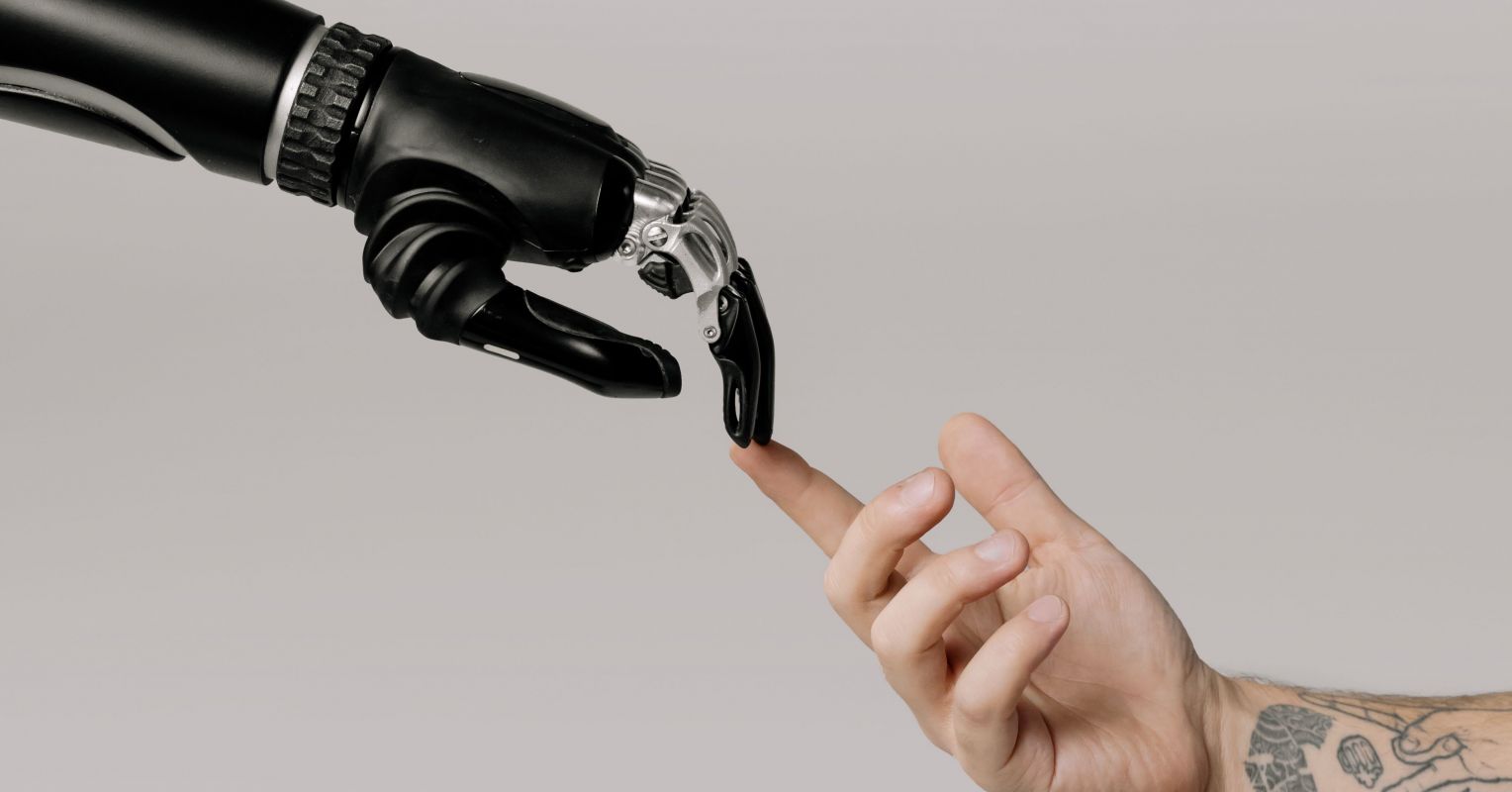
AI is not a cloth monkey that somehow learned to talk. It’s a cloth monkey that we programmed to simulate intimacy
We can program AI to do all kinds of things. It can remember stories from our childhood. It can analyze the fight we had with our partner last Tuesday. It’s available at three in the morning. It can ask us pertinent follow-up questions about personal dilemmas, and it can respond in ways that sound tender and deeply personal
At some point, someone will sell AI-based machines that can physically wrap their plush arms around us and squeeze us. But the force behind the embrace is just computer code. It has no intention toward us
There’s a profound difference between being “hugged” and being “held.”
Being held means that another human being is there with caring intention. That person wants to be there, and their life would change if we were not there
AI can generate pseudo-compassion. It can make us feel a sense of concern without actually being concerned. It can communicate that we matter without us actually mattering to it
And if we die, its heart wouldn’t break because it has no heart to begin with. There is an essential distinction between real intimacy and false intimacy
- Suicide Risk Factors and Signs
- Take our Depression Test
- Find a therapist near me
When artificial connection becomes easier
And there’s another quintessential human experience that AI cannot truly support—the experience of resolving shame. In fact, AI can prolong shame because it makes it easier to hide. We’re not risking anything if we turn to a chatbot and talk about our shame
We might feel temporary relief, but shame is a relational emotion
As I’ve written about previously, shame causes us to feel unworthy, as though we do not belong with other people
What heals shame is talking about it with other people who are safe, and having them stay and continue to love us anyway
A chatbot can never resolve shame because it can’t restore our place within the circle of human connection
Suicide Essential Reads

The Suicides We’re Not Counting

Gambling Disorder Shown to Put People at Risk for Suicide
If AI had a consistent personality type, it would be a “people pleaser.” It is always responsive, always helpful, very affirming, and consistently agreeable. But it can’t resolve loneliness either because loneliness is about feeling authentically known for who we are—and loved anyway
Human relationships are hard, and they come with friction. We’re misunderstood by our spouse. Our friends flake out on plans with us repeatedly. Our therapist challenges us in a way we don’t like. Our sister or brother says the wrong thing, and it hurts us
If we turn to AI instead of these people, our relationships will be less truthful and authentic. And AI will never be able to give us that feeling of being unconditionally loved within human relationships. Being affirmed and being genuinely loved are not the same thing
In fact, I think of AI as a type of “emotional pornography”—a highly stimulating simulation of something fundamentally human, stripped of the demands and constraints of a real human relationship
AI doesn’t have to deal with work stress or take an incoming call. It doesn’t become unavailable because it has a headache. It doesn’t have to get the kids to school. It doesn’t need you to listen to its problems
AI delivers the experience of endless support and affirmation without any expectation of reciprocity
And eventually real relationships may start losing the competition
The bigger danger of AI may not be what we think
To me, this is a very real danger of AI—that the thing that initially relieved loneliness, anxiety, or shame can progressively move us into a tunnel of greater and greater isolation
This is where suicide prevention questions should begin
Not with… “What did AI say when someone was at the end of the tunnel?” but:
- What happens when a machine is easier to talk to than your spouse?
- What happens when AI is the only place where people go with their pain?
- When do real people who care stop hearing about a person’s challenges?
- When did a person’s attachment system and circle of trust shrink to the point that the most important relationship in their life was made of code?
Because when someone goes down a tunnel of despair, they don’t need a better mirror. They need a counterweight
In suicidal mode, people need humans who can say, “I understand why you believe everyone would be better off without you, but I refuse to agree with you. That is not true for me, and it is not true for other people in your life that love you and need you here.”
AI can play some valuable roles in suicide prevention. For example, it might help people find the right words to explain what they’re experiencing or help them find re
But I would pose this question: Is AI moving someone toward human connection or becoming a substitute for it?
The unseen danger with AI may be that it provides a readily available off-ramp from true human connection. Because my experience has taught me that it’s the relationships people have before they reach the end of the tunnel that matter
We don’t need more conventional digital cloth monkeys. We need human beings who will notice when we stop reaching out, who will show up despite their flaws, and who will hug us back with intention
If you or someone you love is contemplating suicide, seek help immediately. For help 24/7, dial 988 for the 988 Suicide & Crisis Lifeline, or reach out to the Crisis Text Line by texting TALK to 741741. To find a therapist near you, visitthe Psychology Today Therapy Directory
Harlow, H. F. (1958). The nature of love. American Psychologist, 13(12), 673–685. https://doi.org/10.1037/h0047884
