Aug 20, 2026
Why pharmaceutical companies are interested in psychedelics
Major pharmaceutical companies like Eli Lilly are exploring how psychedelics might be used to treat mental health disorders like PTSD or treatment-resistant depression
Cultureby Kimberly Adams and Tamar Faggen
Download
Earlier this year, President Donald Trump signed an executive order aimed at fast-tracking the review of psychedelics for mental health disorders. Just last month, pharmaceutical giant Eli Lilly acquired drugmaker AtaiBeckley, a company focused on developing psychedelic substances for mental health conditions, for $2.8 billion
For more on the current landscape for psychedelics, “Marketplace Morning Report” host Kimberly Adams was joined by Josh Hardman, founder and editor of the website Psychedelic Alpha, a media outlet that focuses on the industry. The following is an edited transcript of their conversation
Kimberly Adams: I think when people hear the term “psychedelics,” they might just know about mushrooms or acids or some of these other more recreational-type drugs. What sorts of substances are we really talking about here, and what are their therapeutic uses?
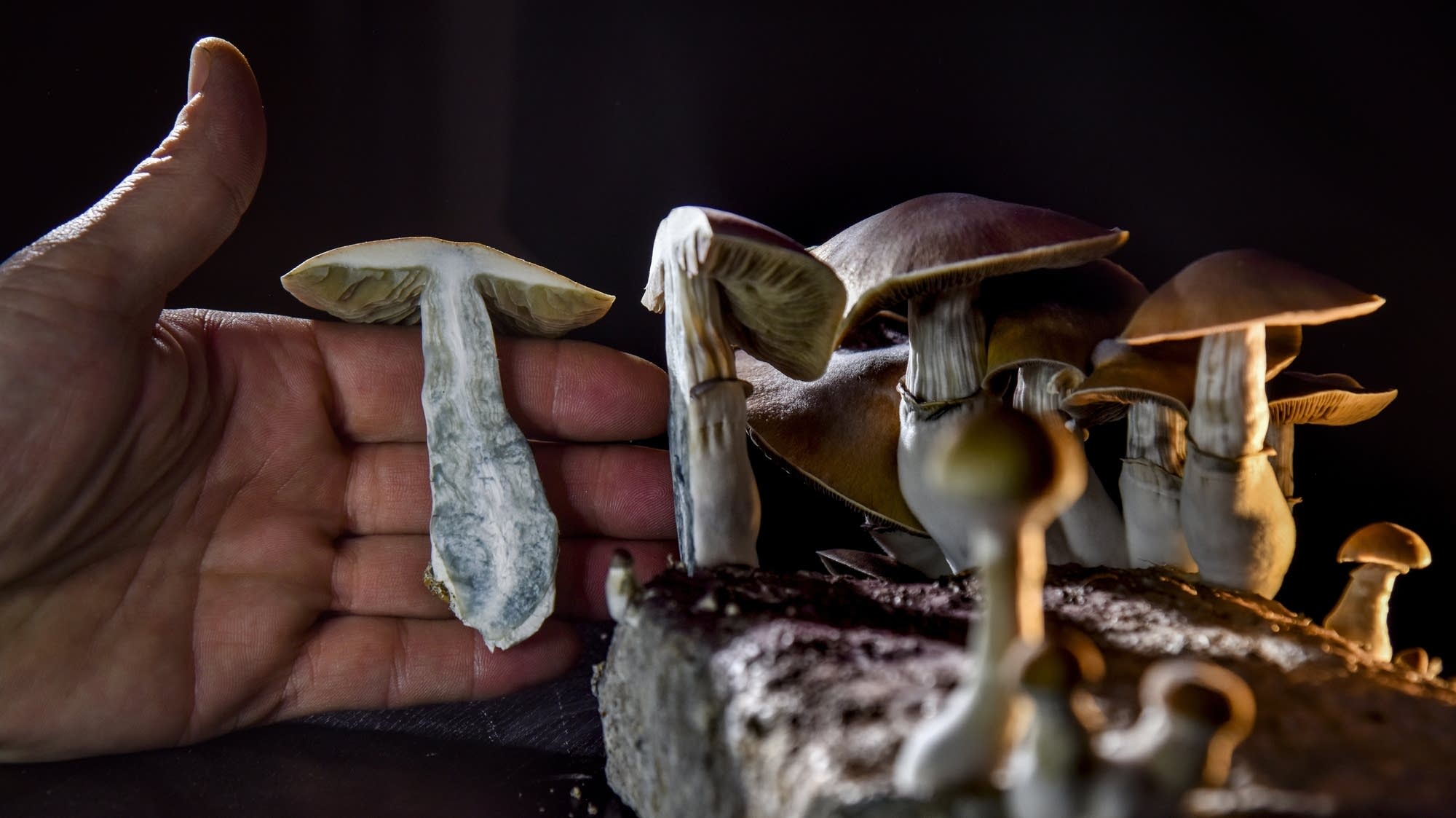
Josh Hardman: Yeah, so I mean in the drug development world, we’re generally almost exclusively talking about synthetic versions of those drugs. So while people might take mushrooms and they might ingest the sort of whole mushroom, here they’re sort of isolating the primary metabolite — so psilocybin — and developing it as a synthetic sort of pharmaceutical product. We are also talking about drugs like MDMA, known as molly on the street; like LSD, known as acid. But in this context, they’re really being used in a more sort of monitored clinical setting. You know, this isn’t microdosing; these are large, very trippy sort of doses of these drugs. But it’s happening under a controlled environment.
Adams: And what sorts of medical considerations are these being used to treat?
Hardman: Yeah, so primarily we’re looking at mental health disorders for now. So all of the sort of later-stage studies, so Phase 2 and Phase 3 studies, are looking at particularly treatment-resistant mental health disorders. So patients that have generally tried at least a couple of existing treatments for things like depression, anxiety, post-traumatic stress disorder, and those types of things. We do see some really exciting earlier-stage work — so perhaps early- and mid-stage trials — looking at substance use disorders, so things like alcohol use disorder, opioid use disorder. And that’s like a really exciting area of research. And then going even earlier — so some of the really early-stage research — are looking at things like neurodegenerative disorders, traumatic brain injury, and all sorts of other sort of neurological diseases. But in terms of what listeners might see approved in the next sort of year or two, it is really these treatment-resistant mental health disorders, so serious mental health issues.
Adams: Why is the Trump administration so interested in psychedelics?
Hardman: I think a lot of it boils down to veterans. Veterans are suffering from diseases like PTSD, traumatic brain injury, and other things like that at greater rates than some Americans, and I think looking for solutions to those diseases has been a real priority, especially of this administration. So, yeah, I think that’s been part of the reason. There’s also some curious sort of cultural and politics side of things that maybe is a bit of a rabbit hole, but podcasters like Joe Rogan have become incredibly interested and big advocates for psychedelics for those types of conditions as well. And they’ve sort of leant on the president and his circle to try and encourage him to sort of catalyze research into these drugs and potentially access.
Adams: What is the legal landscape like around these drugs?
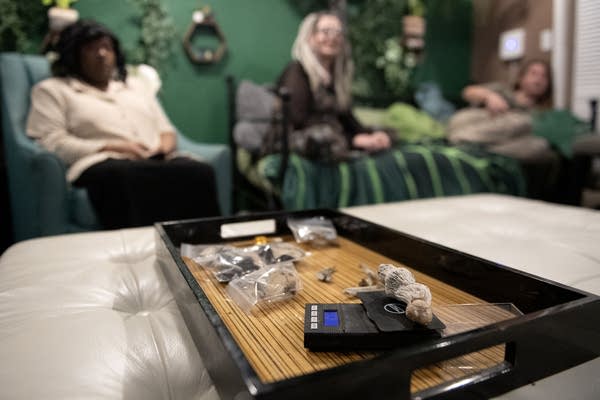
Hardman:Yeah, so I mean, looking internationally, some countries have sort of stepped out ahead of the FDA. So, Australia, a few years ago, rescheduled MDMA and psilocybin for use in PTSD and treatment-resistant depression under limited circumstances. Countries like Switzerland have allowed the medical use in a limited way of psychedelics for the better part of 12 years now. In the U.S., there are some states that have got ahead of the federal government, as well. So, looking particularly at Oregon and Colorado, where psilocybin — so that’s the active ingredient in magic mushrooms — can be administered to clients under the supervision of a state-trained facilitator or a facilitator trained in the state’s model. But it’s not explicitly medical.
At the federal level, all of these drugs — without exception — remain in Schedule I of the Controlled Substances Act. So, if they were approved, at least those medical products would need to be rescheduled by the Drug Enforcement Administration to allow them to be used medically. But as I say, some states and some countries around the world have already sort of moved towards those processes, at least at the local level. If these drugs are approved, that opens up this whole set of other things that need to be met — so, obviously, rescheduling, reimbursement from insurance providers, before they’re really reaching Americans at any reasonable scale.
Adams: So, what’s actually changed so far?
Hardman: Research into psychedelics really started in the 1950s and ’60s, much of it less controlled than today, without sort of randomized controlled trials or double-blind trials. But a lot of that research is now being sort of put into that controlled model. And starting around 10 years ago, we saw companies entering the space and carrying out some of those studies in a sort of more drug development way, with the ultimate goal of getting those drugs approved. So those sort of Phase 2, Phase 3 — being the last stage before approval studies — really kicked up in the last few years, and now we have data from those late-stage studies.
And into that sort of situation, as we alluded to, you know, this political support has come along. So, just this year in April, President Trump signed an executive order that seeks generally to sort of speed up research and access to psychedelics, and there’s a lot going on in the next few months. So, right now, there’s companies preparing their new drug applications to submit to the FDA. Next month, FDA is holding a public hearing at its White Oak campus in Silver Spring, in Maryland, where it will hear from members of the public for four hours about psychedelic therapies and their potential rollout. And yeah, as I say, potentially as early as later this year, we could have FDA decisions — potentially approvals — of drugs like psilocybin and MDMA. So, really, it’s sort of everything all at once right now.
Adams: What is the current business landscape like around these drugs, and how would that have to change if you do see what the administration wants here?
Hardman: Yeah, so at the moment, most of the business around psychedelics is in the drug development world. So there’s around half a dozen publicly traded companies developing these psychedelic drugs and seeking FDA approval. Some of them are quite large, considering they just have sort of one main drug under development. So Definium Therapeutics, which is developing LSD, has a market cap of around $6 billion at the time of recording. And there’s other companies like Compass Pathways and GH Research, AtaiBeckley, obviously just acquired by Eli Lilly. So there’s a small sort of pool of publicly traded developers, but there’s also dozens of private startups working on developing other types of psychedelic drugs for approval.
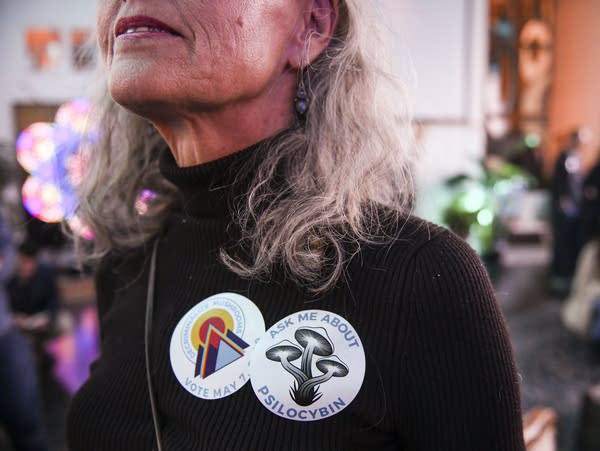
I think the real sort of shift in the business landscape has been that move away from sort of startups focused just on psychedelics towards large pharmaceutical companies — like I just mentioned Eli Lilly, but also AbbVie and Otsuka — becoming really involved in the psychedelics field. So, that’s been quite a big change. Now, if there were approvals, the key thing that needs to sort of change or develop is the involvement of care delivery sites. So, particularly large national health systems, public health systems like the VA — they need to become involved more substantively and really work out how they’re going to deliver these therapies, how they’re going to pay for them, and how they’re going to reach the patients that need them. So, there’s lots that needs to be done right now. Almost all the money coming into the field is just going to this first goal of getting an approval for a drug.
Adams: What are some of the risks or potential downsides of more widespread adoption of psychedelics?
Hardman: Obviously, psychologically there are risks, and in many of the clinical trials, the patients have been very carefully selected to make sure that they don’t have exclusion criteria. So, as I said, things like family histories or things like schizophrenia, personality disorders like bipolar disorder. So yeah, at the moment, the clinical data we have is in patients that are quite a specific pool. When treating a broader population, we could see different safety signals emerge, so it’s certainly something to look out for.
I guess another concern would be that, the trials have administered these drugs under controlled conditions with lots of medical supervision, but if people see these approvals and decide, you know, “I have PTSD” or “I have treatment-resistant depression” and decide to take these drugs at home on their own, we would likely see a different sort of safety profile. But I think, personally, one of my biggest concerns is that there’s a huge amount of excitement — rightfully so — around new treatments for these very difficult diseases, but if there’s too much excitement and too much hype, we could have patients coming to these treatments with incredibly inflated expectations of what they could do for them. And if you’re a patient that doesn’t go on to benefit, you could feel very devastated and like that was your only hope.

Why would Jeff Bezos want to buy an English football team?
Culture
Microdramas get the “Hollywood treatment” at this new studio
Culture
Is the greige wave here to stay?
Culture