


Pittsburgh teens with disabilities help shape more accessible healthcare
90.5 WESA |
By
Jenna Post
Published July 6, 2026 at 5:31 AM EDT
Jenna Post
/
90.5 WESA
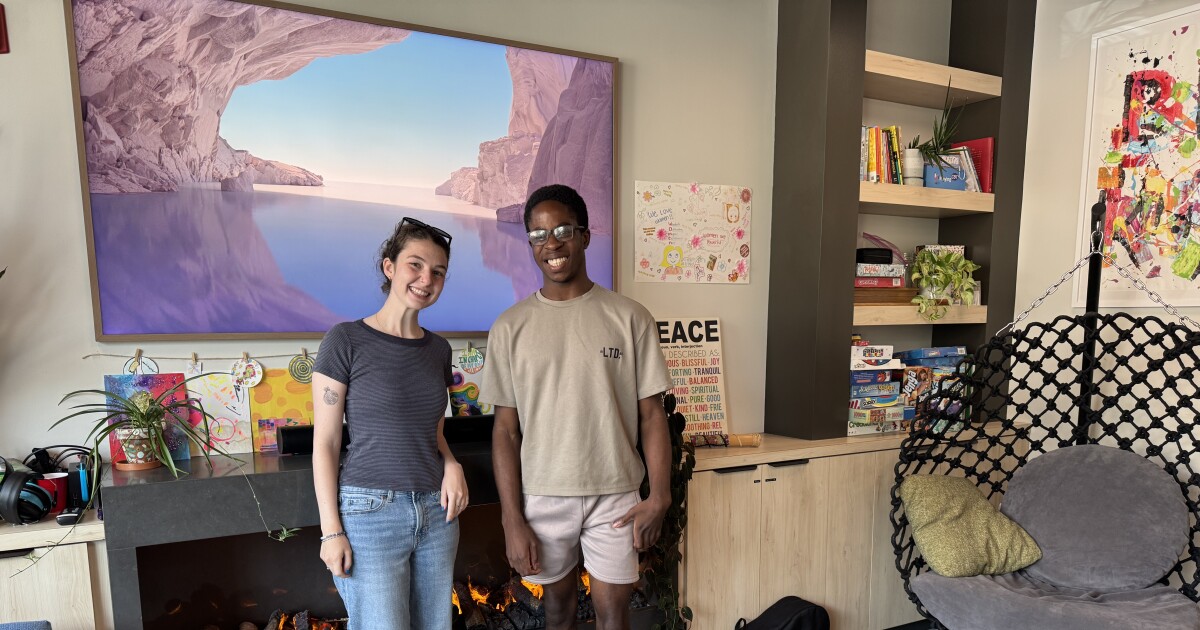
During a mock appointment to a UPMC adolescent health clinic, a group of Pittsburgh teens stood in as patients. They were actually there as accessibility experts as they are also people living with disabilities
The group, called the Health Ambassadors, is a special initiative of Friendship Circle — a global advocacy nonprofit with an outpost in Pittsburgh since 2006. The ambassadors are teens who participate in The Beacon, Friendship Circle’s emotional wellness center
Earlier this year, the Health Ambassadors received a grant from the FISA Foundation, a grantmaking organization that supports nonprofits in Southwestern Pennsylvania. It followed FISA’s 2024 report, A Far Cry From Fair: Healthcare Access for People with Disabilities, which highlighted the experience and inequity of accessing healthcare for people with disabilities
With the report’s findings and the grant, Health Ambassadors set off to create an evaluation tool to analyze a clinic’s accessibility, drawing on their own experiences
“Some of us even used challenges we faced in the healthcare system,” said Ekow Opoku-Dakwa, 20, one of the Health Ambassadors and a rising sophomore at the University of Pittsburgh, “Is the transportation easy? Is even planning the appointment easy? How are the customer services? What re
These were just some of the categories included in the tool they created, in addition to facility accessibility, provider competency, care coordination, inclusivity, patient-centered care, technology, feedback collection and financial accessibility
Their preparation culminated in a test of their tool at UPMC’s Center for Adolescent and Young Adult Health Clinic in Oakland
During their mock appointment, they asked the provider questions about various reith disabilities is spoken to. They were particularly interested in whether the provider spoke to the parent or directly to the patient
The ambassadors reported that they were pleased with the inclusivity from the start of the visit, like how pronouns were actively shared. They called the environment welcoming, with pride flags and friendly stickers
Overall, the clinic scored well, but had room for improvement
Ambassadors also reported appreciating that the facility offered vouchers for Lyft, bus passes and on-site parking for patients, but noted that parking validation only covered a portion of the cost
They flagged this as important, as they learned from the FISA study that adults with disabilities report spending about $16,500 on healthcare, compared with roughly $3,500 for people without disabilities
In the waiting room, they enjoyed the coloring pages but were concerned about the fluorescent lighting, which can be uncomfortable for people with sensory sensitivity. They also suggested adding a dedicated wheelchair spot among the chairs that lined the perimeter of the room
According to the ambassadors’ evaluation, the clinic welcomed the feedback. Opoku-Dakwa said providers acknowledged they had more to learn and worked with the ambassadors to develop solutions
He described a moment when one of the physician assistants mentioned they weren’t familiar with PH-95, a Pennsylvania Medicaid pathway that helps children with severe disabilities qualify for coverage. He reports that the practitioner agreed that making more information like that available to their patients was important
“The doctors, I feel like, when we went there, they were really understanding,” he said
Licensed social worker and teen programming and operations manager at The Beacon, Talia Akiva, helped facilitate development of the Health Ambassadors group alongside Dr. Elizabeth Miller, Emeritus Professor of Pediatrics and Public Health at the University of Pittsburgh
Akiva pointed out that the Health Ambassadors were all compensated for their time working on the project — a feature of the grant
“We wanted to amplify people with lived experiences and do research with them, not about them,” she said
Akiva said even though the grant participation is complete, the ambassadors hope to continue advocacy efforts
“This is honesty, just the first step in creating change,” she said
Opoku-Dakwa wants people without disabilities to consider inclusivity the next time they’re at the doctor
“Definitely just … always be curious,” he said
