




In the waning days of summer, Stacy Staggs should be thinking about how to celebrate the birthday of her twin girls, who turn 13 in September. Instead, the Charlotte mother is anxiously waiting for Congress to return from their August recess to address a growing healthcare crisis
Staggs’ daughters were born prematurely and spent months in the intensive care unit at the Levine Children’s Hospital

While Sara and Emma have complex medical needs, Emma’s condition and disabilities are so serious she qualifies for North Carolina’sMedicaid CAP/C waiver. Staggs said Sara is able to be insured through coverage offered by her husband’s employer
Advertisement
“Medicaid affects every single facet of Emma’s life. It is her ability to stay in the home she grew up with, with the family who loves her, in her school and community and in her bed with her toys that she likes to play with,” Staggs told reporters Friday during a press call hosted by Defend America Action, a political advocacy organization
Staggs is worried cuts to Medicaid could also affect their ability to provide nourishment for Emma, who is fed by a gastrostomy tube
“The formula that she’s able to take is medical, it is prescription, it is wildly expensive and it’s covered by Medicaid,” Staggs said. The loss of that one service would likely mean surrendering her daughter
Sen. Jay Chaudhuri, D-Wake, is also anxious about what the coming months will mean for families like the Staggs. He represents a county with the second largest Medicaid enrollment in the state
Advertisement
“We have watched that math break down for families across North Carolina, not in the abstract but in real time,” said Chaudhuri. “Nearly 165,000 North Carolinians have lost their Affordable Care Act coverage after premiums spiked by more than 150% a year, and 100,000 plus North Carolinians have lost Medicaid as part of the roughly $1 trillion in Republican cuts to the program.”
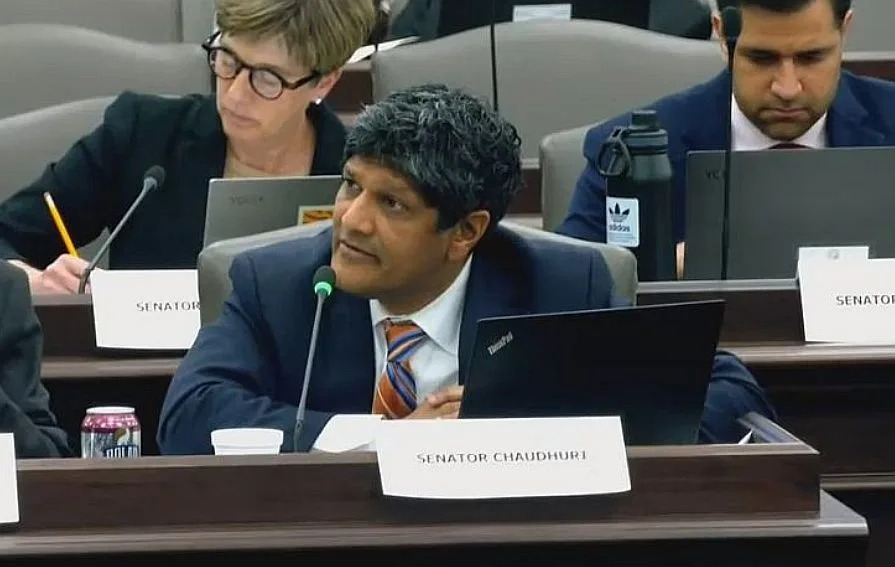
Chaudhuri said when the state finally expanded Medicaid in 2023, it provided a lifeline to hundreds of thousands of North Carolinians. But now under new federal changes, some immigrants granted humanitarian protections willno longer be eligible for Medicaid starting Oct. 1, 2026. Someone admitted to the U.S. as a refugee or granted asylum will lose their ability to receive Medicaid coverage. A veteran or active-duty service member who is not a citizen also stands to lose Medicaid coverage this fall.
Starting Jan. 1, 2027, Medicaid applicants will see new work requirements and the need to recertify for their coverage every six months
Chaudhuri believes state officials may not have seen the worst of it yet
Advertisement
“More than 225,000 more North Carolinians are projected to lose coverage, not because they stop qualifying, not because their lives are changed, but because they’ve gotten lost in the maze of new paperwork and red tape designed, it seems, to make people give up,” Chaudhuri said
U.S. Rep. Deborah Ross, D-N.C., has spent the August recess listening to constituents about their struggles to afford healthcare. With looming cuts to Medicaid and rising healthcare premiums, she worries that more families will face medical debt
“Medical debt is the largest debt that people have in this country. It knows no political party, and it knows no geographic limitation,” Ross said
Under the One Big Beautiful Bill Act, North Carolina is expected to lose nearly $50 billion over the next 10 years, according toanalysis by the NC Department of Health and Human Services
Even as inflation eases slightly, North Carolina families still feel squeezed from all sides
“And what the $50 billion in cuts is going to do is it’s going to mean fewer hospital beds, longer drives for emergency care, and fewer jobs in communities that can’t afford to lose them,” Chaudhuri said
Advertisement
It’s the impact of those projected cuts that prompted U.S. Sen. Thom Tillis, R-N.C., to break from his party and vote against the legislation last year
“We can and must do better than this,” Tillis said in a June 2025statement
With 71 days until the November midterm elections, it’s unlikely the U.S. Senate or the House will find common ground to address the Medicaid cuts or the affordability crisis
A recent national poll by KFF finds healthcare costs continue to top the public’s list of affordability worries. An April KFF Health Tracking Poll foundnearly 9 in 10 voters say the issue will influence their decision to vote in this year’s midterm elections
Advertisement
Staggs said for the first time ever, her family’s healthcare premiums are higher than their mortgage. And for families like hers that rely on North Carolina’s Medicaid CAP/C waiver, there is a very real worry about what will happen if a claim for coverage is denied because of shifting eligibility requirements
“It’s just a bunch of paperwork and it’s meant for people to fall out of the process,” said Staggs. “That sucks because that’s not what it’s supposed to do. It’s not the spirit of the program. It’s not the spirit of America.”
