


Hunting can slow chronic wasting disease. But could it increase human risk?
WUNC News |
By
Emily Putnam
Published August 24, 2026 at 2:15 PM EDT
Emily Putnam
/
WUNC News
Chronic wasting disease outlives the deer it kills
Wildlife managers have culled entire deer herds and waited as long as six years before reintroducing animals to affected areas – only to see the disease return. That’s because the particles that cause chronic wasting disease persist in the soil, where they’re taken up by plants and passed back to the deer that eat them, says Miranda Turner, a wildlife biologist with the North Carolina Wildlife Re
Wildlife officials working to control chronic wasting disease face a difficult tradeoff: Hunting can help slow the disease’s spread through deer populations. But new research suggests the likelihood that chronic wasting disease can jump from deer to humans may be greater than previously thought, raising questions about whether increasing human exposure creates undue risk
“Currently, no human has been known to have chronic wasting disease. But at the same time, that is how people thought before the mad cow disease outbreak in the UK, which was also a prion disease,” said Turner
Chronic wasting disease, or CWD, is caused by misshapen proteins called prions. When a prion encounters a normal protein, it forces that protein into the same misshapen form. Those proteins then change others, creating a chain reaction that damages the nervous system. Infected deer will progressively lose control of their bodies until they die
Unlike a virus or bacterium, a prion doesn’t eventually stop being infectious. The proteins can persist environmentally for years
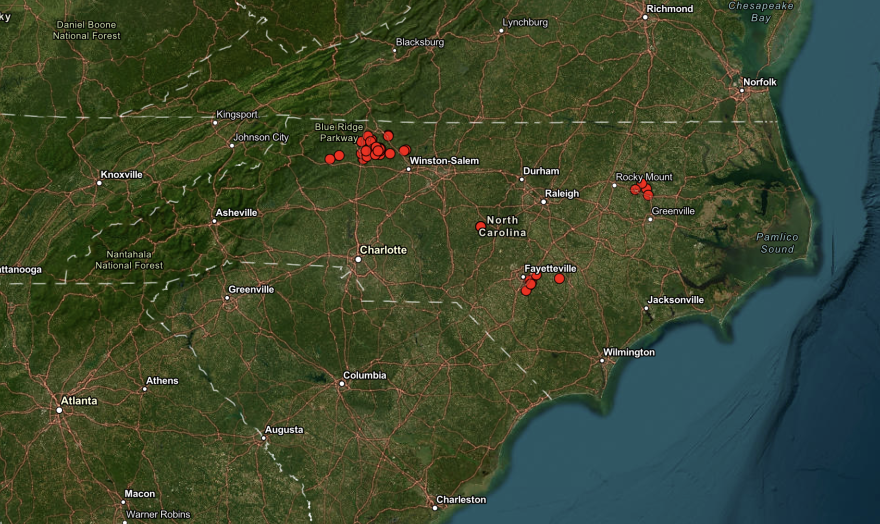
North Carolina detected its first case of CWD in 2022. The disease is still relatively limited in North Carolina, but has devastated deer populations in other states and globally. Prion diseases are always fatal
Chronic Wasting Disease Alliance
When CWD first appeared in North Carolina, the Wildlife Red mandatory testing policies in surveillance areas
The Commission’s restrictions have not been well-received by some hunters, who argue that regulators have focused too heavily on CWD while giving less attention to EHD, another disease that can kill large numbers of deer
“How much funding y’all getting this year for the CWD scare? More counties, more money?” wrote one commenter in a Facebook update about CWD regulations from May
“What about something legitimate like EHD. Cwd hasn’t really killed anything compared to possibly thousands of deer from EHD,” wrote another
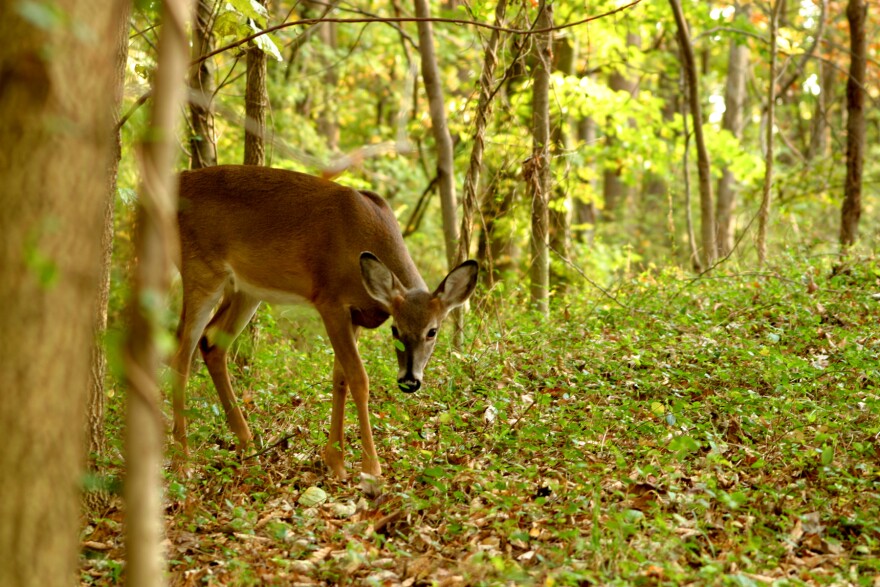
Turner says the commenters are correct that only a small number of deer in North Carolina are testing positive for CWD – but this is because of restrictions, and the limitations of testing. CWD can only be diagnosed post-mortem, and testing often relies on hunter-killed deer. Because most samples come from the healthy-looking deer hunters seek out, there’s a selection bias. Additionally, these animals may be in early stages of infection and have low concentrations of prions that are harder to detect.
National Park Service
And EHD deaths are less of a concern for long-term herd management, Turner says
“The two diseases work on different scales,” she said. “CWD is always fatal and it takes many years, but it will impact entire populations of herds. Whereas EHD is more seasonal, cyclical. It may look bad for a year, but the herds will recover within a year, and populations themselves aren’t really impacted.”
In Wisconsin, Wyoming, and Colorado, where CWD has had a higher impact on herd numbers, population declines happened over time with the accumulation of environmental prions
“Once you hit about 20% of a herd infected, you are going to see herd declines, especially once CWD moves to fawns in utero. A deer can be born with CWD, and that immediately puts a timer on their life of about two years. That is below the age that deer need to reach to replace themselves,” Turner said
Joshua Young represents the Carolina Deer Association and owns a deer farm. He says messaging and hunting restrictions around CWD have been bad for business
“It kind of pushed hunters from wanting to go hunt. And honestly, it killed a lot of the deer industry years ago,” he said
Because infection rates have remained low, Young believes the commission’s previous strategies for controlling the spread were overzealous and ultimately futile
“Buzzards can carry it. It can be on the mud in your tires. So unless you’re walling off the entire state and stopping everything from flying over, you’re not going to stop the spread of CWD,” he said
In May, the Commission relaxed many of therestrictions, expanding hunting opportunities across the state and making all testing for non-commercial deer handlers voluntary. They did this because hunting has been shown to reduce CWD transmission by reducing the amount of prions shed into the environment by infected deer
North Carolina Wildlife Resources Commission
Young and Turner are both happy with the changes. But the increased hunting raises another concern: human exposure to CWD
Research into whether the disease could adapt to be able to infect humans has been going on for decades. But a new study from the University of Calgary suggests that the likelihood may be higher than previously thought
Infectious disease expert Hermann Schaetzl and his colleagues found evidence that CWD prions can cross into macaques, which are primates like humans – although the infection looked very different from CWD in deer
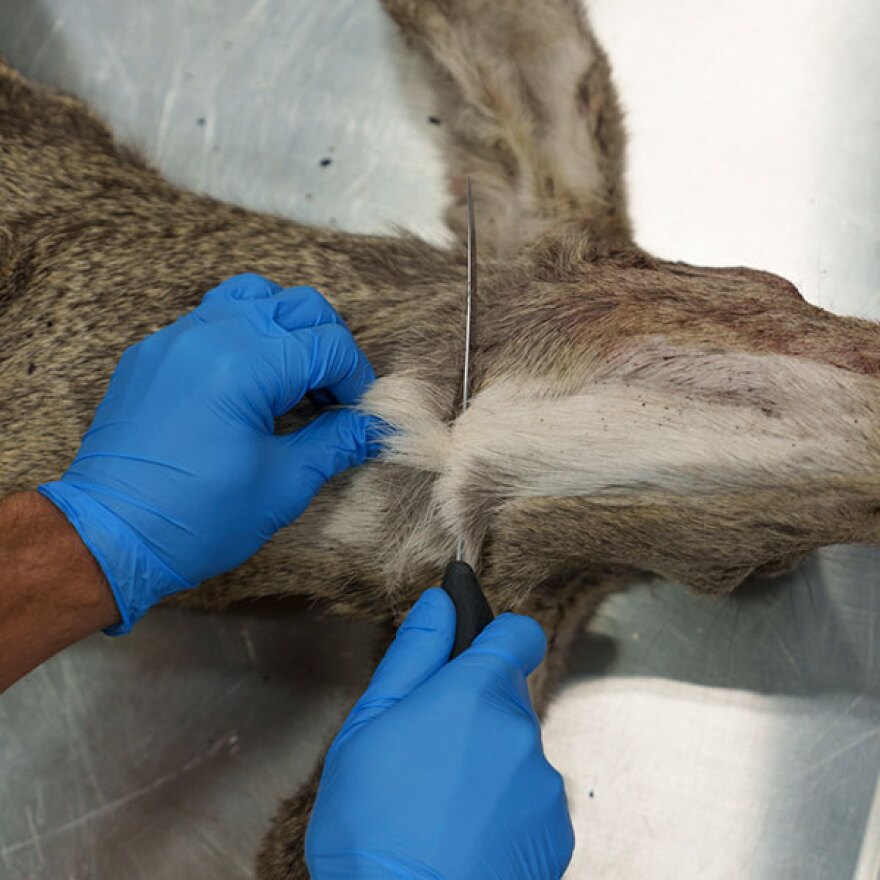
His lab recently tested a wild deer that entered their facility and found CWD prions throughout its body. Prions are typically thought to concentrate in the nervous and lymphatic systems. The finding is consistent with another study published in 2025. In the macaques, Schaetzl’s team also found prions in the gastrointestinal tract
“Some [macaques] showed signs of disease. Others didn’t. Which worries us… is this a typical manifestation of the disease? Would we see human CWD?” Schaetzl said
North Dakota Game and Fish Department
It’s still impossible to predict whether a spillover from deer to primates will happen at all, or if it already has, he added
Schaetzl says increased hunting may help reduce transmission among deer. But it also means more people are handling and eating potentially infected meat. The same dead deer that helps stop CWD from spreading can also be the thing that exposes a human to the disease
As cases increase worldwide, Schaetzl says so does the likelihood of humans interacting with CWD prions and the possibility of a spillover. The main conclusion of the research, he said, is that the disease is unpredictable and this should not be taken lightly
“CWD is a highly, highly contagious disease which is really expanding, and it’s not because our diagnostics are better,” Schaetzl said. “The more CWD you have out there, the higher the risk. The more people consume positive materials, the higher this zoonotic risk.”
His message for hunters: Test if possible, and don’t eat deer that test positive for the disease
For now, North Carolina has no known human cases of CWD and wildlife officials are confident that surveillance and the new hunting policies can keep the disease in check. But as researchers continue studying the disease, only more questions come up
