


By
- Guest Editorial
When I was in medical school in the 1990s, my professor told the class that we wouldn’t need to worry about measles because we would probably never see it
Now, less than 30 years later, I have seen dozens of cases of measles over the last year
As of last week, there were more than 2,800 confirmed cases of measles in the United States. Pennsylvania has become a particular hot spot for measles, with 393 cases so far this year, including two deaths. These are the most cases the United States has seen since 1991
These numbers reflect only people whose cases have been formally diagnosed and verified — not the likely hundreds and hundreds of others who did not seek medical attention for the illness
Only 26 years ago, measles was declared eliminated from the U.S., meaning that there had been no continuous disease transmission for more than 12 months. We are in danger of losing that elimination status this year
Measles is the most contagious virus we know of. It is spread in the air by tiny respiratory droplets produced when an infected person breathes, coughs or sneezes. The droplets can stay in the air or on surfaces for more than two hours, even after the infected person has left the room
Common symptoms of measles include a high fever, cough, runny nose, red, watery eyes, and the characteristic rash. Symptoms typically appear one to two weeks after exposure
Fortunately, most patients recover from measles and do not require hospitalization, but younger children, pregnant women and the immunocompromised are at higher risk. It is not a disease to take lightly because it can cause several complications that may require hospitalization. These include pneumonia, encephalitis, permanent brain damage and, in rare cases, even death
In fact, we have had children hospitalized at our children’s hospital this year because of complications from the measles virus, with care ranging from supportive to intensive care
There is no antiviral treatment or cure for measles. Treatment focuses on relieving symptoms with rest, fluids and fever-reducing medications. The best course of action is to avoid measles in the first place by getting vaccinated
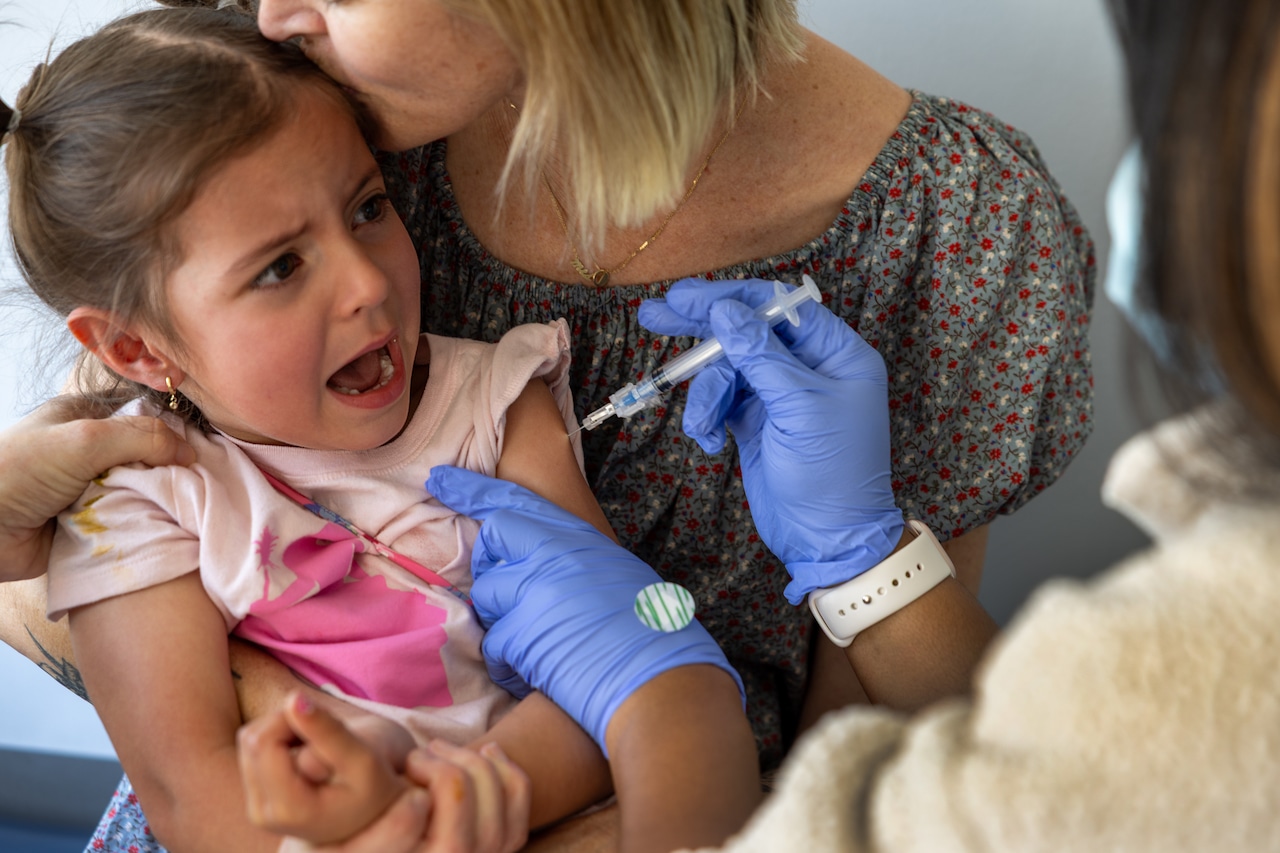
The MMR (measles, mumps and rubella) vaccine has provided excellent protection, with two doses of the vaccine providing 97% protection against measles. Those two vaccinations are typically administered when children are between 12 and 15 months old and again between 4 and 6 years old
It is extremely rare for vaccinated people to get measles. About 3 out of 100 fully vaccinated people may contract measles if exposed during a prolonged outbreak
In the rare case in which a vaccinated person develops measles, the illness is usually less severe and less likely to result in serious complications. Vaccination not only protects the person receiving it but also protects vulnerable members of our community, because vaccinated people are less likely to transmit measles. These include infants who are too young to be fully vaccinated and people with certain medical conditions that prevent vaccination
When at least 95% of the community is vaccinated, transmission of the virus is stopped, and, through so-called “herd immunity,” the unvaccinated people in our community are also protected
Recent gaps in vaccination, though, have allowed measles to return. Data from the last few years show vaccination rates have dropped by 2 to 3 percentage points for kindergarten students across the state. Although it seems like a small dip, it allows the virus to reach unvaccinated communities and leads to outbreaks like the ones we are seeing now

The dip in vaccinations could be caused by misinformation about vaccine safety or by vaccine hesitancy stemming from the COVID-19 pandemic
Whatever the reason, I encourage patients and families to have conversations with their primary care providers and pediatricians when considering immunizations and vaccinations
At Geisinger, we continue to follow the evidence that has shown the effectiveness of the immunization schedules for children and the guidance and vaccine schedule provided by the American Academy of Pediatrics, the American College of Obstetricians and Gynecologists, and the American Academy of Family Physicians
We cannot afford to have our communities sickened by an illness that is completely preventable
Stanley Martin, MD, is director of the Geisinger Division of Infectious Diseases
