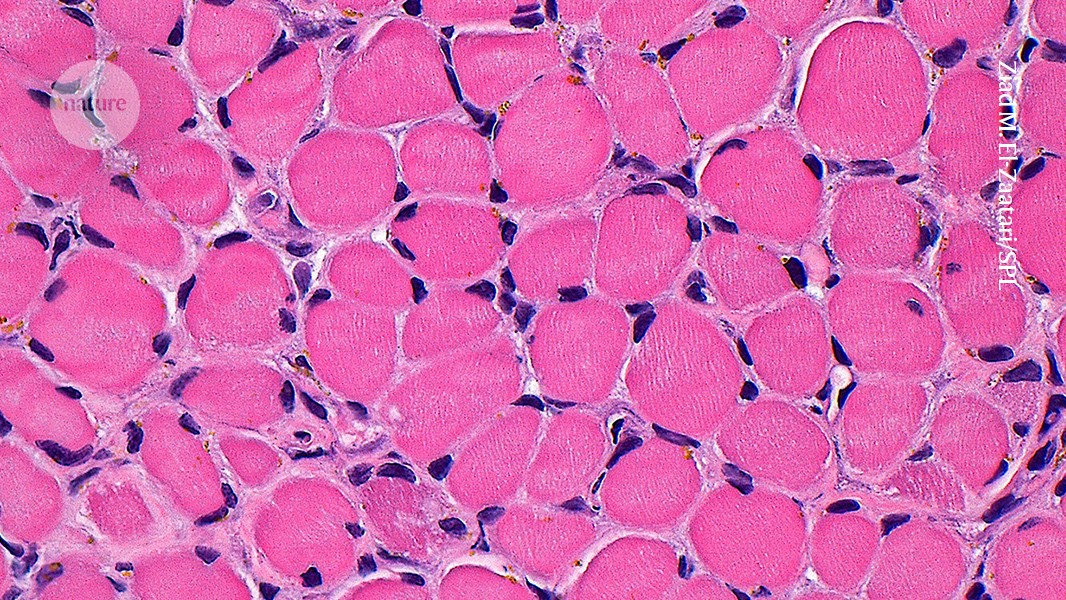
Researchers have created contracting muscle implants that can mimic some of the benefits of exercise, including improving muscle mass, strength and bone density while also slowing age-related muscle changes1
The research, published in Nature Aging today, is still a proof of concept, but if translated from animals into people, could help to prevent muscle loss due to ageing, chronic medical conditions and in bed-ridden people, say the authors
Muscle wasting affects many people, particularly older individuals, but there are no good solutions for the condition apart from exercising, says Shyh-Chang Ng, a co-author of the study and a biologist at the Institute for Stem Cells and Regenerative Medicine in Beijing. “But the people who need to do exercise the most often turn out to be the people who are unable exercise,” he says
Using a muscle graft to mimic exercise response is an intriguing premise, says James White, a physiologist at Duke University in Durham, North Carolina. However, people would probably need multiple muscle grafts throughout the body to achieve the benefits seen in mice. For those who are frail, bedridden or older — the very people who would need these grafts — undergoing several invasive procedures would be undesirable, White says
Muscle-cell graft
To create the implants, called myografts, the researchers extracted stem cells from the quadriceps muscles of mice. They then isolated and cultured the stem cells in the laboratory to grow muscle cells. These were injected under the skin on the animals’ backs, with each mouse receiving its own cells to stop the immune system from rejecting a foreign graft
The transplanted cells formed organized muscle tissue near the injection site, which contracted continuously and developed blood vessels. The grafts survived for several months before the researchers collected tissue samples to study
They found that adult mice between eight and ten weeks old with myografts developed thicker muscle fibres than did control animals that did not receive myografts. Their muscles also showed changes that suggested reduced inflammation and fat accumulation
In separate experiments in older mice, about 1.5 years old, the animals also had a higher proportion of lean mass eight weeks after transplantation than did mice that did not receive the myograft. After 15 weeks, animals with myografts also had higher bone density than controls. Older mice with grafts also performed better in tests of physical function; they ran farther and had greater grip strength
More than just muscle
The researchers also fed a separate group of mice a high-fat diet to induce obesity. After 16 weeks, the myografted mice had a higher proportion of lean mass and a lower proportion of fat mass than did the control animals. They also had lower blood-glucose levels and reduced increases in cholesterol
The treatment was also associated with lower signs of systemic inflammation — such as lower white-blood-cell counts. Other effects included lower triglyceride levels, reduced liver damage, and higher energy expenditure compared with control mice. Myografts were also linked to improved cognitive benefits in older mice. In a maze test, mice with implants spent more time exploring unknown sections of the maze than did mice without the grafts, says Ng
Enjoying our latest content?
Log in or create an account to continue
- Access the most recent journalism from Nature’s award-winning team
- Explore the latest features & opinion covering groundbreaking research
Access through your institution
Sign in or create an account
Continue with Google
Continue with ORCiD
doi: https://doi.org/10.1038/d41586-026-02664-5
References
Liu, X. et al.Nature Aging https://doi.org/10.1038/s43587-026-01190-3 (2026)
Subjects
Latest on:
- Ageing
- Cell biology
- Obesity
- <img src="https://healthylife7.com/wp-content/uploads/2026/08/d41586-026-02352-4_53033976.jpg” alt=””>
Sleuth identifies dozens of studies that used the wrong antibody
News21 AUG 26

How do people live beyond 110? Abundance of cancer-killing cells might be key
News19 AUG 26
Asia’s longevity gains must be translated into better health
Correspondence18 AUG 26


Rb-driven transcription limits its tumour-suppressive effects in breast cancer
Article12 AUG 26
Luminescent-reaction-enabled super-resolution imaging
Article12 AUG 26
An ancient mitochondrial program tunes translation to haem availability
Article05 AUG 26
More muscle, less belly fat: mutations to a gene are linked to wide-ranging benefits
News05 AUG 26
The latest benefit of obesity drugs: boosting testosterone and sperm quality
News15 JUN 26
Obesity doesn’t equate to ill health: why the ‘disease’ label doesn’t always fit
Comment01 JUN 26

Jobs
Faculty Positions in Immune Engineering and Cellular Therapies
Dallas, Texas (US)
The University of Texas Southwestern Medical Center (UT Southwestern Medical Center)

Postdoctoral Position in Autoimmune Disease & Epigenetics
Dallas, Texas (US)
The University of Texas Southwestern Medical Center (UT Southwestern Medical Center)
Assistant Professor, Research
Dallas, Texas (US)
The University of Texas Southwestern Medical Center (UT Southwestern Medical Center)
Postdoctoral Research Position in Cancer Immunology and Immune Engineering
Dallas, Texas (US)
The University of Texas Southwestern Medical Center (UT Southwestern Medical Center)
2027 Overseas Outstanding Young Scholars: NKU Invites Talents From Around the World
Nankai University sincerely invite outstanding talents at home and abroad to apply for the 2027 Overseas Outstanding Young Scholars Fund
Tianjin, CN
Nankai University