


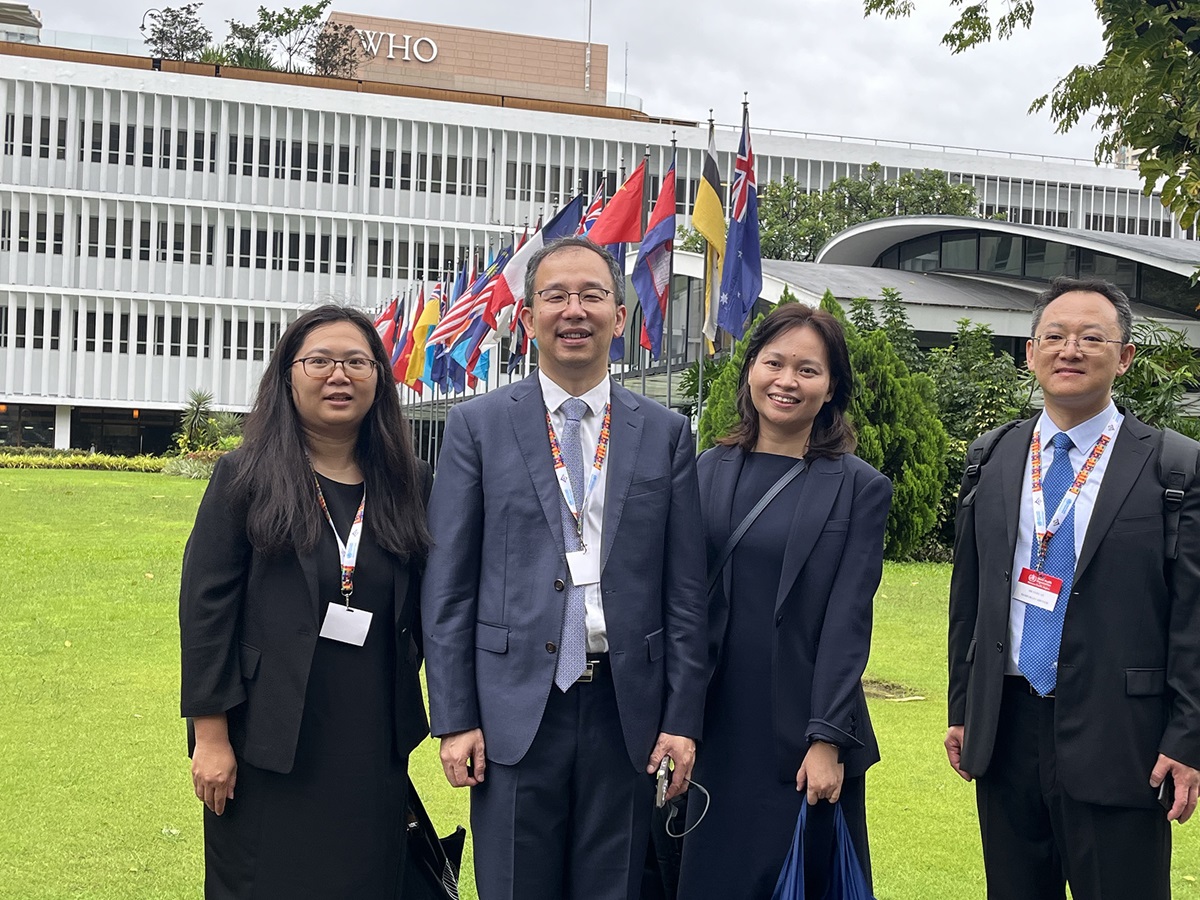
The Institute of Medical Information, Chinese Academy of Medical Sciences (IMICAMS) is a WHO Collaborating Centre for Health and Biomedical Information based on Beijing
Through its management of the Western Pacific Region Index Medicus (WPRIM), IMICAMS has strengthened knowledge sharing and increased the visibility and accessibility of health and biomedical research in the Region
WPRIM is a regional bibliographic index of medical and health journals from countries and areas in the WHO Western Pacific Region. IMICAMS has expanded the index since its launch in 2010 to include more than 1.2 million articles from 760 journals. Its records also feed into the WHO Global Index Medicus, increasing the reach of regional health research even further. Since its establishment, WPRIM has undergone a series of technical enhancements to maintain the accuracy and relevance of its content, improve services for users and contributors, and strengthen database security.
IMICAMS works closely with the WHO Western Pacific Region Library in Manila, Philippines to increase access to journal and bibliographic content from WPRIM-participating countries: Brunei Darussalam, Cambodia, China, Fiji, Indonesia, Japan, Lao People’s Democratic Republic, Malaysia, Mongolia, Papua New Guinea, the Philippines, the Republic of Korea, Singapore and Viet Nam
To build awareness and use of the database in these countries, IMICAMS has organized database in-person training workshops in China between 2011 and 2018
Beyond WPRIM, IMICAMS has helped improve access to Chinese-language health information reeams and staff through the WHO Library. It promotes knowledge sharing by fostering collaboration among medical libraries and health information centres across WPRIM-participating countries
As a WHO Collaborating Centre, IMICAMS serves as a regional hub connecting institutions, expertise and health information rePacific Region Library and WPRIM-participating countries, IMICAMS contributes to evidence-informed action, strengthens access to quality health information and supports public health priorities across the Western Pacific Region
