



Despite concerns that a federal Medicare moratorium is stifling home health and hospice growth, a new analysis predicts mergers and acquisitions activity in the home health and hospice sector could be poised for a strong rebound in 2027.
The Braff Report, an industry research publication produced by Pittsburgh-based healthcare merger and advisory firm The Braff Group, predicted in its mid-year update that deal-making activity in the home care sector could reach pre-pandemic levels in 2027 based on M&A activity from the first half of 2026.
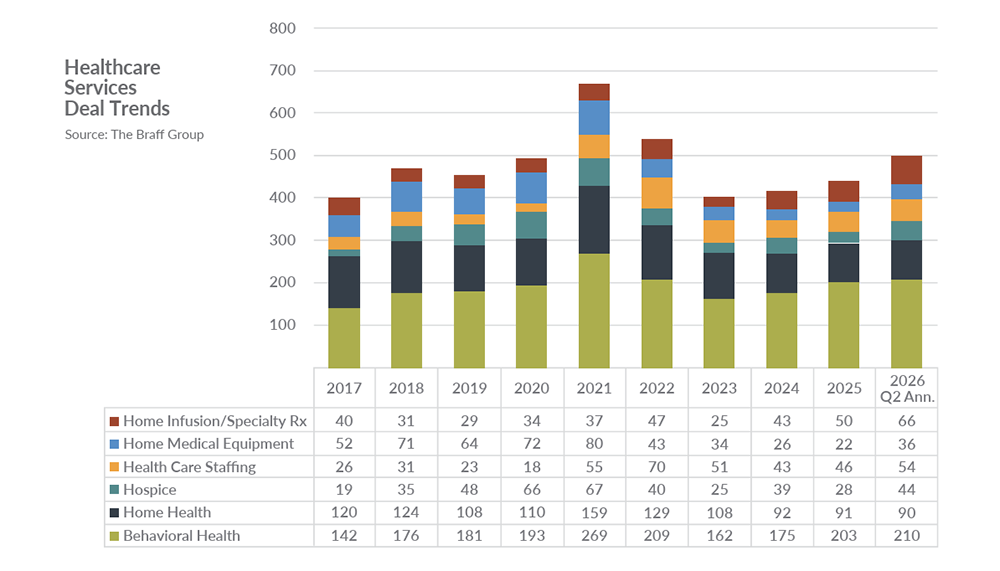
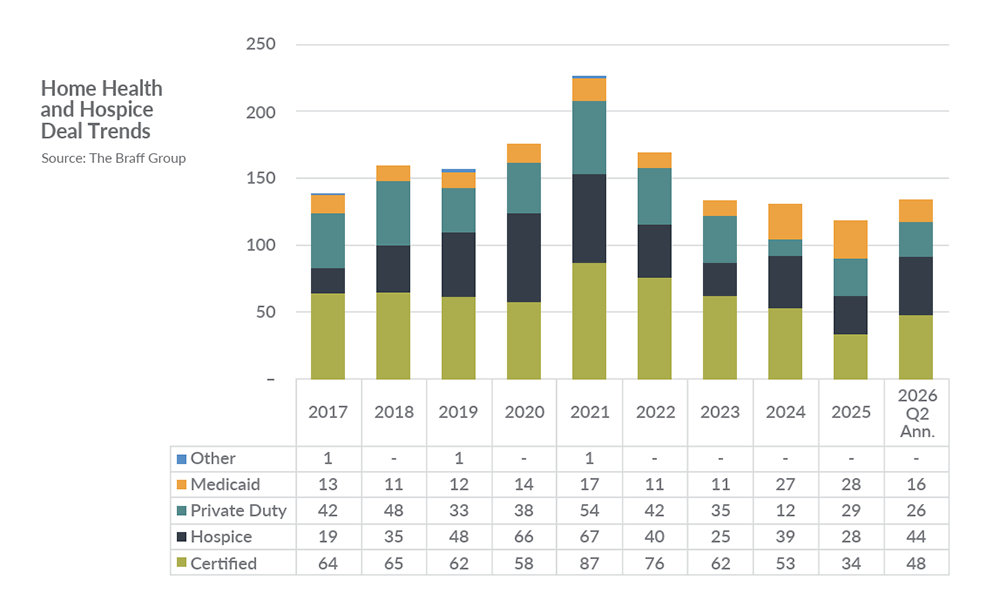
“Home health and hospice activity is trending up after four consecutive years of declines and could very well spike — both in volume and value — through 2027,” the report predicted
Overall, the report estimates there will be 134 healthcare services deals in home health and hospice in 2026, which is the highest number since 2022
Despite fallout from Medicaid cuts in the One Big Beautiful Bill Act passed last year, significant cuts to Medicare that were originally proposed by the Centers for Medicare and Medicaid Services did not materialize in 2025. This year, CMS approved a 2.3% increase in its final rule for hospice for fiscal year 2027, and has proposed 2.4% increase in home health payment rates for calendar year 2027.
“The upshot is that many industry insiders believe that CMS may have concluded that it has finally battered home health enough, paving the way for greater payment predictability,” the report stated. “Add to this the 6-month moratorium on new provider numbers (which many believe will be extended in November and may possibly last through the remainder of the Trump administration), it’s no surprise that aggregate home health and hospice activity is trending up after four consecutive years of declines and could very well spike – both in volume and valuation – through 2027.”
Mark Kulik, senior managing director of home health, home care and hospice for the Braff Group, clarified that while the growth of de novo or new home health and hospices will likely be constrained during the duration of the moratorium, the unprecedented federal move could create potential opportunities for increased M&A activity for home health agencies and hospices that are in good standing.
“This dynamic could create a meaningful supply-and-demand imbalance, resulting in increased competition for high-quality acquisition targets, particularly in markets with strong demand and, especially, in CON (Certificate of Need) states,” Kulik told McKnight’s Home Care Daily Pulse, in emailed comments about the report.
And the moratorium has created a heightened level of due diligence among existing providers around clinical operations, regulatory compliance and payment integrity that could have a positive impact on valuations, he said.
“Buyers will likely place an even greater premium on agencies with clean compliance histories, strong clinical performance, and well-documented operating practices,” he noted. “While these conditions may create headwinds for overall transaction volume, completed transactions involving high-quality agencies could benefit from a valuation tailwind as buyers compete for a limited supply of attractive assets.”
A continuing moratorium, meanwhile, likely will push organizations in a particular direction of growth, he noted.
“Ultimately, it remains to be seen whether the moratorium will be extended or not and, if so, for how long,” he said. “The longer the restrictions remain in place, the greater the pressure will be on organizations seeking growth to pursue M&A as the primary
The report found that home medical equipment deal volume is up 63.6% over 2025 and could post its highest numbers since 2022. And home infusion/specialty Rx is on pace to top last year’s tally by 32%, and healthcare staffing transaction volume is trending up 17.3% over the prior year, according to the report
