


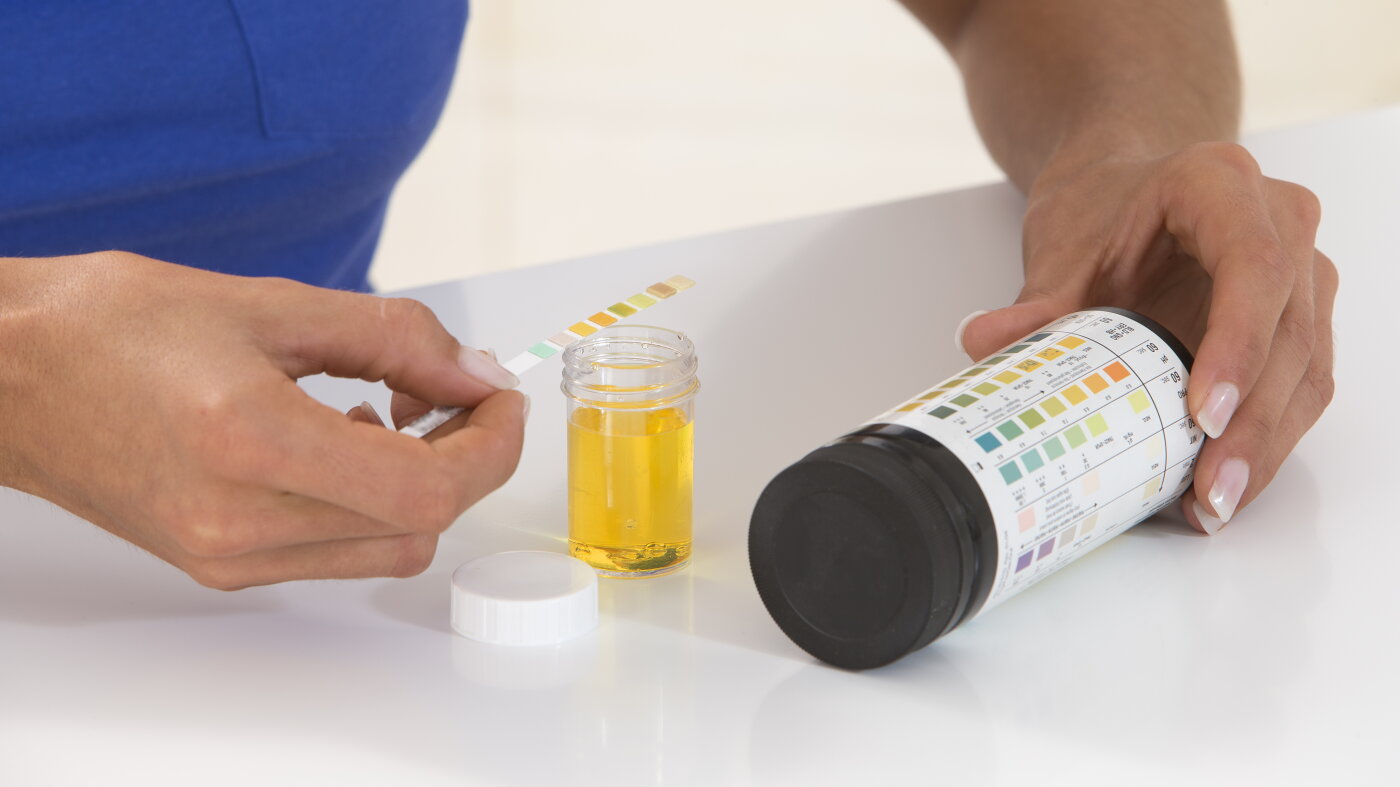
Why too many women are prescribed antibiotics for UTIs they don’t have
August 31, 20265:00 AM ET
Meghan Rabbitt
A recent study found that many women treated for recurrent UTIs didn’t have UTIs at all. Instead, their symptoms were caused by hormonally driven inflammation and pelvic floor dysfunction.
BSIP/Universal Images Group/hide caption
toggle caption
BSIP/Universal Images Group/Getty Images
For stories on the science of healthy living,subscribeto NPR’s Health newsletter.
Maria Uloko sees the same scenario in her urology practice in Los Angeles every day: A woman has been diagnosed with recurrent urinary tract infections (which means she’s had at least two in six months or three in a year), taken repeated rounds of antibiotics, and feels confused as to why the infections keep coming back
Then, Uloko tells these patients something that often feels both revelatory and frustrating. “Most of them don’t actually have UTIs, even though that’s been their diagnosis time and time again,” she says. “In fact, millions of women are being treated for UTIs they may not actually have.”
Uloko is the co-author of a recent study published in The Journal of Sexual Medicine that backs this up. She and her fellow researchers reviewed the medical records of 253 women with recurrent UTIs and found that just 15% showed evidence of problems that were limited to the bladder or urinary tract. The remaining 85% had signs of hormonally driven inflammation of the vulvar region and 75% had pelvic floor dysfunction
These conditions produce identical symptoms as UTIs — burning with urination, urgency, frequency, and/or lower abdominal pain — but require different treatment
“What we found is that in women with recurrent UTIs, the majority didn’t have a bladder problem at all, they had a vulvar problem,” says Uloko

Short Wave
Recurring UTIs: The infection we keep secretly getting
Uloko’s study provides insights that could help patients with urinary tract symptoms, says Melissa Kaufman, professor and chief of the division of reconstructive urology and pelvic health at Vanderbilt University Medical Center who was not involved in the research. “These findings will accelerate our discipline’s investigations into a comprehensive unifying hypothesis to more precisely optimize care,” she said
Why are these vulvar conditions getting missed?
One reason is the current diagnostic process for UTIs. When a patient comes in with classic UTI symptoms, the first thing most clinicians order is a screening test called a urinalysis, which detects the presence of inflammation — not bacteria. To determine whether there’s a bacterial infection, that urine must be cultured
Life Kit
‘Say no to power peeing’ and other good tips from a pelvic floor physical therapist
What’s more, that urine sample must be a “clean catch,” which requires thoroughly cleaning the urinary tract opening and surrounding areas and collecting only the midstream of urine, something not all patients are instructed on how to do, says Kaufman
“But because patients are suffering in real time, clinicians often start them on a broad-spectrum antibiotic right away if that urinalysis comes back positive and adjust the medication if needed once the culture comes back,” says Uloko
There’s also a lack of training among medical professionals, says Uloko, adding that doctors are taught that when a patient presents with classic UTI symptoms, it should be considered a UTI until proven otherwise. “We do the urinalysis, send the culture, start the antibiotic, and for the patients who get better, amazing,” she says. For the patients who don’t get better, the cycle continues “because the doctor, who hasn’t been taught how the vulva relates to urinary, colon, and sexual health, doesn’t know what else to do.”
Overlooked causes of UTI-like symptoms
The truth is that lower urinary tract symptoms that may look and feel like a UTI can be caused by things other than bacteria, says Lindsey Burnett, a urogynecologist, assistant professor at the University of California San Diego, and co-author with Uloko on the study
For example, a loss of hormones to the vulvar tissue can cause inflammation, a condition called hormonally mediated vestibulodynia. This can happen due to natural physiological changes to hormones that happen during breastfeeding and menopause. It can also happen if you’re taking medications that impact hormones
Living Better
5 women’s health myths, debunked by doctors
For example, oral birth control is one of the most commonly prescribed anti-androgen medications that can disrupt the hormonal balance in the vulvar tissue and cause inflammation that prompts UTI-like symptoms. Other commonly prescribed medications that can cause vulvar inflammation include medications for acne (such as isotretinoin, sold as Accutane) and hair loss (such as minoxidil, sold as Rogaine); oncologic treatments for breast, ovarian, and/or uterine cancer (such as aromatase inhibitors and selective estrogen receptor modulators); and hormone therapies for endometriosis or fibroids.
The genitourinary syndrome of menopause, or GSM, a collection of symptoms caused by the decline in estrogen and other sex hormones during menopause, can also affect the tissues of the vagina, vulva, bladder, and urethra and cause UTI-like symptoms. Chronic inflammation due to GSM can also prompt the pelvic floor muscles to go into a state of reactive guarding, says Uloko, which can make them hypertonic (too tight) and can further disrupt bladder function
Real Talk With a Doc
Everyone’s talking about hormone therapy for menopause. Should I be on it?
Things get even more complex when you consider that these hormonal changes can also alter the balance of good and bad bacteria in the urinary tract and vagina. When levels of hormones like estrogen and testosterone are disrupted, the good bacteria decline, which puts patients at risk for developing bacterial UTIs, says Uloko
“So now you have a patient who is testing positive on urinalysis, sometimes growing actual bacteria on culture, receiving antibiotics, getting temporary relief mostly because of the anti-inflammatory properties in antibiotics, and then cycling right back into symptoms because the underlying hormonal and vulvar dysfunction was never addressed.”
What to ask your doctor to make sure you’re getting the best care
If you suspect your recurrent UTIs may be caused by a vulvar issue that has yet to be diagnosed, ask your clinician a few key questions:
Was my urine culture positive for bacteria?
Remember, the first test typically given to patients who present with UTI-like symptoms is a urinalysis, which tests for inflammation—not a bacterial infection
Could my symptoms be due to hormone changes affecting my vulva due to medications I’m taking, or the menopause transition?
There are many conditions that have overlapping symptoms with lower urinary tract symptoms, but getting an appropriate diagnosis for the condition causing your symptoms “requires that someone have the wherewithal and the care to screen and diagnose appropriately in women,” says Kaufman
This can be surprisingly difficult to find. The antidote is to arm yourself with knowledge and name it at your next appointment. You might say to your clinician, “I read that taking the birth control pill could impact my hormones in such a way that it causes vulvovaginal symptoms that could mimic common UTI symptoms. Can we talk about this being a potential factor in my case?”
Uloko recommends patients print the research and bring it to their appointment. “If you’ve asked directly and collaboratively, ‘Have you considered this angle for my recurrent UTIs?’ and you’re dismissed, ask the clinician to document the refusal in your chart, in writing,” she says. “This changes behavior and leaves you a record.”
Has my vulvar tissue and pelvic floor been examined?
Vulvovaginal health and pelvic health are just as important as bladder function and should be evaluated, says Burnett. “I can’t tell you how many patients I see who have spasms of their pelvic floor muscles, and that’s probably what’s causing their urinary symptoms.”
Unfortunately, many clinicians aren’t comfortable doing even a basic physical exam of a woman’s pelvis, says Kaufman. “It’s a simple exam to look for diagnostic changes around the vulva and openings to the vagina and urethra — one that doesn’t even have to involve a speculum or a pap smear,” she says. “And it’s too often a barrier to treatment for many of these conditions with symptoms that mimic a UTI.”
Living Better
ADHD looks different in women and poses unique health risks
If you don’t think your primary care doctor is doing an adequate physical exam or answering your questions, make an appointment with a specialist. Start with a urologist, who has specialized training in treating UTIs and understands that the bladder is part of an interconnected genitourinary system. Other good options include a urogynecologist, gynecologist, or Menopause Society certified practitioner
Am I a candidate for vaginal estrogen or DHEA?
The American Urological Association has published guidelines for multiple conditions that can all present with UTI-like symptoms — overactive bladder, recurrent UTIs, and GSM — and they clearly state that low dose vaginal estrogen or DHEA is an effective treatment
“There are a number of randomized control trials and systematic reviews that demonstrate that low dose vaginal estrogen reduces the risk for recurrent urinary tract infections in perimenopausal and post-menopausal women,” says Kaufman, one of the authors of the association’s guidelines. You can even bring these guidelines with you to your next healthcare visit to jumpstart the conversation with your clinician
“As urologists, we do a pretty good job of the urinary part of the evaluation—the bladder, ureters, and kidneys,” says Uloko. “Where we fall short is the genital part, and that requires a much broader understanding of the pelvic ecosystem as a whole—the hormonal environment, vulvar tissue, and pelvic floor musculature, all influencing each other and all capable of producing symptoms that look exactly like a UTI.”
Meghan Rabbitt is a journalist and author ofThe New Rules of Women’s Health
NPR does not offer or accept money for coverage or interviews.
Anyone who makes such an offer or request is not an NPR employee and does not represent NPR
