



Research and Innovation
Can AI Models Identify Parkinson’s Patients at Risk for Faster Decline?
By: Kyra Gurney | August 31, 2026 | 13 min. read |
Machine-learning models developed by University of Miami researchers used clinical, biomarker and imaging data to identify Parkinson’s patients at higher risk for rapid cognitive or motor decline
For patients diagnosed with Parkinson’s disease, one of the greatest uncertainties is what comes next. Some people experience relatively mild symptoms for years. Others face a much steeper course marked by worsening movement problems, cognitive decline or both
New research from the University of Miami suggests artificial intelligence may help identify patients at increased risk for rapid decline years before those changes become apparent. Published in npj Parkinson’s Disease, the study found that machine-learning models could predict which patients were more likely to experience significant cognitive or motor worsening over the following three to five years
Just as importantly, researchers discovered that some of the most valuable predictive information came not from advanced brain imaging but from clinical measurements neurologists already collect during routine patient visits
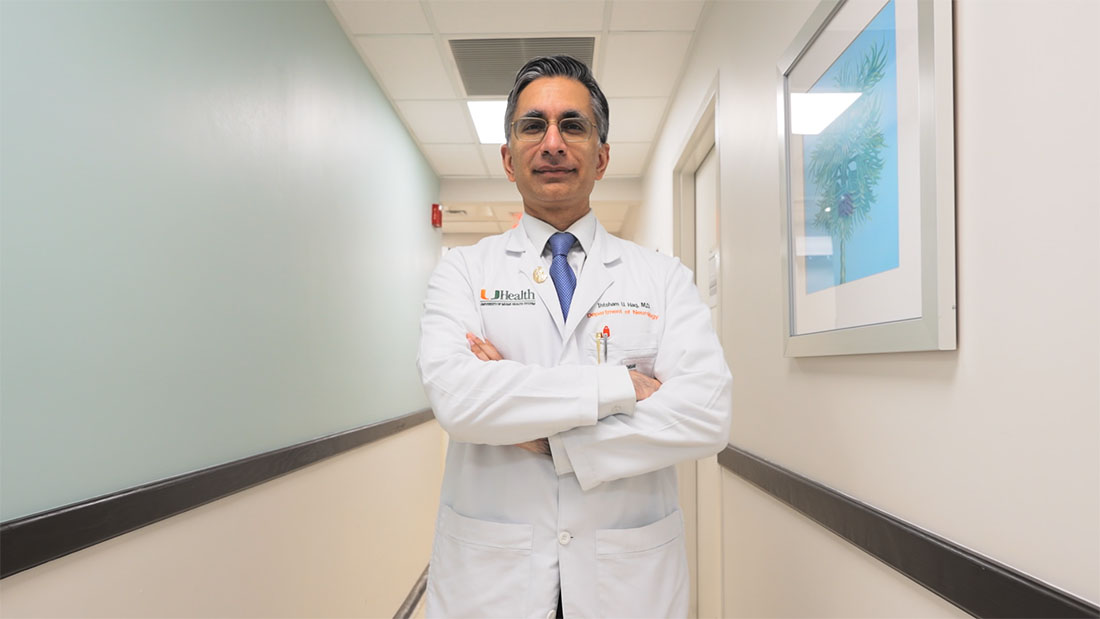
“One of the most difficult things about Parkinson’s disease is not knowing how it will go,” said Ihtsham ul Haq, M.D., professor of neurology at the University of Miami Miller School of Medicine, the Cornfeld-Hurowitz Endowed Chair in Movement Disorders and associate director of the Evelyn F. McKnight Brain Institute. Dr. Haq is senior author of the study. “We wanted to use AI’s ability to analyze many kinds of information at once to see if it could predict who would have a more rapid motor or cognitive decline.”
Bringing AI and Neurology Together
The interdisciplinary project brought together UM neurologists, radiologists, computer scientists and artificial intelligence experts. Among them was Yelena Yesha, Ph.D., a professor in the Department of Computer Science in the UM College of Arts and Sciences, Knight Foundation Endowed Chair of Data Science and AI and a Miller School faculty member with a secondary appointment in radiology
A few years ago, Dr. Haq and co-author Tatjana Rundek, M.D., Ph.D., a professor of neurology and Evelyn F. McKnight Chair for Learning and Memory in Aging at the Miller School, approached Dr. Yesha to explore whether artificial intelligence could help address difficult questions in neurodegenerative disease, including predicting which patients might face a more aggressive Parkinson’s disease trajectory
“The whole premise here is to use AI to attack dementia,” said Dr. Yesha. “It’s very interdisciplinary work. We are using neurology, neuroimaging, radiology and many other areas of clinical expertise to attack a very difficult problem.”

“This research is a compelling example of what’s possible when computer scientists collaborate with medical researchers to address complex clinical issues,” said Leonidas Bachas, Ph.D., dean of the UM College of Arts and Sciences. “These types of interdisciplinary partnerships have tremendous potential to improve the lives of patients and their caregivers.”
Dr. Yesha worked closely with Yusen Wu, Ph.D., a research assistant professor of neurology at the Miller School with a secondary appointment in the UM Department of Computer Science, to develop and validate the machine-learning models used in the study. The team trained the models using MRI scans alongside detailed clinical and symptom data
“As an interdisciplinary researcher working across neurology and computer science, I’ve seen what AI can do when grounded in real clinical data,” said Dr. Wu. “It finds patterns in disease progression that no single field would catch alone. It doesn’t replace clinical judgment. It sharpens it, giving us a real shot at getting ahead of diseases like Parkinson’s before the damage is done.”
“Using this amazing dataset that the University of Miami has based on their clinical experience with patients, we were able to come up with these exciting results that are AI-driven,” Dr. Yesha said. “We came up with not just novelty in clinical care, but also novelty in the application of AI.”
Why This Research Matters
Parkinson’s disease can progress differently from one person to another, making it difficult to predict who will experience faster cognitive or motor decline
In this study, machine-learning models identified higher-risk patients using clinical, biomarker and imaging data. Some of the most useful information came from measurements collected during routine clinical evaluations
The models require additional validation before clinical use, but they may help researchers study disease progression and design clinical trials that can more clearly evaluate potential therapies
Analyzing More Than 1,600 Patients
Researchers trained and evaluated their models using data from 1,602 participants in the Parkinson’s Progression Markers Initiative, one of the world’s largest Parkinson’s disease research programs. They then tested the models in an independent validation cohort of 541 patients from the Parkinson’s Disease Biomarkers Program
The study focused on predicting two major outcomes:
• Rapid cognitive decline, defined as a drop of at least five points on the Montreal Cognitive Assessment (MoCA).
• Rapid motor decline, defined as a 10-point increase on the Movement Disorder Society-Unified Parkinson Disease Rating Scale motor assessment (MDS-UPDRS3).
To make those predictions, investigators created machine-learning models that incorporated baseline clinical information and MRI-derived measures of changes in brain structure over time
Frequently Asked Questions
Can AI predict Parkinson’s disease progression?
Researchers found that machine-learning models could identify patients at increased risk for rapid cognitive or motor decline several years in advance using clinical and biomarker data. The models require additional validation before clinical implementation
Do MRI scans predict Parkinson’s disease progression?
In this study, structural MRI measures added relatively little predictive value compared with routine clinical assessments and symptom-based measures
What factors predicted worsening Parkinson’s symptoms?
Important predictors included alpha-synuclein seed amplification assay results, disease severity measures and changes in symptoms during the first year after diagnosis
Why is predicting Parkinson’s decline important?
Earlier identification of higher-risk patients could help researchers improve clinical trial enrollment, discover new treatment targets and better understand the diverse trajectories seen in Parkinson’s disease
When Simpler Outperformed More Sophisticated
Researchers expected MRI-based measures of brain atrophy to improve prediction performance. Instead, they found that structural MRI data provided relatively little additional value beyond information already available through routine clinical evaluations
“We wanted to look at MRI-based measures because we so commonly order MRIs on patients, but we don’t know how predictive they are,” Dr. Haq said. “We were surprised that the structural MRI measures we tested added relatively little predictive information beyond the clinical data.”
The strongest-performing clinical models achieved AUROC values above 0.80, demonstrating a strong ability to distinguish patients at higher versus lower risk of future decline. Adding MRI-derived measures generally failed to improve performance and, in some motor-decline models, actually reduced it
“I was very surprised that structural MRI didn’t make that much of a predictive difference,” Dr. Haq said. “It’s not that it makes literally no difference, just that what we can measure clinically matters so much more for the model.”
What Predicted Future Decline?
The most informative predictors differed depending on whether researchers were forecasting cognitive decline or motor worsening
For motor decline, two factors stood out: results from a synuclein seed amplification assay (SAA), which detects abnormal alpha-synuclein biology associated with Parkinson’s disease, and how quickly a patient’s MDS-UPDRS motor score changed during the first year after diagnosis
There are multiple reasons why we’d want to identify those who will be at risk for rapid cognitive or motor decline. The most important is the chance to make a difference.”Dr. Ihtsham ulHaq
For cognitive decline, the strongest predictors included the rate of early cognitive worsening as well as the pace of motor decline during that first year
Researchers also found that prediction performance improved when information about a patient’s first-year trajectory was added to baseline data. The finding highlights the importance of monitoring how symptoms evolve over time rather than relying solely on a single clinical assessment
“More data isn’t necessarily better data,” Dr. Haq said. “The information has to be relevant and some of the most useful information in our study came from things neurologists already measure clinically.”
Why This Matters for Patients
Although not every factor influencing Parkinson’s disease can be modified, growing evidence suggests that addressing factors such as blood pressure, physical activity, hearing loss and vision problems may influence long-term brain health. Identifying higher-risk patients earlier could help underscore the importance of these interventions
“There are multiple reasons why we’d want to identify those who will be at risk for rapid cognitive or motor decline,” Dr. Haq said. “The most important is the chance to make a difference.”
The predictive models also may help researchers better understand why some patients deteriorate more rapidly than others and potentially identify new therapeutic targets
Another potential application is improving the design of clinical trials. Researchers currently have limited ability to account for differences in disease progression among participants. Better identification of patients likely to experience measurable decline could make it easier to determine whether an experimental therapy is truly changing the course of the disease
“Trial enrichment simply means using information about patients to enroll the people most likely to answer the scientific question a trial is asking,” Dr. Haq said. “If you are testing whether a drug slows progression, identifying people likely to progress gives you a better chance of detecting whether the treatment actually changes that trajectory.”
Looking Ahead
One of the study’s major strengths was external validation. After developing the models using one large Parkinson’s dataset, researchers tested them in a completely independent cohort and observed similar performance. The result suggests the models are identifying broadly meaningful patterns rather than characteristics unique to a single group of patients
The team plans to investigate whether similar machine-learning approaches can predict rapid decline in other neurodegenerative diseases, including Alzheimer’s disease. They also hope to study whether measures of brain connectivity provide predictive information beyond what can be learned from structural MRI scans alone
“If there’s one thing I’d want people to take away from the study, it’s that AI can help us find meaningful patterns in clinical data that are difficult to see otherwise,” Dr. Haq said. “One of the most interesting lessons was that the most useful information was not necessarily the most technologically sophisticated information. Careful clinical measurement still carried enormous predictive value.”
Dr. Yesha sees broad potential for future collaboration between medicine and artificial intelligence
“We are opening up new vistas in dementia and Parkinson’s research,” she said. “We believe that this team is trailblazing in terms of the effective application of AI in Parkinson’s and other dementia-driven diseases.”
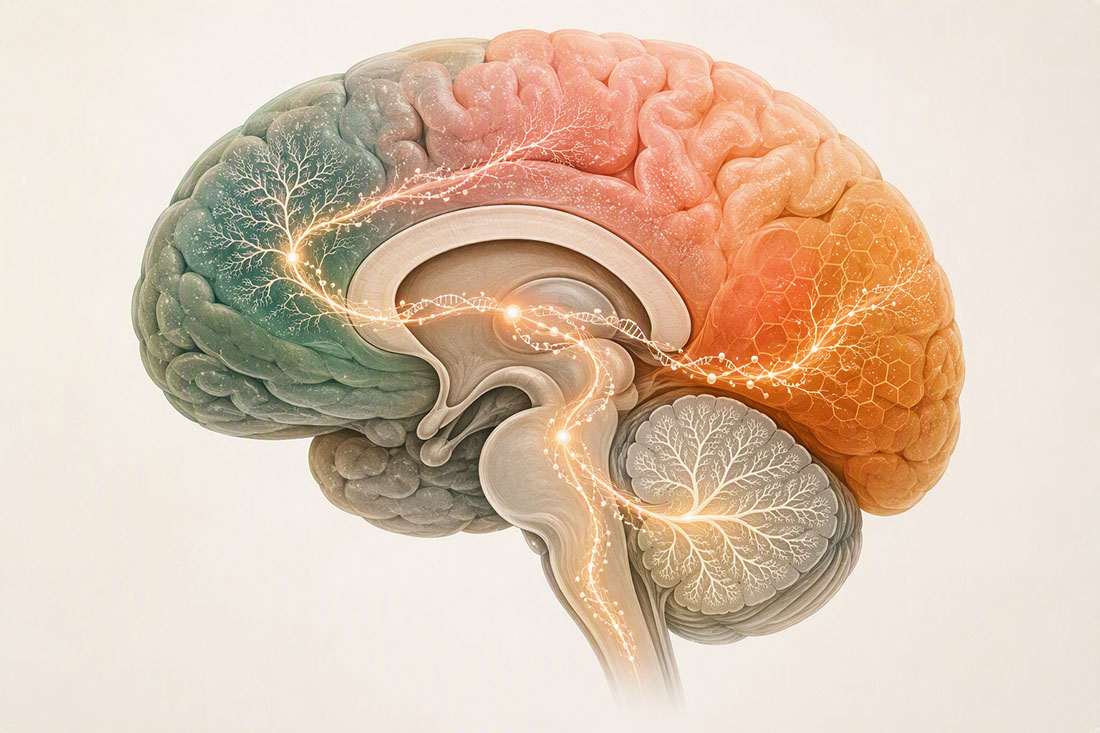
TAND: A New Framework for ALS, FTD and Related Brain Diseases
Researchers propose TAND, a new framework linking ALS, FTD and related disorders through TDP-43 biology to improve diagnosis and treatment
Read more
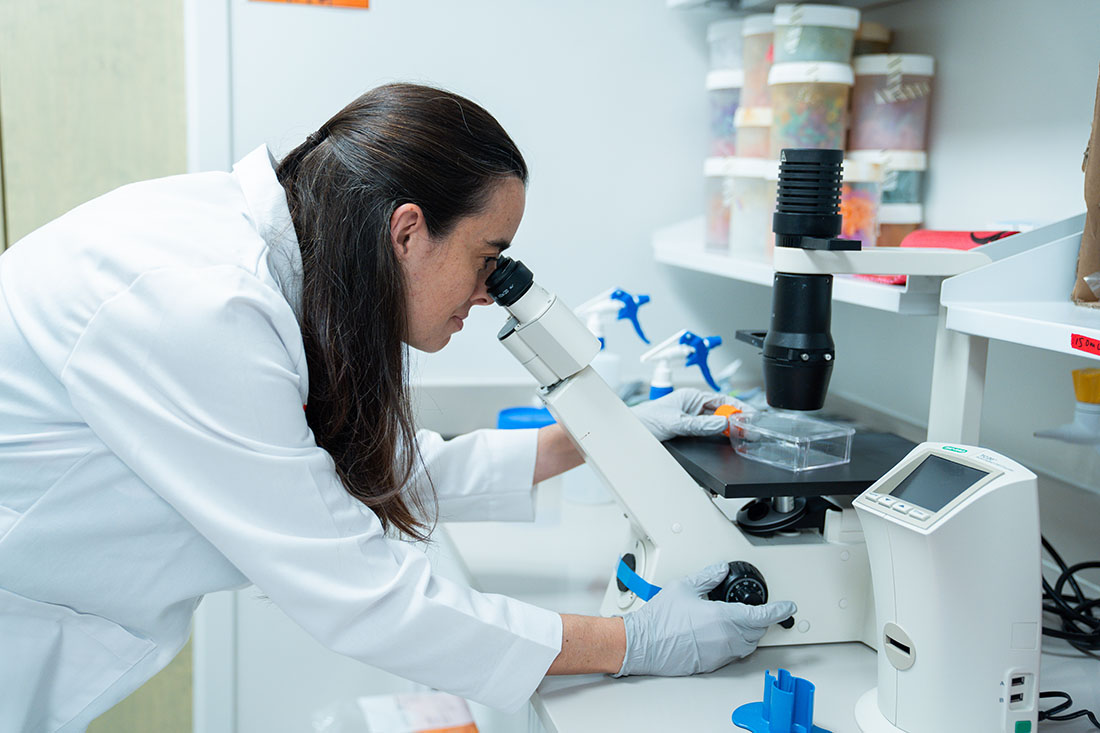
Miller School of Medicine Researchers Identify Molecular Marker Linked to Faster Cognitive Decline in Alzheimer’s Disease
Researchers identified an abnormal UNC13A RNA signature linked to faster cognitive decline and greater impairment in Alzheimer’s disease
Read more

NIH-Funded Study Explores How the X Chromosome Influences Alzheimer’s Disease Risk
Women are twice as likely as men to develop Alzheimer disease. An NIH-funded University of Miami study explores the X chromosome’s role
Read more
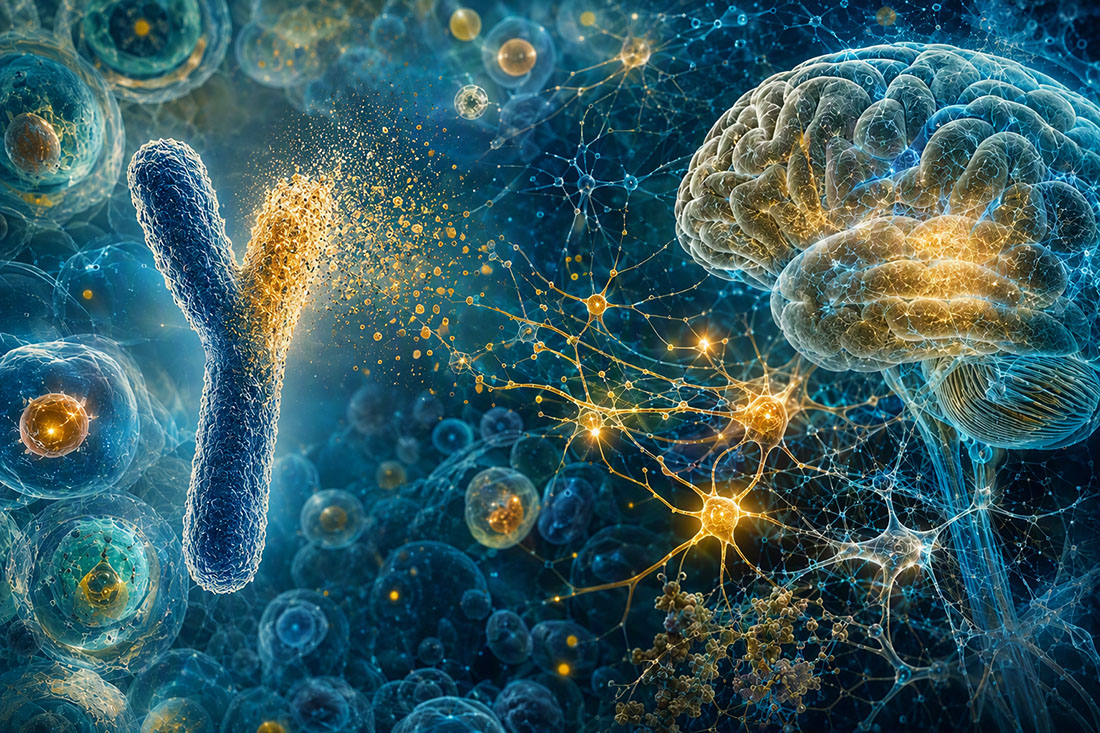
University of Miami Researchers Study Genetic Change Linked to Alzheimer’s Risk in Men
Miller School researchers are studying whether loss of the Y chromosome may help identify men at higher risk for Alzheimer’s disease
Read more
Tags:AI, artificial intelligence, Department of Neurology, Department of Radiology, Dr. Ihtsham ul Haq, Evelyn F. McKnight Brain Institute, movement disorders, Movement Disorders Division, neurology, Parkinson’s disease, technology
