


Gov. Green Signs Legislation to Expand Access to <a href="https://healthylife7.com/opinion-improving-access-to-healthcare-should-not-come-at-the-expense-of-moral-clarity/” title=”Opinion: Improving access to healthcare should not come at the expense of moral clarity”>Healthcare and Relieve Medical Debt
Posted on Jul 9, 2026 in Featured, Latest Department News, Newsroom, Office of the Governor Press Releases
STATE OF HAWAIʻIKA MOKU ʻĀINA O HAWAIʻI JOSH GREEN, M.D.GOVERNOR
KE KIAʻĀINA
GOVERNOR GREEN SIGNS LEGISLATION TO EXPAND ACCESS TO HEALTHCARE AND RELIEVE MEDICAL DEBT
FOR IMMEDIATE RELEASE
July 9, 2026
HONOLULU –
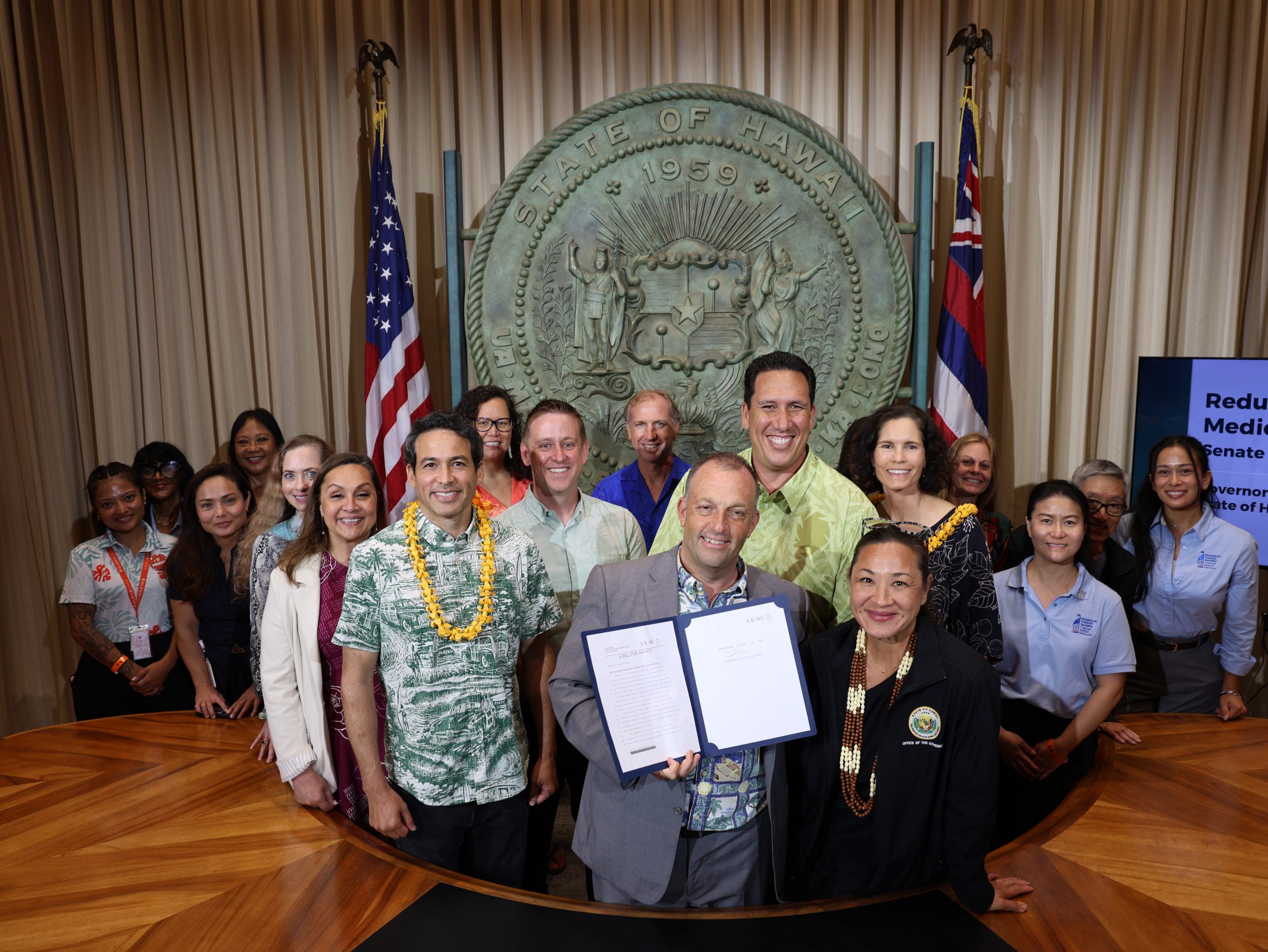
Governor Josh Green today signed three measures in two separate bill-signing ceremonies aimed at strengthening access to healthcare and alleviating the burden of medical costs.
Access to quality healthcare should not depend on an individual’s ability to pay. Yet, many Hawai‘i residents are forced to choose between foregoing needed care and taking on overwhelming medical debt. These reforms help ensure that people can receive the screenings, treatment and support they need without risking their financial stability
“It is with pride that we announce these measures which will truly transform the health and well-being of Hawaiʻi,” said Governor Green. “Having spent years in the medical field, I have seen the gaps in the system. When our people are healthy and life-saving services are accessible and affordable, we will be a stronger and more adaptable Hawai‘i.”
“These measures help meet important healthcare needs of our community,” said Rep. Gregg Takayama, chair of the House Health Committee. “HB 1864 ensures that patients are not forced to choose between their immediate medical needs and their future ability to bear children. HB 1969 will save hundreds of lives by enabling early detection and treatment of colorectal cancer among uninsured residents who cannot afford this crucial procedure.”
HB 1864: RELATING TO INSURANCEHouse Bill (HB) 1864, Act 218, Session Laws of Hawaiʻi (SLH) 2026, requires insurers, mutual benefit societies and health maintenance organizations to cover standard fertility preservation services for individuals undergoing medically necessary treatment that may cause iatrogenic infertility. This requirement applies to all policies, contracts, plans and agreements issued or renewed after December 31, 2026
Because chemotherapy and radiation can damage reproductive organs and impact future fertility, many patients must grapple not only with the challenges of a serious diagnosis, but also with the possibility that life-saving treatment may compromise their ability to build a family. HB 1864 ensures that Hawai‘i residents facing this dilemma will have coverage options for preserving their fertility prior to undergoing surgery or initiation of cancer therapy
This measure makes Hawai‘i the 22nd state to ensure that residents do not have to forgo the opportunity to conceive in order to receive life-saving medical treatment
“This is a historic moment for many of Hawaiʻi’s young cancer patients who, until now, not only had the heartache of receiving the devastating news of a cancer diagnosis, but also had the painful realization that the treatment for their cancer would result in the permanent inability for future fertility,” said Dr. Michael Carney, chair of Hawaiʻi Society for Clinical Oncologists. “This law that we have worked so hard over so many years to pass, is now reality and these cancer patients can have at least a small part of their cancer journey improved. Hawaiʻi has now mandated the option of the initial protection for future fertility in these cancer survivors — hope for survival and genuine hope for a future family.”
HB 1969: RELATING TO COLORECTAL CANCERColorectal cancer is the second-leading cause of cancer-related deaths in Hawai‘i, taking the lives of roughly 260 residents each year. Many of these losses may have been prevented through timely and equitable screening
HB 1969, Act 219, SLH 2026, expands access to colorectal cancer screenings by requiring the Department of Human Services (DHS) to provide financial assistance to eligible Hawaiʻi residents who are uninsured, underinsured, or otherwise ineligible for Medicaid. The measure also requires certain health insurance plans to cover medically necessary follow-up colonoscopies after a positive colorectal cancer screening test without deductibles, copayments, coinsurance or other cost-sharing
“Governor Green’s signing of HB 1969 into law makes Hawaiʻi an innovative leader for colorectal cancer screening and treatment,” said Dr. Shane Morita, surgical oncologist, American Cancer Society medical officer and American Cancer Society Cancer Action Network volunteer. “Colorectal cancer is often curable when detected early, yet it remains a major cause of cancer-related death in Hawaiʻi. Expanding access will reduce the burden on local families and improve survival for our patients.”
SB 3025: RELATING TO MEDICAL DEBTIn a second bill-signing ceremony, Governor Green signed Senate Bill (SB) 3025, Act 220, SLH 2026, which establishes a framework to relieve medical debt for as many as 50,000 Hawaiʻi residents. This enactment is years in the making — born from inventive partnerships and bold, solution‑driven work that reflects our collective dedication to progress
SB 3025 requires the Office of Wellness and Resilience (OWR), now under DHS, to establish and administer a Medical Debt Acquisition and Forgiveness Program to purchase and eliminate outstanding medical debt for state residents, contingent on available program funds. As many as 50,000 residents may qualify, with relief totals reaching as high as $91M
An estimated one in 20 Hawaiʻi residents have outstanding medical debt on their credit report. This burden delays necessary medical treatments, creates barriers to obtaining housing or employment and worsens mental distress, thus intensifying the cycle of poverty. With ever-rising living costs and a for-profit healthcare system, Hawaiʻi is further disadvantaged as one of the most costly states in the nation.
Twenty-seven other cities and states in the United States have developed similar programs for which we can model our path; OWR will partner with a nonprofit organization that will purchase the debt from healthcare providers for a fraction of the total cost, then abolish the debt altogether. This system is beneficial for all involved, as participating providers are able to receive revenue from otherwise dormant accounts
“Medical debt is one of the biggest drivers of financial ruin in Hawaiʻi,” said Senator Jarrett Keohokalole, chair of the Senate Commerce and Consumer Protection Committee and co-introducer of the bill. “SB 3025 ensures that thousands of families in Hawaiʻi don’t have to choose between paying rent and paying off a hospital bill.”
“No one chooses medical debt — and medical emergencies can suddenly bankrupt families with even the best insurance,” said Senator Chris Lee, co-introducer of SB 3025 and chair of the Senate Committee on Water, Land, Culture and the Arts. “This is probably the best return on investment ever — $500k to cancel $91M in medical debt for 50,000 local families struggling to pay their bills. It will save taxpayer money by making it easier for people to see doctors again instead of ending up in the emergency room on the taxpayer dime.”
“Fear of medical debt should never stand in the way of someone getting needed care — and actual medical debt should not be part of a downward financial spiral linked to bad credit or bankruptcy,” said Representative Lisa Marten, chair of the House Committee on Human Services & Homelessness. “With willing partners like The Queen’s Health Systems, the state can erase medical debt and the anxiety and depression often associated with it for just pennies on the dollar. People cannot actually apply for this program, rather, tens of thousands of qualified candidates will simply receive a notice with the good news that their medical debt has been erased.”
“Medical debt is unlike other forms of debt because no one chooses to become ill or injured, yet a single unexpected health crisis can result in an inescapable financial burden,” said Holomua Collaborative Policy and Communications Director Matt Prellberg. “By establishing the Medical Debt Acquisition and Forgiveness Program, we propel Hawai‘i forward and help provide working families in desperate situations with the economic breathing room they need to stay and thrive in Hawai‘i.”
The enactment of these three measures sends a clear message: Hawai‘i is determined to build a healthcare landscape that serves people, not systems. From expanding access to lifesaving screenings, to protecting the possibility of growing a family, to lifting the weight of medical debt, these laws move us toward a future where health and dignity are not out of reach. With continued partnership and commitment, we can create a Hawai‘i where care is accessible, recovery is possible and every resident has a fair chance to thrive.
The complete list of bills signed includes the following. Click the links to see full details of the bills enacted into law
SB 2271 – RELATING TO HOSPITAL LICENSING – Act 221
SB 3132 – RELATING TO HOSPITAL LICENSING – Act 222
HB 1974 – RELATING TO HEALTH – Act 223
HB 1642 – RELATING TO CONSUMER PROTECTION – Act 224
Assets – HB 1864 and HB 1969 Fertility Preservation and Colorectal Cancer
Assets – SB 3025 Medical Debt
# # #
