



Health and medicine
Arizona taps ASU to help hospitals prepare for public health emergencies
Health Observatory at ASU leads efforts to assess state’s emergency preparedness and response, supported by $1 million award administered by ADHS

Widespread shortages of personal protection equipment. Deep burnout among health care workers. Conflicting communications.
The COVID-19 pandemic showed that responding to infectious disease outbreaks is a broad-spectrumed effort — involving everything from first responders to supply chains
To strengthen Arizona’s readiness for future public health emergencies, Arizona State University’s Health Observatory led efforts to assess health care systems in the state. The project was supported by a $1 million grant from the federal Hospital Preparedness Program, administered by the Arizona Department of Health Services.
The HPP is exactly the type of task for which the Health Observatory, an ASU Health research center that helps prepare the state to identify, track and mitigate future health crises, was created
The multidisciplinary effort — including the University of Arizona, Northern Arizona University, the Translational Genomics Research Institute North and ADHS — analyzed statewide infection control, laboratory capacity, supply chains and patient movement in hospitals to better prepare for a future crisis
“Preparedness isn’t something you build during an emergency. It’s something that has to be developed through collaboration and planning long before a crisis occurs,” said Sam Whitman, ASU postdoctoral research scholar and project lead.
Streamlining communication in a crisis
Communication is key in any crisis
While individual health care institutions have emergency protocols, they can fail if not applied in tandem. The HPP looked to solve that by building a digital repository with existing response plans, pathogen databases and training documents to keep everyone on the same page.
Tim Lant, director of data, analytics and coordination for the ASU Health Observatory and lead researcher on the project, said a response should involve joint efforts between groups inside and outside of health care.
When we consider how pathogens spread in cities, we need to account for custodial services, transportation and other non-health-related industries, said Lant, who formerly worked for the U.S. Department of Health and Human Services, spearheading efforts to analyze and evaluate disaster scenarios.
“You have to talk about topics that usually aren’t part of people’s daily jobs. Understanding who’s in the various positions around becomes part of the solution space that we work in,” he said.
Applying lessons from COVID-19
Keeping reupplies or people
As hospitals around the country experienced health care worker burnout and understaffing during the pandemic, they were also faced with extreme re membrane oxygenation (ECMO) shortages resulted in premature death for 90% of patients who couldn’t receive a machine.
“There was so much work in identifying, testing and treating all these patients. A lot of hospital patients couldn’t go to long-term care because of bottlenecking,” said Dr. Rebecca Sunenshine, who was deputy epidemiologist for Arizona during the COVID-19 pandemic and helped coordinate the statewide response
As part of the HPP’s efforts to prevent such shortages in the future, Sunenshine — medical director of the Health Observatory and subject-matter expert for the HPP — worked with hospitals to gauge PPE usage and ECMO machine counts. She has also spearheaded a wellness collaborative to reduce health care worker burnout.
In addition, she and Health Observatory Executive Director Dave Engelthaler are leading workshops designed to educate state health care leaders about emerging pathogens and disease responses.
A former Arizona public health emergency response coordinator, Engelthaler said clinical and research labs at universities like ASU stepped up to identify the COVID-19 outbreaks but weren’t fully integrated into the response system.
“A part of a response is health care, but another part was the research laboratories, whether it was at nonprofit places like TGen or at ASU. We’re trying to better understand a strategic approach to using regelthaler said.
ASU as a connecting force
ADHS will use the ASU team’s findings to inform health care leaders and stakeholders about how they can improve Arizona’s emergency preparedness and hospital stockpiles
Ed Valinski, bureau chief at ADHS, said ASU was the perfect partner for the Hospital Preparedness Program because of its statewide reach and deep expertise in infectious diseases, health systems and data.
He said the Health Observatory’s goals fit perfectly into the vision of the program, translating health information into decision-making for policymakers and health systems.
“The end goal is not just a set of reports, but a more resilient system with updated plans, exercised committees and concrete next steps for health care leaders,” he said
ASU HealthDowntown Phoenix campusHealth ObservatoryMediaSDG 03 Good Health and Well-BeingSDG 09 Industry, Innovation and InfrastructureSDG 15 Life on LandCommunityPolicymakersASU AffiliatesHealth and medicineStudentsHealth careScienceResearchCommunity partnershipsKnowledge Enterprise
ASU Health, Downtown Phoenix campus, Health Observatory, Media, SDG 03 Good Health and Well-Being, SDG 09 Industry, Innovation and Infrastructure, SDG 15 Life on Land, Community, Policymakers, ASU Affiliates, Health and medicine, Students, Health care, Science, Research, Community partnerships, Knowledge Enterprise
More Health and medicine

As the Arizona State University Congressional Dialogue Series with Congresswoman Yassamin Ansari began Wednesday morning, David Schwartz used three words to describe the health care system:Chaotic.…
Read this story
Healthy LivingHealth careCommunity partnerships

Addiction to prescription drugs and alcohol among older adults is rising in the U.S. but often goes undetected.In 2023, an estimated 6.4 million Medicare beneficiaries had a substance-use disorder,…
Read this story
Healthy LivingExpert Q-and-APsychology
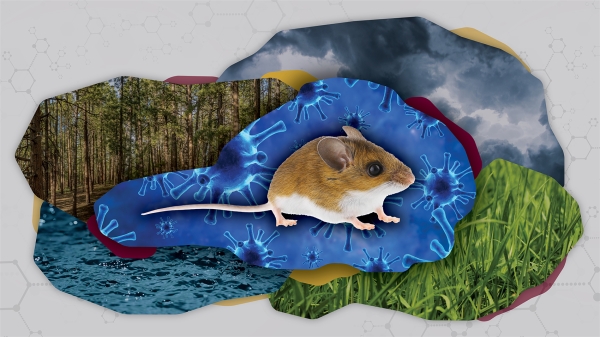
Earlier this month, hantavirus made local headlines following a confirmed death due to the rodent-borne virus in Mohave County. Though the case is unrelated to the hantavirus outbreak on a…
Read this story
Biology and societyBiologyEnvironmentHealth careExpert Q-and-A
