

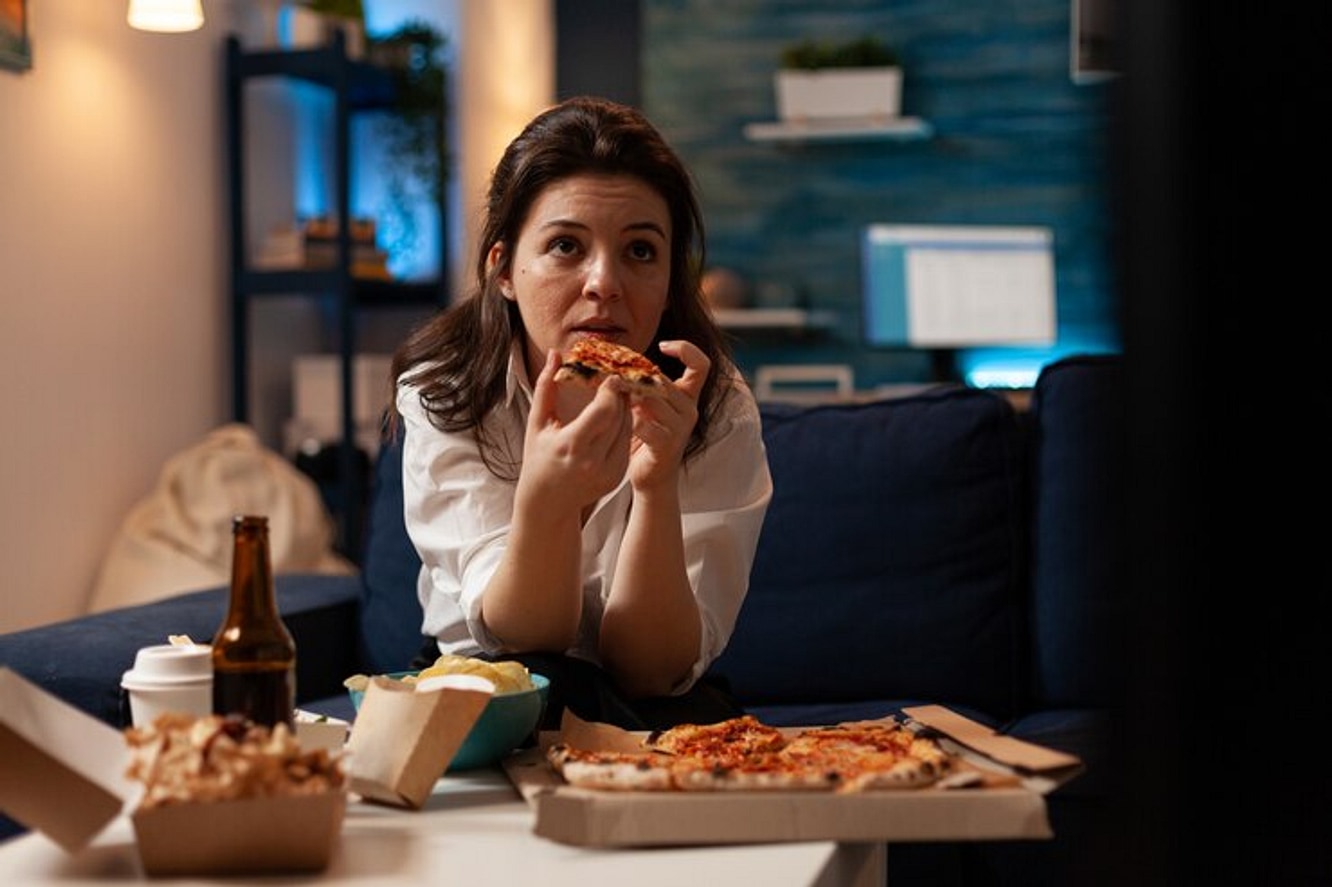
Whether it’s midnight munchies or unstoppable cravings late at night, binge eating when your hunger peaks can sabotage even the most thoughtful diet. Diets don’t work anyway. Instead of denying yourself when dinner ends, you need to plan for inevitable hunger with an eating schedule you can stick to all night long.
Understanding Why You Get Hungry Late at Night
There are many reasons you may start to feel hungry late at night. Maybe you’re stressed and keeping odd hours, go long stretches without eating during the day, or regularly restrict too much during meal times so your appetite peaks after dinner.
Late-night hunger isn’t always physical. Sometimes it can be mental. When your hormones are out of whack because you haven’t slept well or you’re starving yourself all day only to overeat at night your appetite could be heightened.
Outsmart hunger by planning ahead; create a late night hunger diet that actually works with your lifestyle instead of fighting against it.
How Do I Create a Late Night Hunger Diet Plan?
First thing’s first. Stop trying to ignore hunger. Listen to your body and plan your meals accordingly so by the time evening rolls around you aren’t famished.
It’s important to distinguish between true hunger and boredom or stress. If you had an early dinner or skipped meals too frequently during the day then by all means, have a snack. If you’re bored eating won’t satisfy you.
Balance is key. Ensure your meals contain enough protein and vegetables along with healthy fats and complex carbs to keep you full. Keep snack food simple and delicious so late night hunger doesn’t spike.
What Foods Keep You Full Overnight?
Eating the proper nutrients during the day can help you maintain your appetite until morning. A breakfast of just processed carbohydrates will leave you hungrier sooner; whereas if you eat protein and fiber-rich foods your body will thank you come midnight.
- Start your day with:
- Protein-rich foods
- Fiber-rich vegetables
- Complex carbohydrates with less processing
- Fats in moderation
Eating balanced meals and snacks will keep you from getting ravenously hungry at night.
How Do I Stop Eating Late at Night?
Slow down; ask yourself if you’re actually hungry or if you’re bored. Being aware of your habits will stop mindless snacking and allow you to take care of your body.
If you’re hungry, opt for a satisfying snack – not handfuls out of a box. Choose something that has protein or fiber which will fill you up faster and keep you from eating more later.
If you’re bored, try a new hobby. Brush your teeth, read a book, take a walk, or play with your dog. Do anything that will distract you long enough for the craving to pass.
Late-night Snacking: Best Options for Weight Loss
Snacking can be good for you as long as it fits into your calorie goals and doesn’t leave you wanting more hours later. Late-night snacks should fill you up without becoming a full meal.
Focus on protein and fiber. A small piece of candy won’t satisfy like a Greek yogurt with strawberries or half a sandwich with veggies and chicken will.
- Greek yogurt with strawberries
- Half a turkey sandwich with veggies
- A small salad with chicken
- Peanut butter with apple slices
- Hummus with carrots
Sleep and Nighttime Eating
One of the best things you can do to avoid late-night binge eating is get enough sleep. When you’re tired you’ll start to produce more hunger-inducing hormones and fewer fullness hormones. Not only this but your willpower decreases and cravings for unhealthy foods become stronger.
To better understand the relationship between sleep and nighttime eating, here are some key factors to consider.
| Factor | Effect on Hunger | Hormones Involved | Recommended Action |
|---|---|---|---|
| Lack of Sleep | Increases hunger | Ghrelin ↑, Leptin ↓ | Aim for 7-9 hours/night |
| Sleep Schedule | Regulates appetite | Consistent hormone production | Maintain regular bedtime |
| Willpower | Decreases with fatigue | Not hormone-specific | Avoid decision-making late at night |
| Cravings | Stronger when tired | Cortisol ↑ | Choose protein-rich snacks |
With this understanding, you can make informed changes to reduce late-night overeating and improve your overall habits.
Go to bed at a decent hour each night. Keeping your sleep schedule consistent will allow you to have less intense nightly habits before they begin.
Planning Your Evening in Advance
Prepare for your hunger beforehand. If you know you’ll get hungry at night eat a big enough dinner that contains protein and veggies so you won’t be searching for food half an hour later.
Decide if you will or will not have a bedtime snack. Having something already decided takes the stress away when you suddenly get hungry at midnight.
You don’t have to go overboard with this either. Place one or two allowable snacks in sight. When the urge to eat hits you won’t have to think about what you can have. You’ll know.
Foods That Are Better to Eat at Night
Not all foods are made equal when it comes to your midnight snack. You want to eat something that fills you up without feeling too heavy. Eating a big meal or large amounts of sugar may satisfy you for the moment but you’ll likely be hungry again soon after.
Eat something that has modest calories but will satisfy your cravings. Most likely this will be protein. Fruit and veggies are great late-night snacks as well.
If you must eat something sweet pair it with protein or watch your portions. Save your favorite dessert for special occasions. You don’t want to eat one cookie and end up finishing an entire package.
Creating Habits That You Can Keep
There will be good days and bad. Create a routine you can follow even on the most stressful of days. If you set yourself up for failure by following strict dieting rules more than half the time you’re setting yourself up to fail.
Focus on consistency, not perfection. One late night snack does not mean you’ve failed. Take the steps needed to create healthy habits that you can maintain whether you’re hungry at night or not.
