

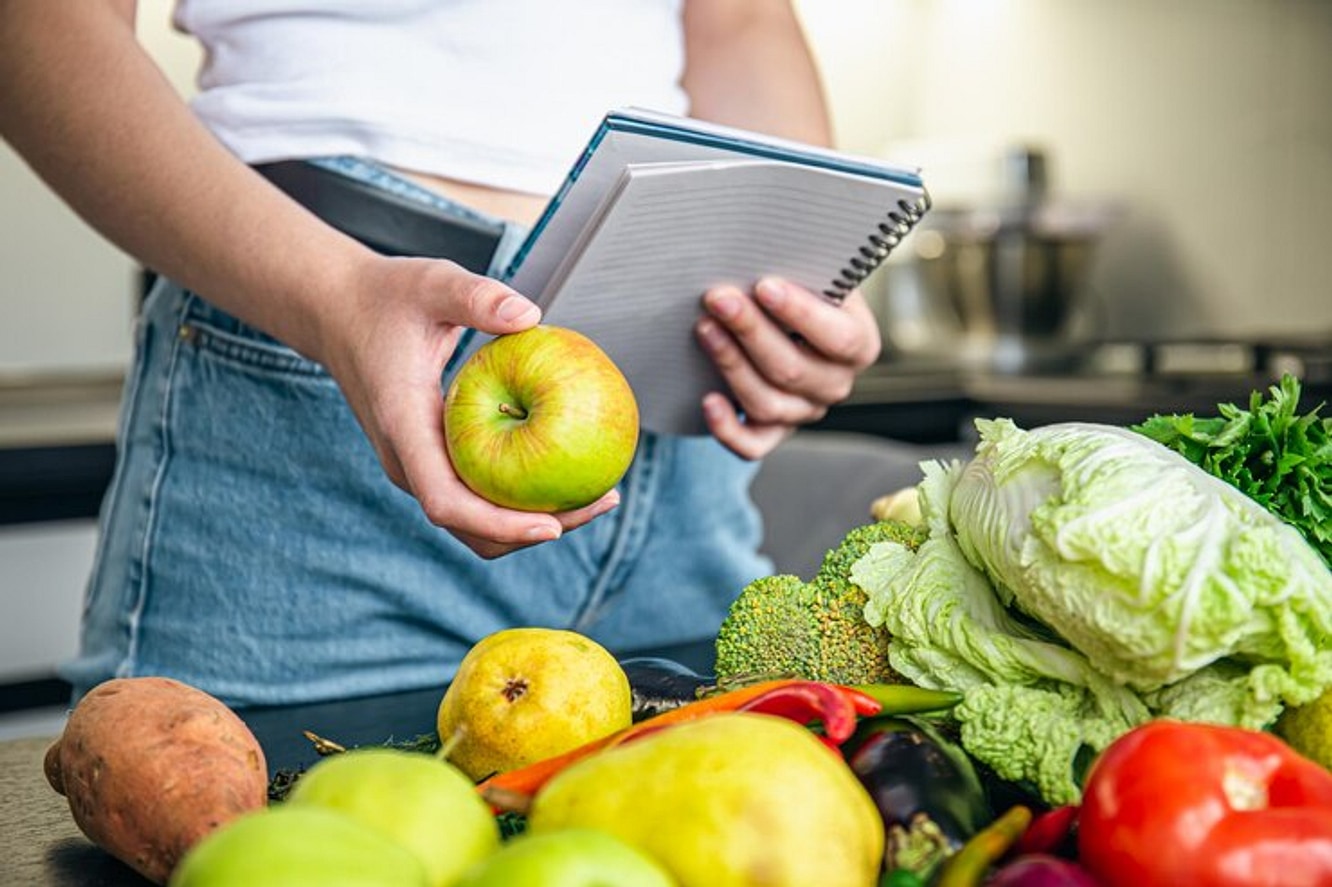
Follow this grocery budget meal planning method and learn how to plan out a week of weight loss meals before you head to the grocery store.
Stop Shopping Blindly, Plan With Purpose
When you pick up groceries with no plan in mind, there’s little control over how those foods will fit into your calorie, nutrition, or budget goals. Planning meals before shopping helps you understand where your dollars go and how to fill your grocery list with satisfying food. Planning ahead also saves you time and money by reducing waste and helps ensure that you stay consistent.
Know Your Why Before You Go Shopping
You won’t believe how much money you’ll waste if you buy groceries without a shopping list. If you pick up whatever looks good that week, chances are your trip will cost more and contain many nutritious foods. Instead of shopping blindly, take 10 minutes to plan your meals. That doesn’t mean you can’t swap things later; it just sets you up for success!
Weekly meal plans should have a good mix of breakfasts, lunches, and dinners. Variety is vital when you eat the same thing every day, so find recipes that can be reused for several different meals. Planning makes healthy eating simpler and more affordable because it keeps you from making impulse purchases.
How Do You Plan Meals Before You Go Grocery Shopping?
Before you head to the grocery store, take the time to plan your meals. If you grocery shop when deciding what to make for dinner that night, you’ll likely spend too much money. Look through recipes and pick a few that sound good for the week. Make sure some can be made into lunch the next day. After you have your meal ideas, you can create a grocery list.
Fill Your Grocery Cart With These Categories
Here are some categories to get you started. Use them as-is, replace options that won’t work for you, or add more if you want:
- Lean proteins for steady fullness and meal flexibility
- Frozen vegetables for convenience without higher produce costs
- Whole grains that stretch meals across several servings
- Fruit choices that travel well and store easily
- Flavor basics like garlic powder and salsa
Think of each category as a piece of the puzzle. Without fruits and veggies, you’ll have to spend more money on snacks, and cheap proteins like beans won’t keep you full unless you pair them with healthy fats or complex carbs.
Take Your Weekly Spending Limit and Divide by 6
Once you know how much money you can spend each week on groceries, take that number and divide it by six. Allocate your points to meats, vegetables, grains, snacks, and pantry staples.
If you spend more points one week on meats, you’ll have to use fewer points on vegetables and grains. Divide your weekly food budget by six, giving yourself a spending allowance per category.
Meal Planning for Weight Loss: Foods That Give You Most Value
One of the best parts about meal prepping for weight loss is that certain foods are less expensive per calories. Focus on adding healthy carbs and filling protein to your meals:
- Eggs
- Oats
- Brown rice
- Sweet potatoes
- Beans
- Lentils
- Cabbage
- Carrots
- Frozen vegetables
- Plain yogurt
- Canned fish
You’ll have to eat more of these items to feel full, but they also work with almost every meal. Potato oats and rice are complex carbs, while eggs, fish, and yogurt are high protein.
How Can You Make Your Meals More Interesting?
Add plenty of different spices to your meals to keep your taste buds entertained throughout the week. All of these ingredients can go with any meal; you just have to be creative with how you cook them. For example, you can have oats for breakfast one day and oats for dinner the next. Spice up canned chicken with salsa, or use different spices to change the oats’ flavor.
- Rotate spices to change the flavor profile without changing the menu
- Use different cooking methods like roasting, steaming, and grinding
- Add sauces and dressings to change the flavor (use sparingly)
You can make a boring ingredient taste completely different by changing how you cook it. Add sauces and spices to spices to keep your food interesting throughout the week. More variety ensures you’ll stick with your meal plan because healthy eating doesn’t have to be boring.
When’s the Best Time to Prep Your Meals for the Week?
Many meal preppers like to prep right after grocery shopping. If you have the time, wash all of your fruits and veggies, cook your grains, portion out snacks, and marinate any proteins. You can also split prep into two parts if that works better for your schedule.
Some people like to chop all of their ingredients one day, and then cook the items that will keep well in containers the next. Other people like to do everything in one day. Choose a day and time that works for you, and make sure you prep.
Here’s Some Cheap Meal Templates to Try
Meal templates simplify your weekly meal planning because you don’t have to think of new meals each week. Breakfast may be oatmeal + fruit + protein, while lunch is a grain + vegetable + protein + sauce.
Here are some dinner meal templates that are easy to mix and match with food from your grocery list:
- Taco bowls (grain + protein + 2 veggies)
- Salad (veggies + protein + healthy fat + dressing)
- Stir fry (protein + vegetable + carb)
- Soup (anything in a blender)
Pre-plan the meals, but be flexible if something is out of stock or if you find something you know you’ll love. Don’t feel like you have to follow these meal combinations exactly. Swap out ingredients that you don’t like for ones that you do. Meals don’t have to be perfect every night.
Repeat Your Best Meals. Meal Planning Is a Marathon, Not a Sprint.
There will be weeks where you spend too much money. There will also be times when you don’t feel full or crave certain foods not on your list. You’re not going to get everything right every week, but as you continue meal planning, you’ll learn what meals you like best.
Practice makes perfect when meal planning on a budget. Try out different recipes and meals until you find some that you love. Then repeat those meals over and over. Pretty soon, planning a week of healthy meals won’t feel like a chore.
