


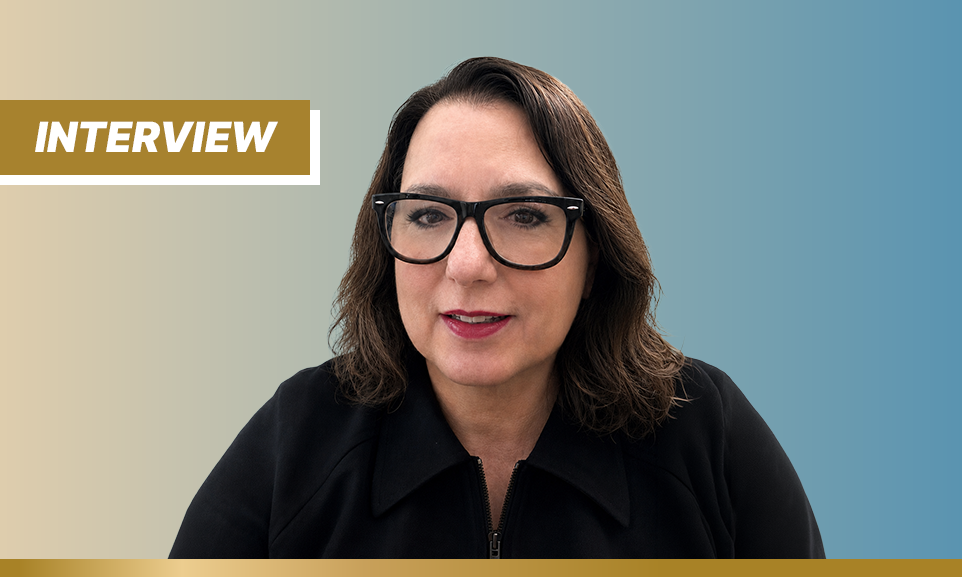
In our latest 5 minutes with, Dr Jamie L. Weiss, Director, Global Medical Communications and Publications, <a href="https://healthylife7.com/symposium-unites-rare-disease-experts-for-mtor-research/” title=”Symposium Unites Rare Disease Experts for MTOR Research”>Rare Disease, Alnylam Pharmaceuticals, talks AI, innovation and why the future of rare disease still depends on human expertise
What drew you to medical affairs, and why rare diseases in particular?
I was scientifically curious from an early age and even asked for a microscope for my tenth birthday. My first job after my undergraduate studies was as a scientist at the Roche Institute of Molecular Biology, where my manager had famously developed a cDNA cloning technique that revolutionised the field
At one point, an immunology cloning project I was working on was discontinued because of an executive-level strategic decision. It was then that I realised I wanted to help shape scientific strategy, and that is what led me to medical affairs. Here, I enjoy analysing data and working with colleagues to develop scientific and medical content
As for rare disease in particular, the data can be especially challenging because of the small patient numbers. Even so, the great unmet need in this population means our work can genuinely improve patient care and treatment, and for me that is what makes it so worthwhile
What’s the biggest challenge facing medical affairs today?
For me, the biggest challenge is the increasing volume of scientific data and medical insight, and how we use it to develop clinically meaningful approaches that improve patient care
After all, medical affairs receives insight from a wide range ofns, clinical data and competitive intelligence. The real difficulty is not only collecting these insights but collating them, so that we can identify the evidence and knowledge gaps that then inform our strategy
This is precisely where AI feels so promising. Its potential to integrate insight from these diverseefficient and better-informed strategic decisions, is unprecedented
How is the industry approaching AI, and where are the biggest opportunities for improvement?
The industry is increasingly using AI across scientific communications and the drug lifecycle. For example, where we once focused on SEO, attention is now shifting toward GEO (generative engine optimisation) and AEO (answer engine optimisation), which is changing how evidence and scientific messaging are discovered and communicated
However, I think it is best used as a tool rather than as a replacement for medical affairs competencies
It’s crucial that students and those new to medical affairs develop strong scientific judgement, data analysis and written communication skills, including the ability to tailor scientific content to different audiences, before they rely on AI. Ultimately, these foundational skills are what let us constructively assess AI outputs, ensure scientific accuracy and use AI responsibly
Where will AI have the greatest impact in rare disease in the future?
I believe AI has real potential to transform rare disease by identifying patients much earlier in their diagnostic journey. Many patients experience delayed diagnosis because their symptoms are nonspecific and their cases are dispersed across the specialist trajectory
To address this, AI can analyse large electronic health record and claims datasets, alongside other real-world evidence, to identify patterns that suggest a patient may have an undiagnosed rare disease, and in doing so flag those who might benefit from biochemical, genetic or other diagnostic testing
Earlier patient identification can meaningfully shorten the diagnostic odyssey
Of course, experienced assessors must always review these outputs to ensure they are scientifically and clinically appropriate. Even so, earlier patient identification can meaningfully shorten the diagnostic odyssey. In turn, this helps to address the significant unmet need in rare disease and ensures patients receive the most appropriate treatment as early as possible
If you were to write a novel about your life, what would the title be and why?
The title would be ‘Asides from My Dad’, the memoir I’m writing about my father. Through his many asides, I discovered our family history and how this shaped my own. He studied chess strategy and beat chess programs at the highest levels, which reflected the way he approached life through logic, careful analysis and strategic decision-making
His way of thinking and communicating was unlike anyone I know, teaching me to keep in mind that people have individual ways of doing both. Embracing that empowers different perspectives, which in turn leads to stronger collaboration and more innovative, impactful approaches
That is why, as a cross-functional leader, I strive to create an environment of psychological safety where colleagues can bring their own perspectives and ways of communicating. Ultimately, that is how I believe innovation can thrive
Guest bio
Prior to joining Alnylam, Jamie was Senior Medical Affairs Consultant, Global Publications Lead at Takeda in Rare Metabolic Disease. Before that, she was Senior Director, Scientific Programs, Prilenia, managing scientific and medical affairs, publications and patient advocacy content. Earlier, she was Director, Global Publications, LEO Pharma, where she established the publications department and processes. She began her industry career in publications at Novartis and Allergan.
Beyond her primary role, Jamie is an invited speaker on publications innovation and has served on ISMPP programme committees. She also holds certificates in Essential Skills for Medical Writing (AMWA) and Brain-Based Coaching (NeuroLeadership Institute).
Before transitioning to industry, she was a professor of biomedical science and principal investigator for 11 years. Jamie also has a PhD in Neuroscience (cellular and molecular) and a Bachelor’s in Biological Science (genetics, cellular and molecular biology).
Outside of work, Jamie lives in a Victorian house in rural Northwest, New Jersey, with her husband, 22-year-old (when not at university) and cat. She enjoys leading the never-ending house renovations and singing and playing ukulele.
