


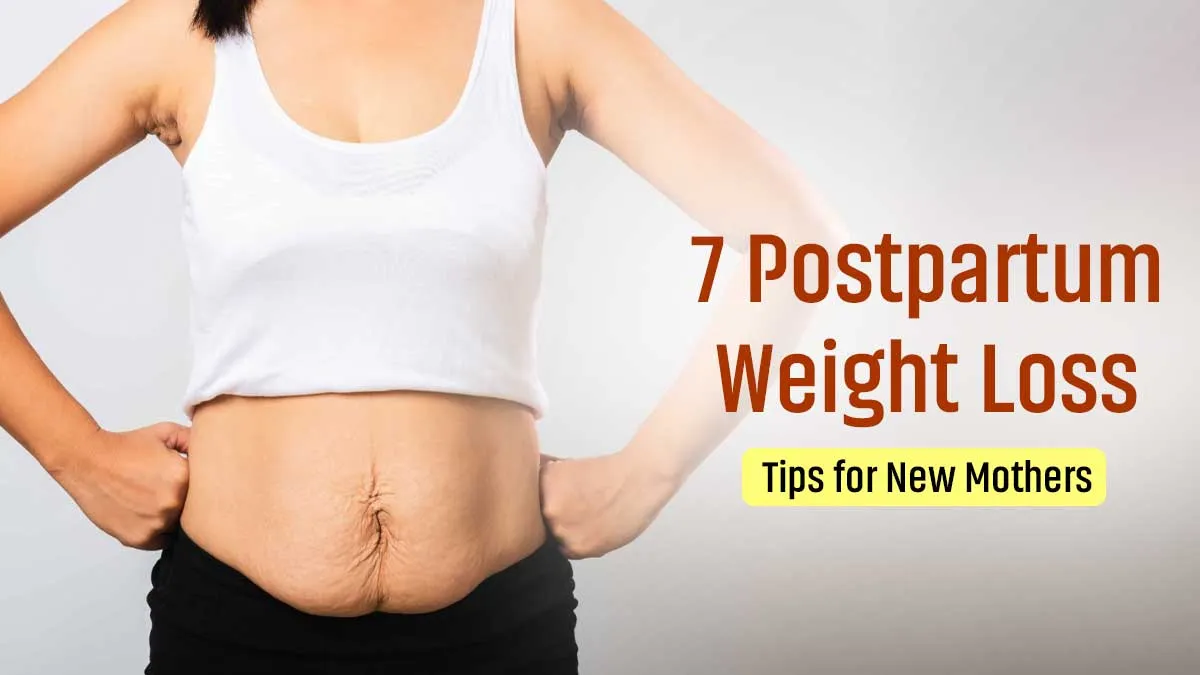
Most postpartum weight loss advice treats it like any other weight loss journey, just with a baby added in. That’s the core mistake, according toDr Pooja C Thukral, Associate Director – Department of Obstetrics and Gynecology at Cloudnine Group of Hospitals, Faridabad. New mothers are often handed the same calorie deficit and exercise advice given to anyone else trying to lose weight, without any real acknowledgement of what the body has just been through.
Table of Content:-
Why Generic Weight Loss Advice Doesn’t Work After Pregnancy
Tip 1: Postpartum Weight Loss Tip: Check Recovery Before Starting a Calorie Deficit
Tip 2: Postpartum Weight Loss and Breastfeeding: Track Energy Output, Don’t Guess It
Tip 3: Postpartum Weight Loss Nutrition: Prioritise Protein Timing, Not Just Totals
Tip 4: Postpartum Weight Loss and Sleep: Why Rest Is a Hormonal Issue, Not Just Wellness
Tip 5: Postpartum Weight Loss and Exercise: Rebuild the Pelvic Floor Before Cardio
Tip 6: Postpartum Weight Loss and Thyroid Health: Why It’s Easy to Miss
Tip 7: Postpartum Weight Loss vs Baby Weight: Know the Difference First
Healing tissue, shifting hormones, disrupted sleep, and possibly breastfeeding all happen at once, and none of that fits neatly into a standard weight loss plan. Here is what an expert wants new mothers to actually understand before starting any weight loss plan
Why Generic Weight Loss Advice Doesn’t Work After Pregnancy
“The body postpartum is running on a completely different physiological script, healing, hormone recalibration, possible breastfeeding demands, sleep deprivation, all at once,” explainsDr Pooja C Thukral.
This isn’t just a clinical hunch. A 2022 review published in theJournal of the Academy of Nutrition and Dieteticsfound that generic advice often fails precisely because it overlooks postpartum-specific realities, including exhaustion, time scarcity from newborn care, breastfeeding demands, and a lack of postpartum-specific guidance
With that context in mind, here are 7 tips built specifically around what a postpartum body is actually dealing with
Tip 1: Postpartum Weight Loss Tip: Check Recovery Before Starting a Calorie Deficit
Before touching diet or exercise, the body needs to actually finish healing, especially after a C-section or if there’s diastasis recti, or abdominal muscle separation. Dr Thukral warns that pushing a calorie deficit onto a body still repairing tissue and stabilising hormones can backfire, slowing healing and even disrupting milk supply in breastfeeding mothers
Her unique tip: get a diastasis recti check and a general postpartum recovery clearance before starting any structured weight loss plan, not just the standard six-week check
Tip 2: Postpartum Weight Loss and Breastfeeding: Track Energy Output, Don’t Guess It
Breastfeeding burns real calories, often 300 to 500 extra per day but the amount varies hugely by:
- The baby’s age
- Feeding frequency
- Whether it’s exclusive or combination feeding
A generic “eat in a deficit” approach risks undereating during heavy breastfeeding phases, which can affect milk supply and energy levels
This tracks with real research findings. A 2023 study fromNutrientson breastfeeding mothers, including those who’d had gestational diabetes, found that exclusive breastfeeding had a significant impact on weight loss at 6 to 8 weeks postpartum. It was alongside lower insulin levels, though this effect wasn’t sustained a year later in the same way.
Dr Thukral suggest to adjust intake based on feeding frequency changes week to week, rather than setting one fixed calorie target for the entire breastfeeding period
Tip 3: Postpartum Weight Loss Nutrition: Prioritise Protein Timing, Not Just Totals
Most advice says “eat more protein,” but doesn’t connect it to the actual chaos of a newborn’s feeding schedule Eating protein-rich meals or snacks around feeding and pumping sessions helps stabilise blood sugar during the exact windows when exhaustion and sleep deprivation make sugar cravings hit hardest
Her unique tip: keep a protein-forward snack within arm’s reach of wherever you feed the baby, since that’s when willpower is lowest
Tip 4: Postpartum Weight Loss and Sleep: Why Rest Is a Hormonal Issue, Not Just Wellness
“Chronic sleep deprivation directly raises cortisol and disrupts hunger hormones, ghrelin and leptin, making fat loss genuinely harder at a hormonal level, regardless of diet quality,” Dr Thukral explains. “This isn’t just feeling tired. It’s a real physiological barrier.”

Dr Thukral advises that instead of chasing eight hours, which is unrealistic with a newborn, prioritise protecting even one uninterrupted 3- to 4-hour sleep block, since sleep architecture matters as much as total hours for hormone regulation
Tip 5: Postpartum Weight Loss and Exercise: Rebuild the Pelvic Floor Before Cardio
Many new mothers jump straight to walking programmes or postnatal workouts without addressing pelvic floor strength first Weak pelvic floor muscles can make higher-impact exercise counterproductive or even risky, contributing to issues like prolapse
Her unique tip: spend the first 4 to 6 weeks specifically on breath-linked core and pelvic floor activation before layering in walking or cardio-based fat loss efforts
Tip 6: Postpartum Weight Loss and Thyroid Health: Why It’s Easy to Miss
Postpartum thyroiditis, a temporary thyroid inflammation, affects a meaningful percentage of women in the months after delivery and can cause:
- Weight gain
- Stubborn weight loss resistance
- Fatigue
- Mood changes
It’s rarely mentioned in mainstream postpartum weight loss content. This is a genuinely underdiscussed issue backed by solid data. According to the American Thyroid Association, postpartum thyroiditis occurs in approximately 5 to 10% of women in the United States, with incidence climbing considerably higher in women with existing autoimmune conditions like type 1 diabetes

Dr Thukral adds that if weight loss stalls significantly despite consistent effort, request a thyroid panel rather than assuming it’s purely a discipline issue
Tip 7: Postpartum Weight Loss vs Baby Weight: Know the Difference First
This is a distinction most advice completely skips Some pregnancy weight is genuinely temporary:
- Fluid retention
- Increased blood volume
- Breast tissue changes
This resolves on its own in the early weeks without any active effort. True fat loss is a separate, later phase
Dr Thukral advises to not start aggressive fat loss efforts in the first few weeks. Give the body time to shed the temporary physiological changes first, then reassess what “extra” weight is actually left to address
ALSO READ- Craving Chalk During Pregnancy? Doctor Explains Pica and Why Woman Crave Non-Food Items
Conclusion
Postpartum weight loss isn’t a regular weight loss journey with a baby thrown in. It’s a distinct physiological process shaped by healing, hormones, sleep, and feeding demands, all happening at once. Dr Thukral’s approach reframes the goal away from a generic calorie deficit and toward working with the body’s actual postpartum state, healing first, tracking real energy needs, protecting sleep where possible, and ruling out thyroid issues before assuming it’s simply a matter of effort
FAQ
1. Is it normal for postpartum weight loss to stall completely for weeks at a time?
Yes, this is a common experience, and it doesn’t necessarily mean something is wrong. Hormonal shifts, breastfeeding demands, and sleep disruption can all cause temporary plateaus.
2. Does the type of delivery, vaginal versus C-section, change how weight loss should be approached?
Yes, to some extent. Recovery timelines and the type of core and pelvic floor rehabilitation needed can differ between vaginal births and C-sections, since a C-section involves abdominal surgery requiring its own healing period.
Read Next
Craving Chalk During Pregnancy? Doctor Explains Pica and Why Woman Crave Non-Food Items
Disclaimer
All possible measures have been taken to ensure accuracy, reliability, timeliness and authenticity of the information; however Onlymyhealth.com does not take any liability for the same. Using any information provided by the website is solely at the viewers’ discretion. In case of any medical exigencies/ persistent health issues, we advise you to seek a qualified medical practitioner before putting to use any advice/tips given by our team or any third party in form of answers/comments on the above mentioned website.
Vivek Kumar
Senior Sub Editor
How we keep this article up to date:
We work with experts and keep a close eye on the latest in health and wellness. Whenever there is a new research or helpful information, we update our articles with accurate and useful advice
Current Version
Sep 01, 2026 12:47 IST
Published By : Vivek Kumar
Reviewed By : Dr Pooja C Thukral
