


Carey Goldberg, a contributing writer for Globe Ideas, is a former Boston bureau chief for The New York Times and Bloomberg News, and a former health and science reporter for the Globe and WBUR
These days, Dr. David Rind’s primary care practice involves an unwelcome new routine
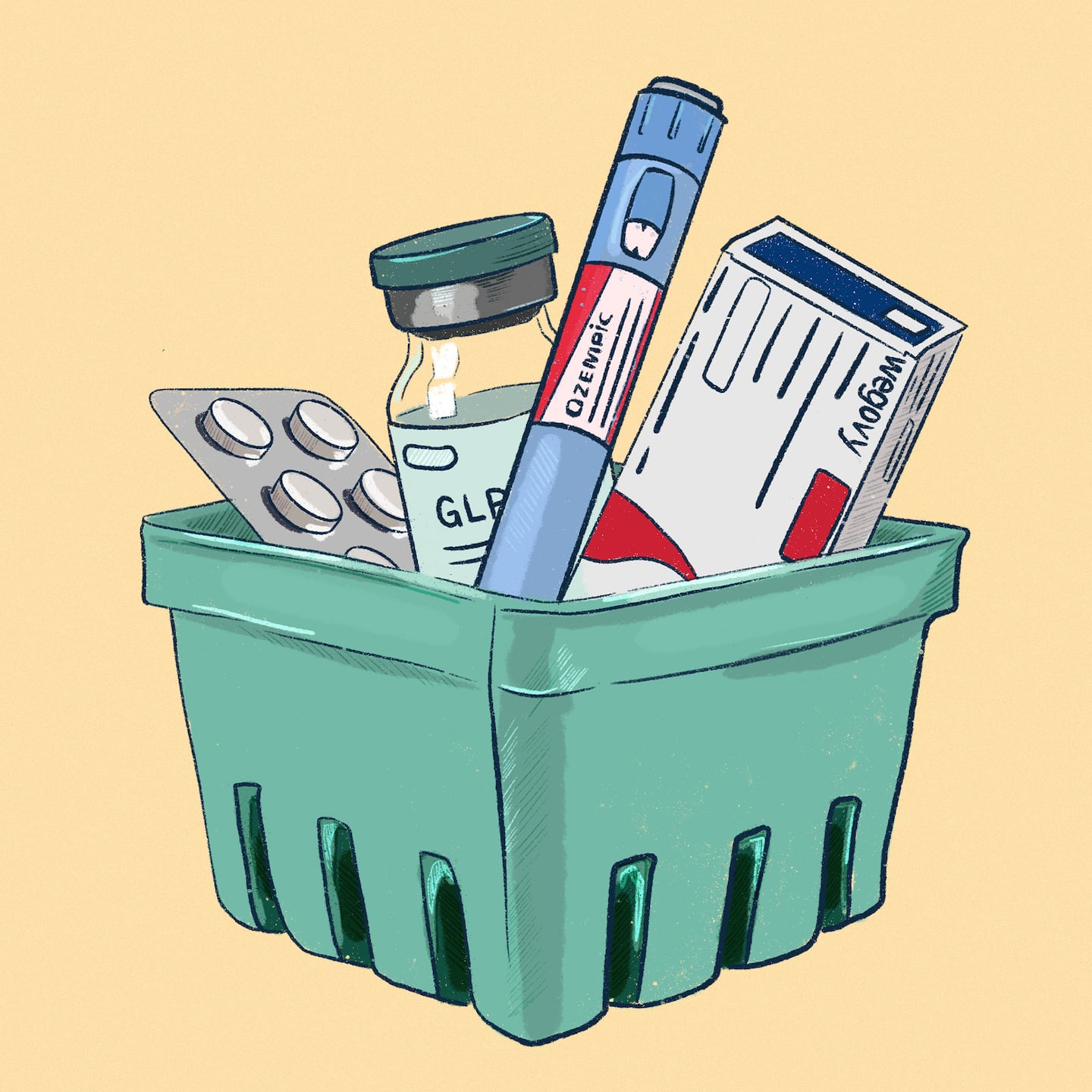
He sees a patient with obesity and, say, high blood pressure or heart disease or arthritis, who is clearly benefiting from a GLP-1 weight-loss drug like Ozempic or Zepbound
But now the patient is being cut off
“More and more, people have been coming in saying, ‘Insurance has informed me I’m no longer covered,’” says Rind, who teaches primary care to medical residents at Beth Israel Deaconess Medical Center
Appeals go nowhere. Lost weight returns. It’s self-pay or nothing — usually nothing. Many people can afford to pay hundreds of dollars a month for a GLP-1 drug, he says, “but not most of our patients.”
Any primary care doctor would hate to see a potent new weapon against chronic disease fall out of reach, but it’s especially hard for Rind because he knows the data so well
He has helped crunch the GLP-1 numbers as chief medical officer for the Institute for Clinical and Economic Review, or ICER, a Boston-based nonprofit that calculates the value of medications
To him, these are not just good drugs; they are once-in-a-career drugs, able to slash heart-disease risk by 20 percent among myriad other benefits
ICER’s analysis found that GLP-1’s are not just generally safe and effective; they are highly cost-effective — promising longer lives and better health for a reasonable price. They may even cut total lifetime health care costs
Though GLP-1’s are not for everyone, some analysts estimate that they hold the potential to help at least half of all Americans
“The magnitude of the potential benefit for public health, and for individual health, is unmatched,” says ICER’s president, Sarah Emond. “And the potential for significant and harmful budget impact is also unmatched.”
In other words: These drugs work. We just can’t afford them
Never before has the vaunted Massachusetts health care system broken this dramatically
The consensus social contract has long held that if drugs work, the state’s health insurers, dominated by nonprofits like Blue Cross Blue Shield and Point32Health, will cover them. Even if they cost a lot
Pricey new drugs have shaken the system before. In 2014, a cure for hepatitis C that cost more than $80,000 per patient threatened to break the health care bank
But “we got through that, and the system did not blow up,” says Dr. Michael Sherman, who was chief medical officer for the insurer Harvard Pilgrim Health Care at the time
Treatment rolled out gradually, and before long, competition from a new drug brought the price down by more than two-thirds. Virtually everyone who needed it got access
But with GLP-1s, Sherman says, the financial strain reaches a whole new level. Insurance premiums are already sky-high and rising, and demand for these drugs is far more widespread than demand for a hepatitis treatment
Can the system absorb the cost of a major new class of drugs? The initial answer is a cascade of the state’s health insurers announcing a pained “no.”
“This is the first time that we’ve seen significant restrictions on access to drugs that are safe and effective,” Sherman says
Blue Cross Blue Shield of Massachusetts and Point32Health dropped GLP-1 coverage for weight loss as of January. Many self-insured businesses have dropped it too. The Group Insurance Commission, which covers nearly a half million public employees and their families, long held out but finally did the same as of July 1
At state health care cost hearings last fall, Matthew Veno, the executive director of the Group Insurance Commission, said he felt strongly about continuing to cover GLP-1’s. But “the pricing of these drugs really puts us at a breaking point.”
“Just think about that,” he told the gathering of state health care leaders. “We’re talking about eliminating coverage for a drug that we all acknowledge is highly effective for a condition with high prevalence and enormous downstream costs.”
MassHealth, the state Medicaid agency, also ended GLP-1 coverage solely for weight loss as of this month, though coverage continues for patients who also have certain other health issues, including diabetes and sleep apnea
Eliminating GLP-1 coverage for MassHealth patients and lower-income people in general poses an obvious equity problem: People with less money face a greater risk for obesity and thus could benefit more from the drugs, yet they cannot afford to pay out of pocket for them
“In the fight against discrimination, as in the fight against obesity, we are in uncharted territory,” the former FDA commissioner David Kessler writes about GLP-1 access in a recent book titled “Diet, Drugs and Dopamine.”
One big exception to the coverage denial trend: For seniors, Medicare this month launched a pilot program that covers weight-loss drugs for just a $50 monthly copay. However, it runs only through the end of next year, and what happens next remains unclear
Also worth noting: Like MassHealth, many insurers are continuing to cover GLP-1 drugs for people with diabetes and certain other conditions
‘Pharm to table’
Thus far, the coverage limits have prompted less public outrage than might be expected
For many, the financial pain of high premiums outweighs everything else. Also, comment sections and social media discussions often digress into debates over whether people should be able to lose weight without drugs
Most strikingly, with insurance outfits slashing coverage, many patients are simply paying out of pocket — a dynamic that has fueled a whole cottage industry of direct-to-consumer companies for these drugs
Companies like Ro, Hims, and Hers are offering large discounts to bring in self-paying customers. Some promotions offer price tags of about $150 per month
The telemedicine that became widespread during the pandemic allows customers to easily get remote prescriptions. CVS joined online providers in June, announcing that for $49, patients could get a virtual visit with its Minute Clinic to obtain a GLP-1 prescription
Add in medical advice from widely used AI chatbots and patients are taking ever more of their care into their own hands — and paying out of their own wallets. Put it all together – real competition, dropping prices – and the GLP-1 dynamic is looking much more like market economics than is usually seen in health care
Some use the term “pharm to table” — a play on the food industry’s “farm to table” — to describe this rise in direct-to-consumer health care, says Sherman, the former insurance executive, who now works as an independent consultant to the industry
He sees “an alternative distribution system” developing around GLP-1 drugs and other medical treatments that insurers do not tend to cover, from blood tests that screen for cancer to full-body MRI scans
“This is not a flash in the pan,” he says. “It is not going away,” though, he adds, it will likely be focused on conditions seen more as “wellness” issues than serious diseases
Emond from ICER similarly sees the growth of an alternate health care ecosystem in which patients get prompt online treatment for conditions from obesity to menopause, erectile dysfunction, and infertility
Prescriptions not covered by insurance may be filled affordably by low-markup companies like Cost Plus Drugs
The GLP-1 phenomenon “is potentially a signal for how some conditions will be treated in a more market-reactive way,” Emond says. But that new ecosystem is no panacea, she cautions; among other concerns, it worsens the gap between haves and have-nots
This coverage crunch is only temporary, of course. GLP-1 drugs will become available as generics in a few years and prices will plummet further
Still, it carries a central underlying lesson, Emond says: The health care system overpays for so many other drugs that “then, when you have something high-value available for a large population, you feel like you don’t have any money left for it.”
Kessler, the former FDA commissioner, sums up the ultimate frustration: “I think we’re on the verge of being able to prevent and treat the major chronic diseases,” he says. “But we don’t have a health care system that is structured to do that.”
