


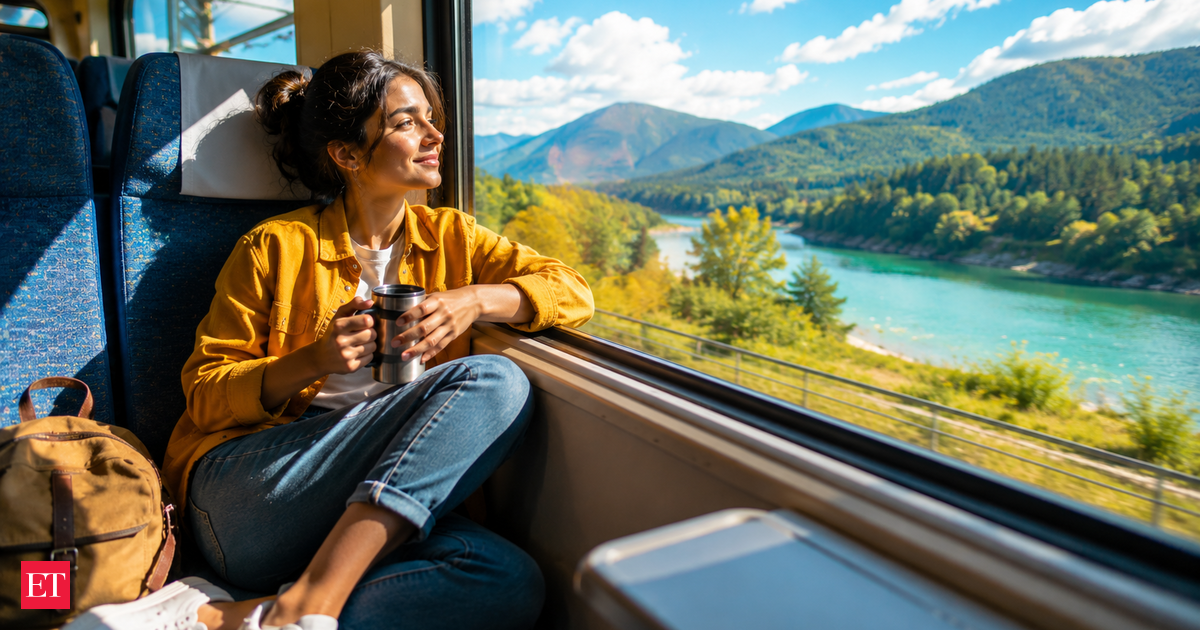
For some people, flying is the quickest and most convenient option. For others, the ideal journey involves a train window, changing landscapes, conversations with fellow passengers, and the rhythmic sound of the tracks. Even when a flight saves several hours, many still choose the train. It is easy to assume they dislike airplanes or fear flying.Psychology suggests the explanation is often much broader. Several well-established psychological theories help explain why train travel feels especially satisfying to some people. There is no scientific evidence that everyone who prefers trains has the same personality or motivation. Travel choices are influenced by cost, comfort, accessibility, environmental values, previous experiences, health conditions, and personal preferences.
The journey itself becomes rewarding
One explanation comes from Self-Determination Theory, developed by psychologists Edward Deci and Richard Ryan. The theory suggests people are more motivated when experiences satisfy psychological needs such as autonomy and enjoyment.Train travel often gives passengers greater freedom to walk around, read, work, eat comfortably, or simply enjoy the scenery. Unlike air travel, which focuses on reaching the destination quickly, train journeys often become part of the experience itself. Someone traveling through the Swiss Alps or the Japanese countryside may value the scenery as much as the destination.
Feeling in control reduces stress
Psychologists have long found that Perceived Control plays an important role in emotional well-being. Train stations often allow passengers to arrive shortly before departure, move freely, and maintain greater awareness of their surroundings.You Might Also Like:

Psychology says people who get bored easily don’t have a low attention span, they may have a brain that craves more stimulation
Air travel, by comparison, involves security screening, boarding procedures, and limited movement once onboard. For some people, having more control over their environment makes train travel feel calmer and less mentally demanding. This preference does not necessarily indicate a fear of flying.
Slow travel encourages mindfulness
Research on Mindfulness suggests people experience greater well-being when they pay attention to the present moment without constantly focusing on the future. Train journeys naturally encourage this mindset.Watching changing landscapes, reading by the window, or quietly observing other passengers creates opportunities to slow down mentally. Many travelers describe train rides as relaxing because the journey itself becomes meaningful rather than simply something to endure.
Natural scenery supports psychological restoration
Another explanation comes from Attention Restoration Theory (ART), developed by environmental psychologists Rachel and Stephen Kaplan. The theory suggests that viewing natural environments helps restore directed attention after periods of mental effort.You Might Also Like:

Psychology says people who leave things incomplete aren’t necessarily procrastinating, they may struggle with finishing more than starting
Train travel often provides continuous exposure to forests, rivers, mountains, villages, and farmland. Research suggests these natural views can reduce mental fatigue and improve emotional well-being. Someone traveling for six hours by train may arrive feeling surprisingly refreshed despite the longer journey.
Positive memories influence future choices
According to Classical Conditioning, introduced by Ivan Pavlov, repeated positive experiences create lasting emotional associations. Someone who spent childhood vacations traveling by train with family may associate trains with comfort, excitement, and connection. Those pleasant memories can influence travel preferences decades later, even when faster transportation is available.
Personality may shape travel preferences
Research on the Big Five Personality Traits suggests that people high in Openness to Experience often enjoy exploring cultures, landscapes, and new environments.For these individuals, the gradual pace of train travel offers more opportunities for observation and discovery. Meanwhile, people who value efficiency above all else may naturally prefer flying. Neither preference is psychologically superior. They simply reflect different priorities.
Loving trains doesn’t mean someone fears airplanes
A common misconception is that train lovers avoid planes because they are anxious. Psychology does not support that conclusion.Many frequent flyers also enjoy trains for leisure trips. Others choose trains because they offer more legroom, fewer travel formalities, scenic routes, environmental benefits, or a more relaxing pace. Travel preferences are shaped by practical and psychological factors working together.
Why do some people prefer trains over airplanes?
Psychologists say trains may provide greater comfort, perceived control, opportunities for mindfulness, scenic experiences, and emotional satisfaction.
Does preferring trains mean someone has a fear of flying?
No. Many people simply enjoy the slower pace, freedom of movement, and scenery that trains provide.Add 
as a Reliable and Trusted News Source

Add Now!
(You can now subscribe to our Economic Times WhatsApp channel)
Read More News on
psychology of train traveltrain vs airplane psychology travel psychologyscenic travel psychologypsychology says train loversbenefits of train travel
(Catch all the US News, UK News, Canada News, International Breaking News Events, and Latest News Updates on The Economic Times.)
Download The Economic Times News App to get Daily International News Updates
…moreless
(You can now subscribe to our Economic Times WhatsApp channel)
Read More News on
psychology of train traveltrain vs airplane psychology travel psychologyscenic travel psychologypsychology says train loversbenefits of train travel
(Catch all the US News, UK News, Canada News, International Breaking News Events, and Latest News Updates on The Economic Times.)
Download The Economic Times News App to get Daily International News Updates
…moreless
