


||
The Ministry of Food and Drug Safety will lower the approval threshold for follow-on drugs (alternative treatments) containing the same ingredients as orphan drugs. Because rare diseases affect only small numbers of patients, making it difficult to secure clinical and safety data, the ministry aims to rationalize approval requirements to expand the supply of alternative treatments
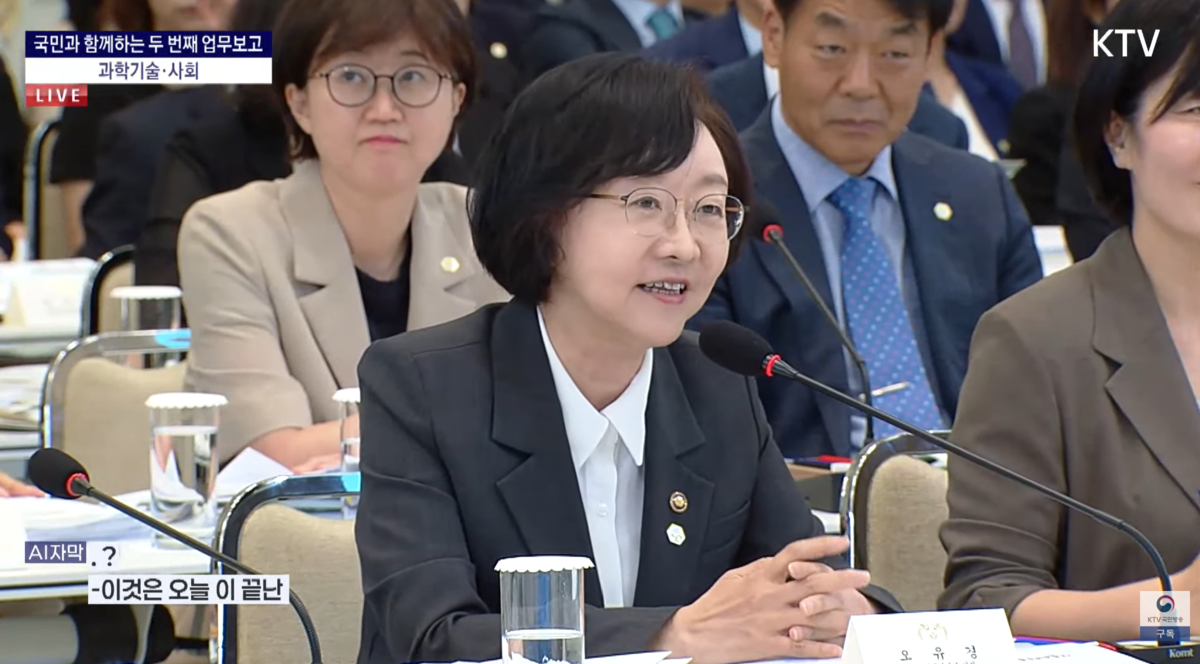
Oh Yu-kyoung, Commissioner of the Ministry of Food and Drug Safety, announced during the “Second-Half 2026 Presidential Work Report” at the Blue House on the 16th that approval requirements for follow-on products with the same ingredients as orphan drugs will be rationalized starting this December
The core of the measure is reducing the burden of submitting Risk Management Plans (RMP). The ministry will reasonably adjust some criteria among RMP data requirements, such as the number of survey subjects, and will also exempt RMP submission obligations for follow-on drugs of products whose orphan drug designation has been lifted
The RMP is a plan for systematically managing side effects that may occur after a drug’s approval. Developers must submit safety data and post-marketing surveillance plans. However, because rare diseases involve small numbers of patients, securing sufficient safety data has been difficult, acting as a barrier to entry for developing follow-on products
The industry expects the measure to boost the development of alternative treatments for rare diseases. Expanding the supply of follow-on drugs with the same ingredients could improve the stability of treatment supply and broaden patients’ treatment options
The measure is seen as an extension of the ministry’s recent policy of rationalizing drug regulations. On the 14th, the ministry also revised and implemented related regulations to allow the exemption of Phase 3 clinical trial data submissions for biosimilar approvals when equivalence is proven through comparative testing of quality, non-clinical, and pharmacokinetic (PK) data
The ministry will also expand bio-industry support policies in the second half. In line with the special act on regulatory support for biopharmaceutical contract development and manufacturing organizations (CDMO), which takes effect this December, it plans to establish an export-tailored regulatory support system, including export quality certification and strengthened regulatory capabilities. Alongside this, the ministry will strengthen support for the overseas expansion of K-Food, K-Beauty, and K-Bio by launching the world’s first Global Cosmetics Regulatory Authority Summit (GCORAS) and pursuing the establishment of a public halal certification system for food.
#OrphanDrugs#RareDisease#KBio#DrugRegulation#Biosimilar#CDMO#FoodDrugSafety
Original reporting by Park Ji-soo for Seoul Economic Daily
AI-translated from Korean. Quotes from foreignxact original wording
View Korean originalTranslation Policy
More →
Most Read This Week
1-5
- 1Musical ‘Let Me Fly,’ Made Famous by Park Bo-gum, Now Soars with Ahn Jae-wook and Lee Hee-joon
- 2Germany Debates Ending Century-Old Sunday Shopping Ban
- 3Korea Investment Sees SK hynix Q2 Profit Missing Market Estimate
- 4Teachers Retreat From Lessons as Political Complaints Mount
- 5Brokerage That Called KOSPI Crash Now Says Bottom Is In, Sees 11,450
← Back to Home
