


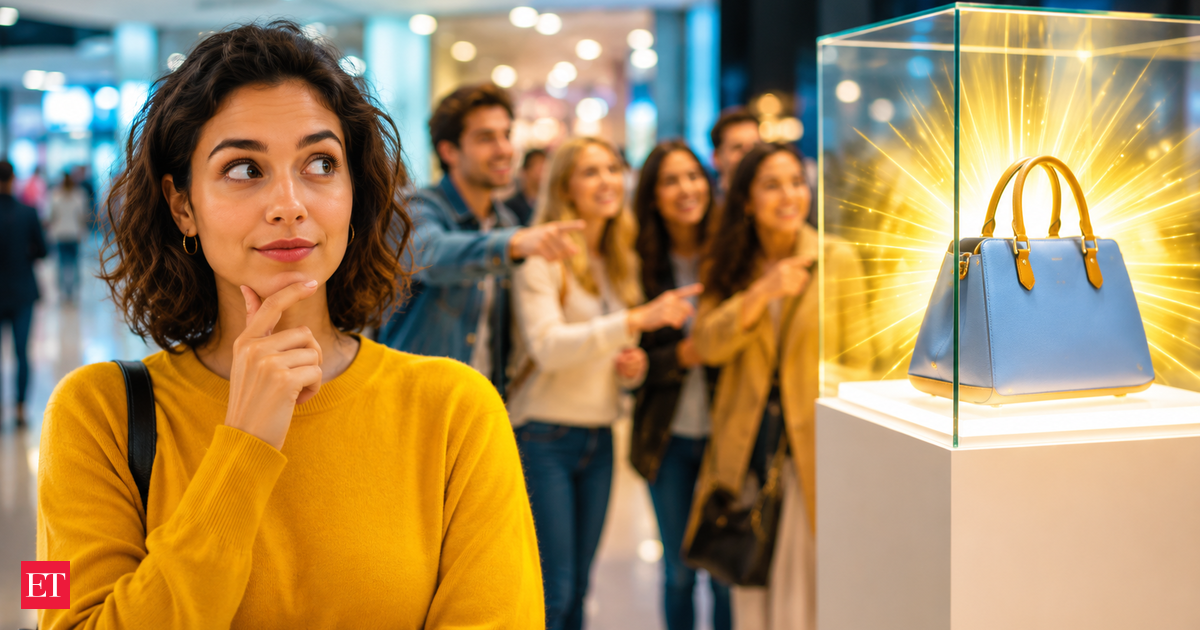
It happens almost every year. One day, hardly anyone is talking about a product. A week later, it seems to be everywhere. Whether it’s a new water bottle, a skincare product, a sneaker, a kitchen gadget, or a viral chocolate bar, suddenly everyone wants one.Psychology says this isn’t simply because the product is the “best.” Instead, a combination of social influence, cognitive shortcuts, and marketing psychology can make certain products feel irresistible almost overnight. Researchers have found that people often look to others when deciding what to buy, especially when they are uncertain about quality or value.That doesn’t mean consumers are irrational. In many cases, following the crowd is an efficient way to make decisions. But it can also make demand spread much faster than expected.Here are the psychological reasons why some products suddenly become “must-haves.”
Social proof tells your brain that popular means valuable
One of the strongest explanations comes from Social Proof, a concept popularized by psychologist Robert Cialdini. People often assume that if many others are buying something, it must be worth having.You Might Also Like:

Psychology says $999 feels cheaper than $1,000 because the brain processes numbers using fast mental shortcuts
Imagine seeing thousands of five-star reviews for a new coffee maker. Even if you’ve never heard of the brand before, the high number of satisfied customers can increase your confidence in buying it.This shortcut saves time because the brain uses other people’s behavior as information.
The Bandwagon Effect encourages people to join trends
Closely related is the Bandwagon Effect, a well-documented phenomenon in behavioral science. As more people adopt a product, others become more likely to buy it simply because it has become popular.For example, a fashion accessory may seem ordinary at first. But after celebrities, influencers, friends, and coworkers begin using it, the item starts feeling like the “normal” choice. Popularity itself becomes part of the product’s appeal.You Might Also Like:

Psychology says happy couples may start looking alike over time, but not for the reason you think
Scarcity makes products seem more desirable
Another powerful influence is the Scarcity Principle. Psychologists have consistently found that people place greater value on things they believe are limited or difficult to obtain.Imagine reading that only a few units remain in stock. Even shoppers who were undecided may suddenly feel motivated to buy immediately. The product hasn’t changed, but its perceived availability has. Many companies use limited editions or countdown timers because scarcity can increase perceived value.
Fear of Missing Out (FOMO) drives quick decisions
Modern social media has amplified Fear of Missing Out (FOMO). When people repeatedly see friends posting about the same product, they may worry about being left out of a shared experience.For example, if everyone’s workplace is talking about a newly released gadget, someone who had no previous interest may begin considering a purchase simply to participate in the conversation. The desire for social belonging is a powerful psychological motivator.
Mere Exposure makes products feel familiar
Psychologist Robert Zajonc described the Mere Exposure Effect, which shows that repeated exposure generally increases liking. The more often people encounter the same product through advertisements, videos, news stories, or social media posts, the more familiar and trustworthy it begins to feel.For example, seeing the same skincare product in multiple Instagram reels may gradually increase interest, even without actively researching it. Familiarity often creates comfort.
Influencers shape perceived credibility
According to Social Learning Theory, developed by Albert Bandura, people learn by observing others. Influencers and celebrities often serve as role models in consumer behavior.If a trusted creator demonstrates a product repeatedly, viewers may become more willing to try it themselves. This effect is especially strong when the influencer seems authentic or shares similar interests with the audience.
Emotional excitement spreads through groups
Researchers studying Emotional Contagion have found that emotions spread between people. When excitement about a product spreads across social media, that enthusiasm can become contagious.Imagine thousands of people posting enthusiastic unboxing videos on the same day. Even viewers who didn’t plan to shop may begin feeling curious because positive emotions are being shared repeatedly.
Why do products suddenly become popular?
Psychologists say trends often spread through social proof, social learning, repeated exposure, and scarcity, making products appear more valuable.
Does social media make products go viral faster?
Yes. Platforms allow social proof, emotional contagion, and repeated exposure to reach millions of people in a very short time.Add 
as a Reliable and Trusted News Source

Add Now!
(You can now subscribe to our Economic Times WhatsApp channel)
Read More News on
why products go viralpsychology saysconsumer psychologysocial proofbandwagon effectscarcity effectfomo psychologyconsumer behaviormarketing psychologyviral products.
(Catch all the US News, UK News, Canada News, International Breaking News Events, and Latest News Updates on The Economic Times.)
Download The Economic Times News App to get Daily International News Updates
…moreless
(You can now subscribe to our Economic Times WhatsApp channel)
Read More News on
why products go viralpsychology saysconsumer psychologysocial proofbandwagon effectscarcity effectfomo psychologyconsumer behaviormarketing psychologyviral products.
(Catch all the US News, UK News, Canada News, International Breaking News Events, and Latest News Updates on The Economic Times.)
Download The Economic Times News App to get Daily International News Updates
…moreless
