


It wasn’t that long ago when the human-like conversational skill of artificial intelligence models mesmerized us all. And while such ask-and-answer interfaces are still the most popular way to use AI, the <a href="https://healthylife7.com/board-of-trustees-hears-how-non-stem-research-improves-technology-well-being/” title=”Board of Trustees hears how non-STEM research improves technology, well-being”>technology is rapidly advancing in capability, shifting the paradigm from “What can you tell me?” to “What can you do for me?”
It’s a move toward something called agentic AI, in which AI models aren’t limited to information sharing. They’re doers now — agents of action, if you will. And researchers at Stanford Medicine are capitalizing
James Zou, PhD, associate professor of biomedical data science, is one researcher leading that charge. He’s developed several agentic AI systems, creating an army of AI-powered science genies trained to carry out a wide range of research tasks. Behind the scenes, these agents are continuously abuzz, making Zou not just the principal investigator of his research group, but the head of a virtual AI biotech company and a virtual laboratory
As agent-supported science takes off, Zou discussed the emerging field of agentic AI, what it means for scientific discovery, and the benefits and challenges of incorporating virtual independent thinkers into research collaborations
What is agentic AI, and what type of agents power it?
Agentic AI is a type of artificial intelligence that can reason, understand and pursue complex goals. It can also act independently with minimal supervision from a human. If you think of a chatbot as akin to an AI brain that can think and talk, agents are like adding the arms and legs. Not only can AI agents interact with humans conversationally, but they can also carry out tasks, act autonomously and interact with other agents. They’re built using a large language model as a foundation — again, its brain — but they can also use external tools (like web browsers or software that models the molecular mechanics of proteins), broadening their ability to think independently and make decisions.
James Zou
The emergence of agentic AI has created a paradigm shift in machine learning and artificial intelligence. In the past, we thought of generative AI as a red in tasks that harness pattern recognition, like various types of data analysis. But agents are now becoming more like scientists in their own right. Agents can use and create their own tools, annotate their own datasets, generate their own hypotheses or make new discoveries
In our lab, we’ve also been experimenting with giving agents different personas. That could mean an agent takes on a certain role, such as the CEO of a tech company, a biochemist in a lab or more specific personalities. For instance, we took multiple famous historical scientists, including Albert Einstein and Richard Feynman, and tried to revive them as AI agents, then had them debate scientific questions
How are scientists using agentic AI?
Agents are flexible; you can talk to them using human language, which makes the barrier to entry much lower for scientists who want to integrate them into their lab. There’s a range of independence that agents assume. They might be used for scientific support, almost like a research assistant for the human researchers, or researchers can give agents a lot of autonomy. In some cases, the lead researcher of some projects is an AI agent. That happens when the AI agent does more of the work than the human scientist — it comes up with the research idea, analyzes the data and writes the paper mostly autonomously with some human supervision.
In my lab, we use them in almost every stage of our research — everything from refining research project ideas to reviewing manuscripts before we submit to a journal. The agent, for instance, can suggest ways to strengthen an experiment or make your work stand out compared with other related studies. We also have research projects that are almost entirely reliant on agent-driven science, such as our virtual laboratory, which uses agents to run a research lab and answer scientific questions; a virtual biotech company, a digital replication of a biotech company that investigates potential drug targets and other areas of drug development; and an effort that we call Paper2Agent that “agentifies” scientific manuscripts and turns each paper into its own agent capable of answering questions about the research and interacting with other paper agents.

Which LLM is best for real health care needs?
READ THE STORY HERE
Can generative AI tackle global health problems?
READ THE STORY HERE
- 9
- 2
How would you advise, or caution, a scientist interested in using agentic AI in their lab?
Autonomous agents can help scale the productivity of a research team, but they still make mistakes, and it’s important that human scientists critically assess what agents produce. Subject matter experts will need to verify and validate AI-driven discoveries. Agents can’t work in the physical world yet, so it’s crucial that the agentic scientific process includes validating agents’ findings in a real lab. Human expertise and oversight are still critical, especially when it comes to testing hypotheses, drug candidates or other AI outputs for viability.
Where do you see the future of agentic AI going?
We’re seeing efforts — including in our own lab — to create agents and AI models that can improve on themselves and refine their own outputs. This type of self-improvement falls under a broader umbrella of continuously learning agents. For example, agents that have advanced memory storage capabilities could be one mechanism for self-improvement. That allows them to learn from their previous experiences — like experiments that failed or hypotheses that didn’t pan out. They can go back and see what they did right and what they did wrong, then try to avoid those mistakes in the future. That opens a whole new realm of how AI can support biomedical research — it’s a leap from AI executing tasks and following instructions to agents becoming critical thinkers and thought partners.
INSIGHTS: Going beyond the headlines
Sharing the informed perspectives of those leading medical research, patient care and education at Stanford Medicine

The science of addiction
READ THE STORY HERE

Seed oils: What should you know
READ THE STORY HERE

Young people and nicotine: 5 things to know
READ THE STORY HERE
Sunscreen fact & fiction
READ THE STORY HERE

Kids, teens and antidepressants
READ THE STORY HERE

The science behind sunscreen
READ THE STORY HERE
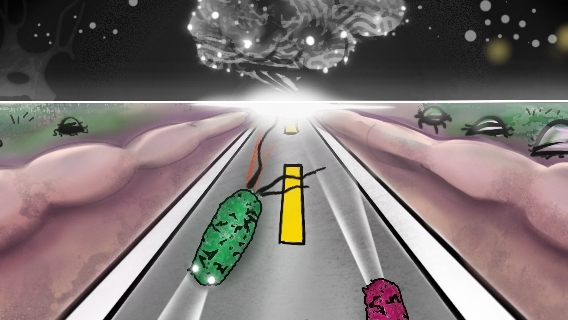
Understanding the gut-brain connection
READ THE STORY HERE
- Insights
- 8
- 9
- 6
- 2
- 3
- 4
- 5
