


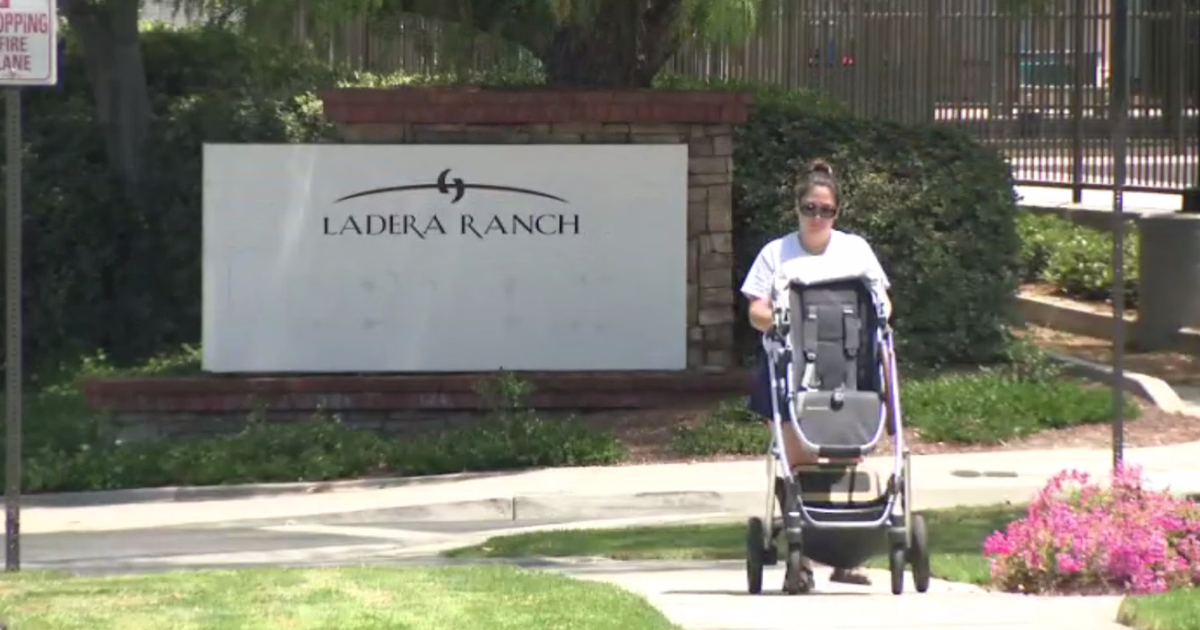
Hundreds of Orange County residents were expected to fill the halls of a community meeting on Tuesday evening as they voiced <a href="https://healthylife7.com/more-women-in-their-20s-are-getting-type-2-diabetes/” title=”More women in their 20s are getting type 2 diabetes”>their concerns over an extremely rare childhood cancer that several children have been diagnosed with in recent years
Last week, Orange County Supervisor Katrina Foley wrote a letter to California’s Department of Public Health Director Dr. Erica Pan, asking that they expedite their ongoing review of the reported Ewing sarcoma cases in the Ladera Ranch neighborhood.
“Ladera Ranch families have reported six children diagnosed with Ewing sarcoma, an exceptionally rare cancer that most often affects children and young adults,” Foley’s office said in a statement after her letter was sent. “The number of reported diagnoses in a community of approximately 26,000 residents has raised serious concerns among families and residents.”
Some community members have raised concerns about an herbicide used in their community as a potential cause, including Brian Dalton, whose daughter Lily spent most of her time in Ladera Ranch throughout high school with her boyfriend and his family.
“Spent a lot of nights, weekends and summers in Ladera Ranch, and we also lived six miles away,” Brian said.
Lily died in January of a rare soft tissue cancer that had been diagnosed a few years earlier. Doctors told him that her tumor had an Ewing sarcoma gene fusion.
“This is so rare that there has to be something, and if it’s not pesticides, then what is it?” he said.
Foley said that the Orange County Health Care Agency asked the California Cancer Registry to evaluate concerns in Ladera Ranch in 2024, but no discernible pattern of cases was discovered at that time. After renewed concerns from the community, they again asked CCR, UCI’s Cancer Center and the Orange County Agricultural Commissioner to revisit the issue. The results of that assessment are still pending.
“Ladera Ranch families deserve answers, transparency, and urgency from the state,” Foley said in a statement. “We do not yet know what caused these cancers, but that uncertainty demands a comprehensive review of every credible factor, including possible environmental exposures, along with direct communication and the public release of the findings.”
The California Cancer Registry tells CBS LA that the purpose of their assessment is to determine whether the number of cancers diagnosed in the area appears higher than expected based on population-based cancer registry data
A spokesperson for the California Department of Public Health says that because Ewing sarcoma is so rare, small numbers can make statistical interpretation difficult, and that they cannot determine if an environmental exposure caused the cancers.
During Tuesday night’s meeting, the Ladera Ranch Civic Council, which is made up of community members, is expected to present a special agenda item titled “Community Health Concerns.” It’s expected that a ban on herbicides in the community is expected to be one of the topics.
Orange County-based oncologist and the physician in chief at City of Hope, Edward Kim, who is not involved in the study, says that sometimes cancer cases like this are happenstance.
“Sometimes it is just by chance that a certain location, over a certain amount of time, has a higher number of cases, but it may still fall within the norm of the cases described through the country,” Kim said.
Logan Spector, an epidemiologist who studies the causes of childhood cancers, and Ewing sarcoma in particular, says that he has already been contacted by some Ladera Ranch families over the concerns.
“There are environmental causes of some childhood cancers, Ewing sarcoma is not really one of them,” Spector said. “The other thing about Ewing sarcoma, is the strongest risk factor is actually the ancestry of a child.”
U.S. Attorney Bill Essayli has also raised concerns, penning a letter to the Environmental Protection Agency to “conduct an appropriate investigation to determine if there are any environmental factors causing this cancer cluster” and to see if any federal environmental laws are implicated
