


Jenni Green22 July 2026
>More in
- Community
- Health and wellbeing
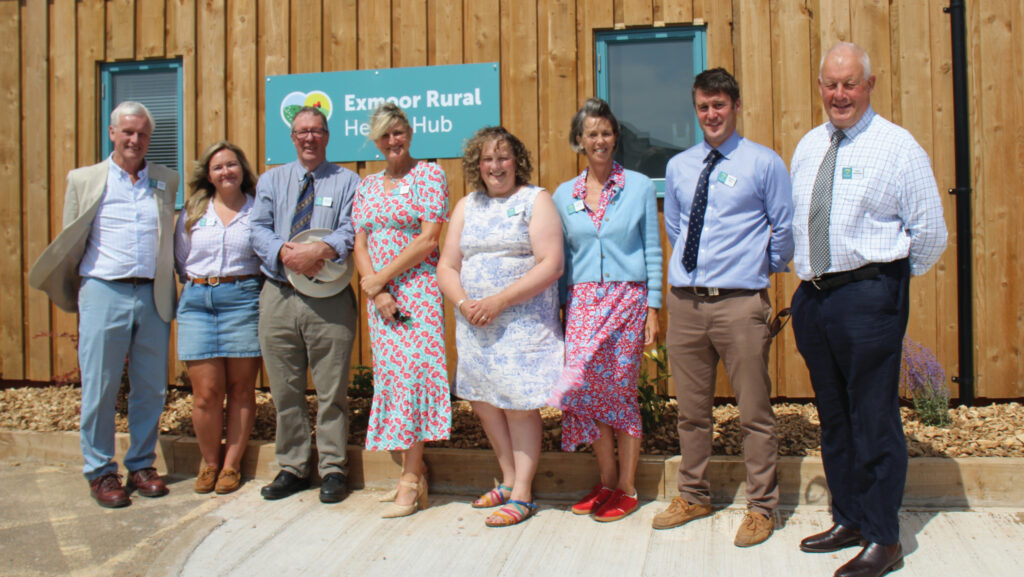
The trustees of the ERHH, from left: Martin Brown, Iona Leckie, Richard Webber, Olivia Winterton, Julie Pearce, Charmain Dascombe, Gethin Rees and Peter Delbridge © Jenni Green
Farmers are notoriously bad at seeking help with their health – and rural communities are disadvantaged by poor access to services. Now, the new Exmoor Rural Health Hub (ERHH) at Cutcombe Market, Wheddon Cross, is aiming to rectify that
“Our aim was to make basic healthcare as easy as possible for farmers,” says Richard Webber, chairman of trustees at the ERHH. “Farmers are fantastic at looking after their livestock, but their own physical and mental wellbeing generally takes a back seat, and we wanted to change that
“Having seen how well the Derek Mead Health Room at Sedgemoor had been received, we wanted to offer a similar facility to the rural Exmoor community.”
Stephen Dennis, regional director at the Farming Community Network, believes that Somerset “stands out from the crowd”, pointing out that the county has not one, but three similar services based at livestock markets in Cutcombe, Sedgemoor and Frome
A Healthwatch report in 2025 cited various reasons for farmers not prioritising their own health, including time constraints, the financial cost of taking time off, difficulties arranging and attending appointments, and access issues in rural areas
“The most valuable livestock on a farm is the farmer and their partner,” notes ERHH trustee Peter Delbridge. “They’re always good at looking after their animals, but not so good at looking after themselves.”
Difficulty getting help
April Bosley, district nurse team manager, was key to getting the project off the ground, having recognised the difficulties rural patients face in accessing help. “That’s when I approached the market,” she explains.
The ERHH charity initially worked out of the nearby Moorland village hall, then moved into a portacabin at the market in 2022. “We realised we needed to be seen and be visible,” recalls Mandi Usher, district nurse team leader
Since then, one NHS nurse and one mental wellbeing practitioner have staffed clinics for four hours a day, twice a month, coinciding with cattle and sheep sales
“Being here regularly is making a huge difference,” says Mandi. “People get to know your face and are at ease, so are happy to come in and ask for help.”
In the previous portacabin, the team was seeing up to eight people a day. They hope and believe both awareness and demand will grow with the new facilities
“It was clear from the level of engagement that a purpose-built facility was required; with more space the nurses could offer more treatment options,” Richard explains
Stephen Dennis has a blood pressure check from nurse Mandi Usher in one of the three treatment rooms © Jenni Green
New facilities
Acquiring planning permission was a straightforward process and consent was given in March 2025
“We consulted the chief planning officer before applying and had excellent support from solicitors, architects and planners, who generously provided their time pro bono.”
In total, £110,000 needed to be raised for the project. Private grants and fundraising accounted for £55,000 of that, which was match-funded by the Rural England Prosperity Fund
The new facility has a reception area, disabled WC and three treatment rooms
Services available include prostate-specific antigen testing, aneurysm screening, blood pressure checks, chiropody, podiatry, physiotherapy, mobility assessments and mole checks
The team can also make referrals and prescribe as necessary. In addition, there is a mental health service for confidential chats and signposting
And it’s certainly proving its worth. One screening clinic for abdominal aortic aneurysms (a life-threatening condition with no obvious symptoms), yielded two immediate referrals. “They probably wouldn’t have been seen otherwise,” says Mandi
The ERHH NHS team, from left: Kaye Shields, Mandy Gadd, April Bosley, Mandi Usher and Alysha Branchflower © Jenni Green
Treatment to prevention
The service fits well with the NHS 10-year plan to shift from treatment to prevention – and it relieves pressure on local GP surgeries
“The collaboration between the NHS and the EFHH exemplifies the strength of public and community partnerships in delivering meaningful and lasting healthcare improvements,” says Jonathan Higman, chief executive of NHS Somerset
Now, it’s about raising awareness of the facility and potentially using it as a template to be rolled out elsewhere, adds Stephen. “If we can encourage people to make good use of it, it might encourage other markets to do the same.”
To learn more, visit the health hub website.
See more
- Community
- Health and wellbeing
